

- Joined
- Nov 2, 2025
- Messages
- 282
- Reaction score
- 0
- Points
- 16
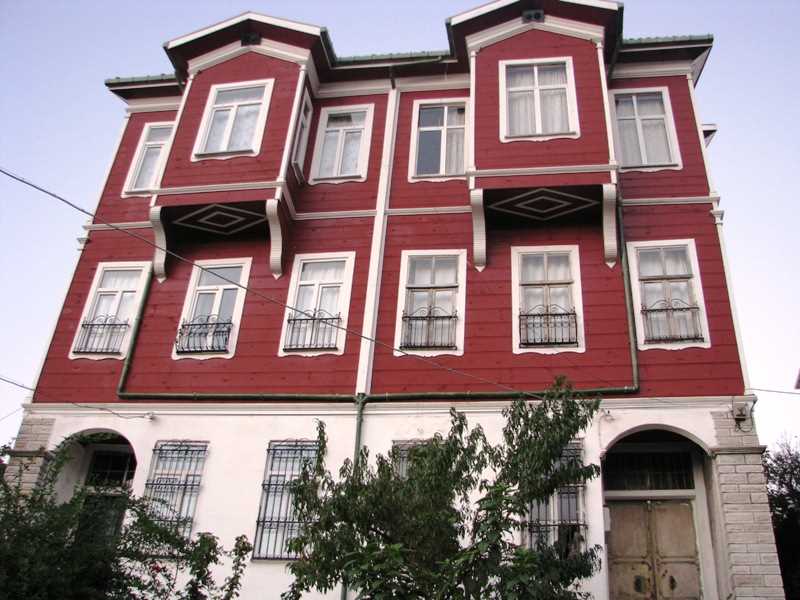
Historic houses in İnebolu on the Kastamonu coast.
Kastamonu's Black Sea coast links towns and villages among small harbours, bays, beaches and wooded slopes. İnebolu, Cide and Abana represent different aspects of this coast, while inland Daday adds another rural landscape to the province. They share a provincial identity but differ clearly in terrain, settlement and local work.
 İnebolu and its coastal houses
İnebolu is known for historic houses on its slopes, combining timber and stone with distinctly coloured façades, particularly red. Roofs are covered with slabs of local stone known as marla. The sloping ground means the apparent number of storeys can differ from one side to another. Some large houses have several staircases, reflecting family needs and the separation of domestic spaces.
The town is connected with the sea, its harbour and the memory of transporting supplies during the Turkish War of Independence. This history gives the coast significance beyond its scenery. Houses and lanes complete the picture of a community shaped by maritime trade, local work and life on sloping ground.
 Cide and Gideros Bay
Cide has an extensive coastline surrounded by mountains, woodland and water. Gideros Bay is a distinctive inlet enclosed by green slopes, quite different from the open beach in the town centre. Coastal settlements such as Aydos, Denizkonak and İlyasbey reveal varied patterns of life between the shore and the entrances to valleys.
The area's cultural identity includes the writer Rıfat Ilgaz, who was born in Cide, alongside village heritage and traditional clothing. These associations help explain the coast as a home to people, stories and work. Bays, headlands and beaches reveal the changing relationship between land and sea along its length.
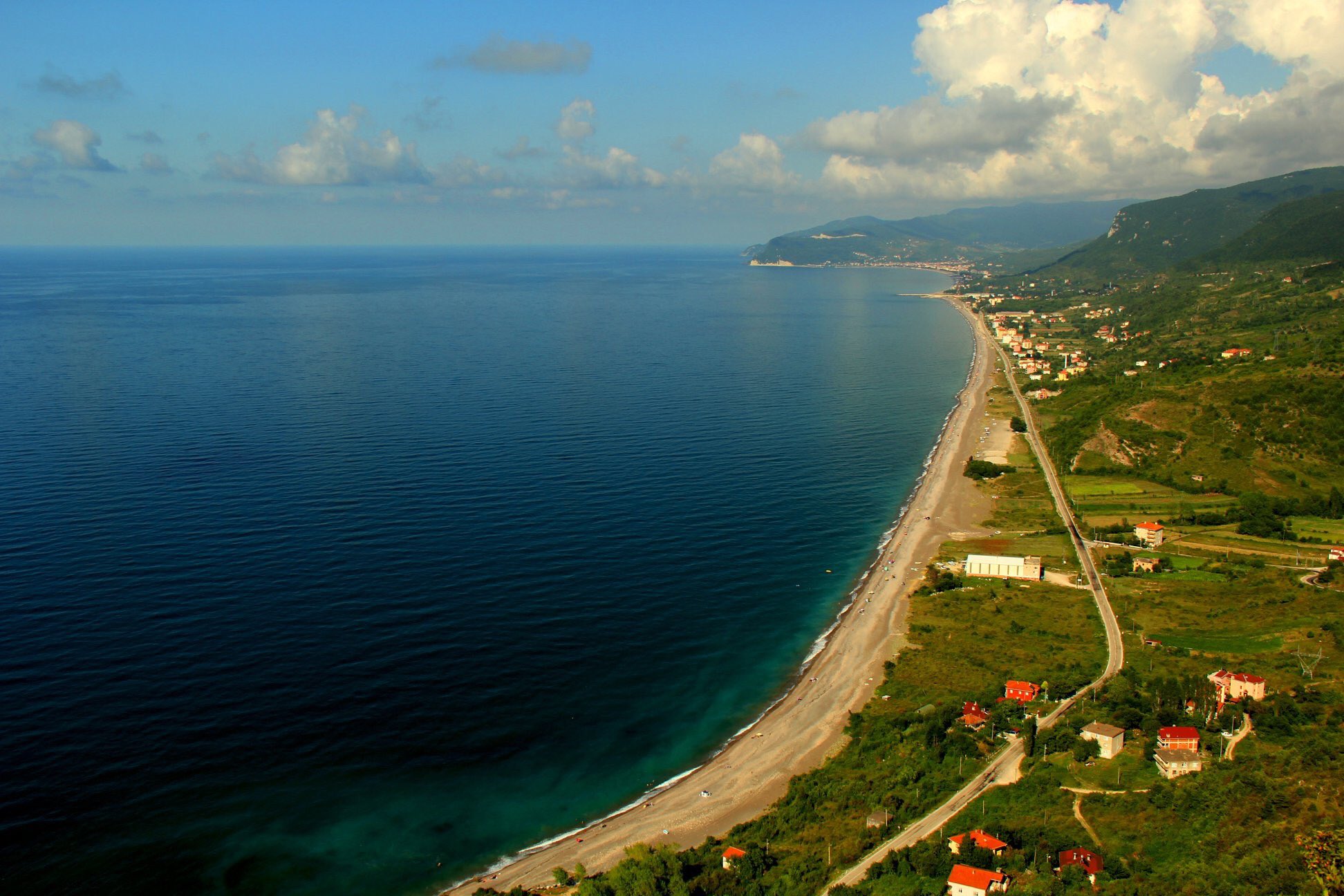
The Cide coast and the green slopes around it.
 Abana and the eastern villages
Abana lies on the Kastamonu coast, where the small town connects with the shore, watercourses and slopes behind it. The maritime landscape is closely linked to the town and neighbouring villages. Coastal architecture related to İnebolu's house tradition also occurs around Abana, İlişi, Bozkurt and Çatalzeytin, showing how building traditions and environmental conditions cross town boundaries.
The shoreline changes between sand, shingle, rock and sheltered bays, while farmland meets woodland on higher ground. Kastamonu's coast is a succession of landscapes, each shaped by its valley, village, harbour and historic sites.
 Daday and the rural interior
Daday is inland, in a setting of forests, villages and open land. Its settlement pattern and rural houses reflect the history of life in the Kastamonu interior, with connections to farming, livestock and woodworking. Upland pastures and woodland offer a different perspective from the harbours of İnebolu, Cide and Abana.
Comparing Daday with the coast shows how location shapes local life. The sea is prominent in coastal work, memory and buildings, while forests and agricultural land take the lead inland. Crafts, houses and rural products connect the province, with each area retaining its own place names, villages and geographical character.
 Practical notes
Check coastal road conditions and the weather, particularly during rain. Respect occupied houses and working harbours, and follow beach instructions: the Black Sea can have strong waves and currents. Remember that Daday is inland when locating it in relation to the coastal towns.
 Related topics
 - Kastamonu 2026: Castle, Clock Tower and Museums
- Küre Mountains and Pınarbaşı 2026: Horma Canyon, Valla Canyon and Ilıca Waterfall
- Safranbolu 2026: Ottoman Town, Houses and Historic Markets
- Yenice and Eskipazar 2026: Forests and Hadrianopolis Heritage
- Bartın and Amasra 2026: The Coast, Castle and Rural Heritage
- Zonguldak 2026: Coal Heritage, the Mining Museum and Gökgöl Cave
- Ereğli, Devrek and Filyos 2026: Archaeology, Crafts and the Coast
- Gölcük and Aladağ 2026: Bolu Lakes, Forests and Highlands
- Yedigöller 2026: Seven Lakes, Forests and Natural Diversity
Last edited by a moderator: