

- Joined
- Nov 2, 2025
- Messages
- 282
- Reaction score
- 0
- Points
- 16
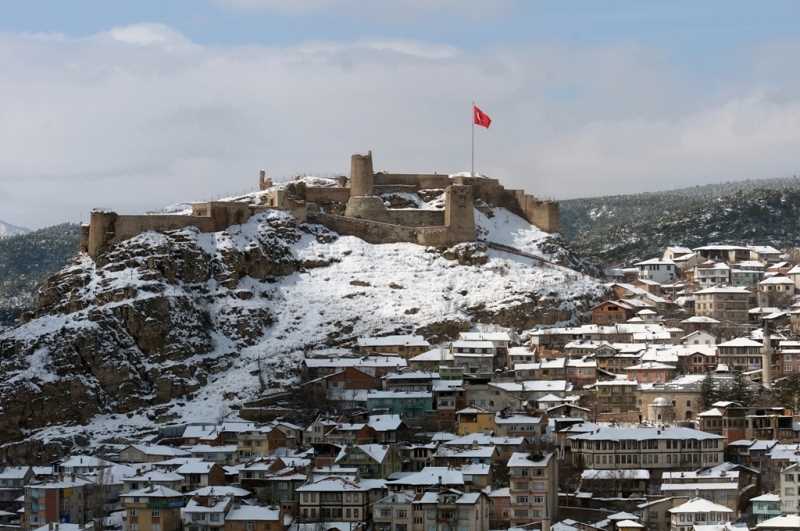
Kastamonu Castle on the rocky height overlooking the city.
Kastamonu is an inland city in the western Black Sea region, with neighbourhoods arranged along the Karaçomak valley and surrounding hills. Its castle, clock tower, houses, mosques and markets reveal successive historical layers, while museums explain local life and its links with the villages. This valley city has a character distinct from coastal towns, shaped by forests, historic routes and local architecture.
1.  The castle and the city's development
Kastamonu Castle rises on a rocky outcrop west of the centre, making it a clear landmark on the skyline. Cultural sources attribute it to the 12th-century Komnenian period, with later alterations contributing to its present form. The principal surviving part is the inner castle. Features within the area include cisterns, defensive structures and the tomb known as Bayraklı Sultan. Its elevated position explains the importance of watching the valley and approaches, and shows how settlement spread below the defences.
From the castle, neighbourhoods appear to step down the slopes, revealing the relationship between the watercourse, streets and historic buildings. The site helps explain the city as a geographical whole that developed around a low corridor enclosed by higher ground.
2.  The clock tower and historic centre
The clock tower stands on Sarayüstü Hill behind the government building. It was built in 1885 under Governor Abdurrahman Paşa. Facing the castle across the urban landscape, it pairs an older defensive landmark with a civic monument from the late Ottoman period. A popular story describes a clock exiled from İstanbul; this belongs to local folklore rather than a confirmed historical explanation for the tower's construction.
Nasrullah Mosque, its surroundings and bridge, and the old markets form part of the city's heart. Timber and stone façades and buildings adapted to sloping ground give the lanes an architectural variety connected to everyday life, trade and worship.
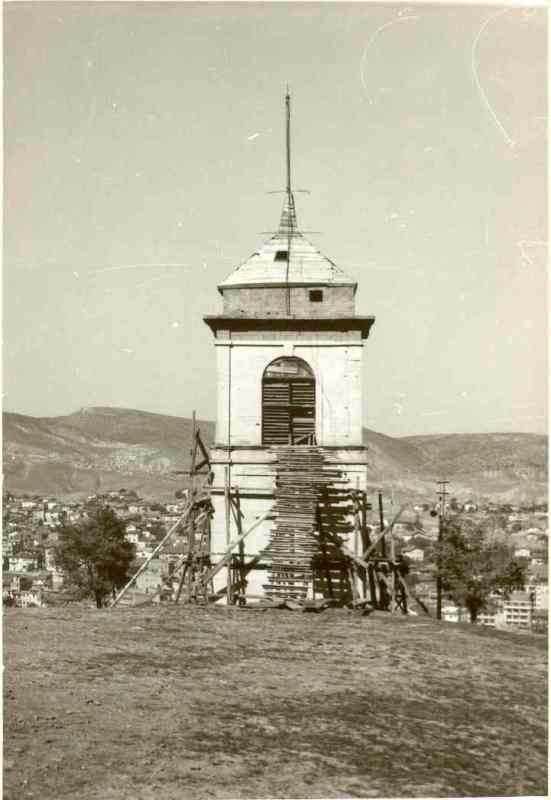
A historic photograph of the clock tower on Sarayüstü Hill in Kastamonu.
3.  The museums and their collections
Kastamonu Museum occupies a stone building designed by architect Kemaleddin. Its collections extend from prehistory to later periods. Notable objects include a carved gem bearing a portrait of the Roman empress Agrippina the Younger from the Cide area, vessels and finds from Kınık village, a Roman sarcophagus and a terracotta figure of Cybele. They introduce the province's civilisations and the artistic and practical uses of objects within them.
The Livapaşa Mansion Ethnography Museum occupies a 19th-century house and explores crafts such as copperwork, weaving, shoemaking and saddlery, alongside traditional domestic life. It combines the value of the building with the history of work and households, including wooden objects associated with the region's heritage. The governor's office announced its reopening after restoration on 4 May 2026; confirm current access before visiting, as some official listings still carry older closure information.
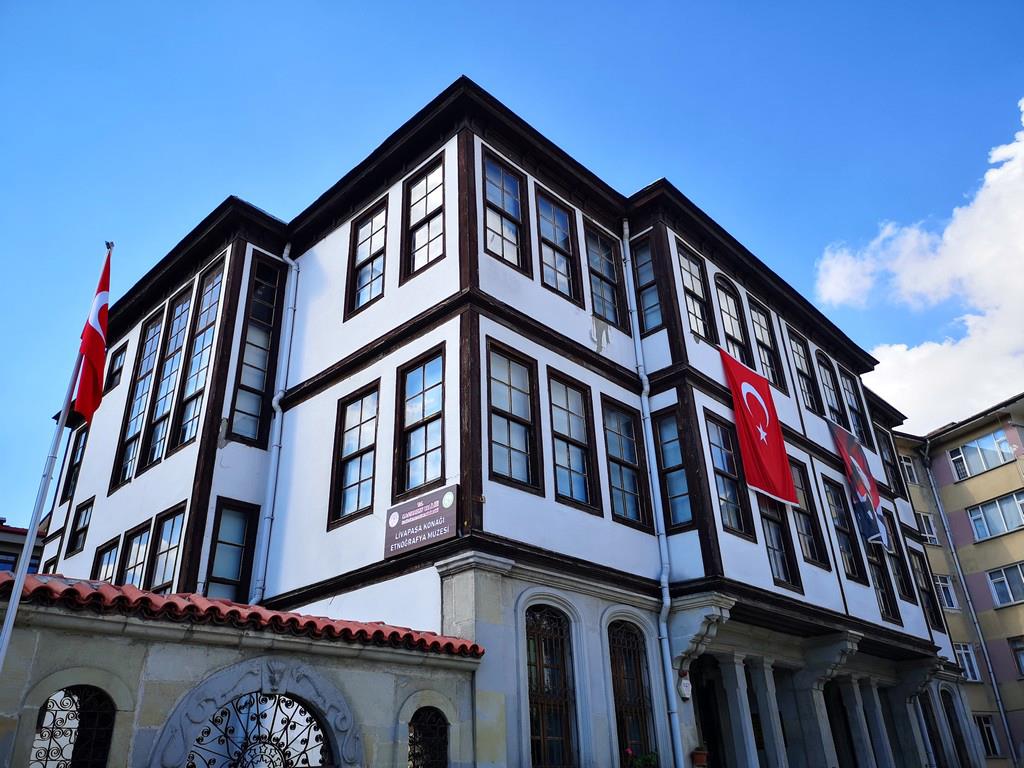
Livapaşa Mansion, home to Kastamonu’s Ethnography Museum.
| Stop | What to focus on | What to check |
|---|---|---|
| Kastamonu Museum | Archaeological finds from successive civilisations; architect Kemaleddin’s building | Opening hours, available galleries and photography rules |
| Livapaşa Mansion | The historic home, crafts and domestic life; reopened on 4 May 2026 | Current hours and any exceptional visiting arrangements |
| Castle and clock tower | City views, the Karaçomak valley and historic architecture | Authorised paths and the condition of steps and surfaces in rain |
4.  Houses, markets and the surrounding countryside
Kastamonu's old houses combine timber and stone with architectural solutions responding to slopes and privacy. Windows, projecting bays, roofs and courtyards help explain daily domestic life, complemented by the crafts and markets in the centre. Copperwork, textiles and woodworking form part of the regional heritage. Agricultural products, household objects and folk traditions reveal the city's links with its villages.
Beyond the centre, the province includes forests, highlands, inland towns and a coastal strip. The city provides a cultural introduction to Kastamonu, while the coast, Küre Mountains and Daday offer other perspectives on nature and rural settlement within the same province.
5.  Practical notes
The castle and some neighbourhoods involve uphill routes and uneven surfaces. Check current museum hours and any exceptional visiting arrangements, and respect occupied houses. Clear weather helps reveal the city's layout. Stay within the parts of the castle walls open to visitors.
6.  A suggested day in the centre
This is a flexible sequence: reverse it to suit museum hours and the weather. Allow separate time for uphill areas, and aim to reach museums well before closing.
| Time | Suggested visit | How to adapt it |
|---|---|---|
| Morning | Kastamonu Museum and Livapaşa Mansion, according to their hours | If the timing does not work, begin with the markets and rearrange the museums |
| Middle of the day | Nasrullah Mosque, the markets and a meal break | Respect prayer times, worshippers and occupied homes |
| Afternoon | The clock tower or castle for views across the city | Choose one elevated stop if steps or distances are tiring; postpone the climb when surfaces are slippery |
 Related topics
 - Küre Mountains and Pınarbaşı 2026: Horma Canyon, Valla Canyon and Ilıca Waterfall
- The Kastamonu Coast and Daday 2026: İnebolu, Cide and Abana
- Safranbolu 2026: Ottoman Town, Houses and Historic Markets
- Yenice and Eskipazar 2026: Forests and Hadrianopolis Heritage
- Bartın and Amasra 2026: The Coast, Castle and Rural Heritage
- Zonguldak 2026: Coal Heritage, the Mining Museum and Gökgöl Cave
- Ereğli, Devrek and Filyos 2026: Archaeology, Crafts and the Coast
- Bolu 2026: The Historic City, Museums and Markets
Last edited by a moderator: