

- Joined
- Nov 20, 2025
- Messages
- 221
- Reaction score
- 0
- Points
- 16
You sit down with a long menu, recognise “kebab”, then discover ten different names. The photograph is tempting, but you want to know what will arrive: meat or chicken, a plate or a wrap, rice or bread? Reading a menu becomes enjoyable when you treat each line as a small story with ingredients, a serving style and a size. A few precise questions help you choose a meal to your taste while leaving room for something new.
 Read each line in three steps
Start with the dish name, then its description and pricing unit. The name identifies a broad food category, the description explains fillings and accompaniments, and the unit tells you what the price covers. Look for three things before considering the photograph: main ingredient, preparation method and serving format. If there is no description, ask rather than guess.
The word tavuk means chicken, kuzu means lamb, and dana refers to veal or beef in a menu context. kıymalı means with minced meat, so ask which meat if it matters to you. peynirli indicates cheese, but the cheese type and mixture are worth asking about when comparing fillings or seeking a particular flavour.
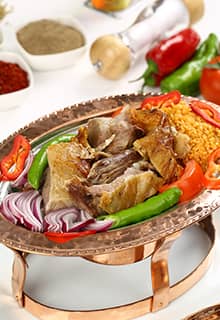
Meat with accompaniments: an illustration for reading a menu.
 Cooking terms shape your expectations
Useful words include ızgara for grilled, fırında for oven-cooked, kızartma for fried and haşlama for boiled. These are starting points for choosing; ask about sauce and presentation too if texture matters to you. A grilled dish covered with sauce offers a different experience from one served with sauce on the side.
Also, acı deserves attention if you like spicy food. You can request acısız, meaning without chilli heat, then check whether the dish can be adjusted. Some preparations are made ahead and seasoning may already be in the filling. “Mild” alone can mean different things; explain that you mean chilli and ask about the sauce as well.
 A small glossary for the table
| Word | Menu meaning | Useful question |
|---|---|---|
| Çorba | Soup | What ingredients and stock are used? |
| Dürüm | Wrap | How large is it and what is inside? |
| Porsiyon | Portion | What does the plate include? |
| Adet | Piece or individual item | Is the price for one piece? |
| Karışık | Mixed selection | Which items and how many? |
| Yanında | With it or alongside | Are the accompaniments included in the price? |
 One name can have several serving styles
Döner may come as a wrap, in bread or as a plated portion. Compare the format you want: a wrap suits eating on the move, while a plate offers a seated meal with accompaniments that can vary between restaurants. Ask what the portion includes, especially if a menu photograph shows rice, salad and bread without making clear whether all are included.
Pide (pide) is a boat-shaped baked flatbread with varied fillings or toppings; check whether yours has meat, cheese, vegetables or a mixture. Börek (börek) comes in many shapes and fillings. Choose the filling first, then ask whether it is sold by piece, portion or weight. This makes your order clear and helps you compare two sizes.
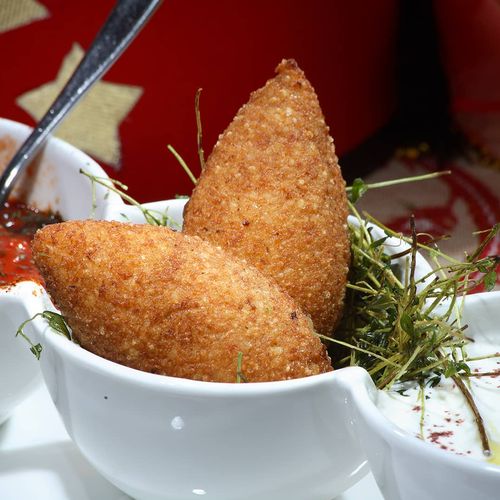
Stuffed köfte: an example of checking the number of pieces and their price.
 Accompaniments are part of the meal
The word pilav needs its description to identify the dish: you may see pirinç pilavı for rice pilaf or bulgur pilavı for bulgur pilaf. Ask about additions if you have a dietary preference. Likewise, meze covers varied small dishes; look at each one and ask about its ingredients rather than assuming they all have the same composition.
Before ordering small dishes, ask whether they are included in your meal or ordered separately at their displayed prices. The same applies to bread, water and starters you choose yourself. You can begin with a small quantity and add a dish you enjoy. Clear questions at the outset make the meal easier and leave you free to talk about the food rather than untangle the bill later.
 Six phrases to reduce misunderstandings
 Bu yemeğin içinde neler var? — What ingredients are in this dish?
 Yanında neler geliyor? — What comes with it?
 Bunlar fiyata dahil mi? — Are these included in the price?
 Acısız yapabilir misiniz? — Can you prepare it without chilli?
 Sosu ayrı getirebilir misiniz? — Could you bring the sauce separately?
 Bu fiyat bir porsiyon için mi? — Is this price for one portion?
Say the dish’s name or point to its menu line, then ask one question and wait for the answer. A long paragraph of questions in a translation app can hide the most important point. If an ingredient affects your choice, ask staff to check with the kitchen rather than relying on their impression of the dish’s name.
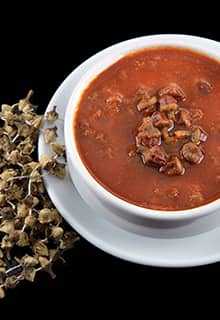
Soup: an example of a dish that may come in different sizes or portions.
 A practical example: the family’s first lunch
The family chooses pide, döner and a salad. Before confirming, ask about the pide’s filling and size, then the döner’s accompaniments. If the plate already includes bread and a side, reconsider whether more extras are needed. Agree on separate sauce for anyone who prefers a different chilli level. This short conversation makes the order clear and easier to adjust before preparation begins.
On a digital menu, check that the photograph and description belong to the item you have opened, particularly when the page offers sizes or fillings. Check the quantity in the order summary; pressing twice may change the number of items. When switching menu languages, keep the Turkish dish name visible so staff can identify it easily.
 Discover food one step at a time
Choose a dish whose main ingredient you understand and add one new item to taste. Save the Turkish name of something you enjoyed on your phone with a short description; it can help in the next city, where you will know what differences to ask about. The pleasure of a menu is seeing its words become memorable food and knowing why you chose each dish.
 Related Topics
 Everyday Lokantas in Türkiye: Choosing from the Day’s Trays
  Ocakbaşı Restaurants in Türkiye: Grills and Fireside Seating
  Burdur at an Easy Pace: Şiş Köfte, Walnut Sweets and Lake-Road Flavours
  Restaurants and Cafés in Konya: Etli Ekmek and Oven Kebab
  Mersin’s Sea and Street Flavours: Tantuni, Sweets and Family Tables Comparing Menus and Prices in Türkiye: Calculate the Whole Meal Ordering for a Family in Türkiye: Portions, Sharing and Less Waste Vegetarian Food and Allergies in Türkiye: Questions to Ask Before Ordering Restaurant Bills, Service and Tips in Türkiye: Paying with Confidence
Last edited: