

- Joined
- Nov 20, 2025
- Messages
- 221
- Reaction score
- 0
- Points
- 16
Aubergine, lentil soup and a salad may look ideal on the menu, until a question about the stock or sauce changes your choice. Türkiye offers a wide range of vegetables, pulses, baked foods and small dishes, and explaining exactly what you eat can make the experience rewarding. Start with your requirements, then ask about the particular dish and how it is prepared. Names and photographs help you find options; detailed answers help you decide.
 Explain what you mean by vegetarian
If you are vegetarian and eat dairy and eggs, say so when staff need clarification. If you avoid all animal products, explain that explicitly. vejetaryen means vegetarian and vegan means vegan, but a brief conversation helps prevent misunderstandings. Be specific about meat, chicken, fish and stock, then dairy, eggs or honey according to your diet.
You could start by asking about vegetables cooked in olive oil (zeytinyağlı), pulses or starters. Check how today’s food is prepared; a category name does not reveal every addition. The filling, garnish or sauce may need adjusting. Ask about your chosen dish by name so staff can obtain an answer from the kitchen that applies to your order.
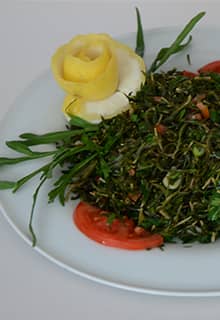
Thyme salad: an example of a vegetable dish whose ingredients should be checked with the restaurant.
 Check every component of the dish
For soup, ask about the stock; for rice or vegetables, the cooking fat and additions; for baked foods, the filling and dough. For a salad, check the dressing, cheese and other additions if they affect your choice. These questions help the restaurant describe its food; you do not need to discuss the entire menu if you are considering only two dishes.
Starters (meze) also have varied recipes, so request a description of each one you wish to eat. Ask about yoghurt, tahini, nuts and bread if these are ingredients you need to check. A photograph of baklava or another dessert does not show every ingredient. Give sweets and drinks the same attention as the main course when you have dietary requirements.
 Turn a choice into a specific question
| Dish you are considering | What to ask about | Key phrase |
|---|---|---|
| Vegetable or lentil soup | Ingredients and type of stock | Et suyu var mı? |
| Vegetable dish | Meat, cooking fat and sauce | İçinde neler var? |
| Baked food | Dough and filling | Süt veya yumurta var mı? |
| Salad or starters | Dressing and additions | Sosun içinde neler var? |
| Dessert | Ingredients and decoration | Malzemeleri öğrenebilir miyim? |
 Phrases for a vegetarian order
 Vejetaryenim; et, tavuk ve balık yemiyorum. — I am vegetarian; I do not eat meat, chicken or fish. Veganım; hayvansal ürün tüketmiyorum. — I am vegan; I do not consume animal products. İçinde et suyu veya tavuk suyu var mı? — Does it contain meat or chicken stock?
 Süt, yoğurt, tereyağı veya yumurta var mı? — Does it contain milk, yoghurt, butter or eggs?
 Bana uygun hangi yemeği hazırlayabilirsiniz? — Which dish can you prepare to suit my requirements?
Show the sentence describing your diet, then name the dish. If staff suggest an alternative, ask about its ingredients rather than accepting it by name alone. You can request a written description or use a short translation while keeping the Turkish words you know clear. Once your requirements are understood, the conversation can turn to flavour, portion size and accompaniments as with any other meal.
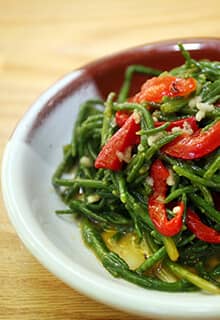
Prepared sea vegetables: an illustration of the variety of plant-based options.
 For an allergy, name the exact ingredient
If you have a known allergy, tell staff explicitly before ordering and name the ingredient. Describing food as vegetarian does not establish that it is free of allergens, and removing a garnish does not reveal what was used in preparation. Speak to someone able to check the ingredients and handling, and seek clarification if the answer is vague or uncertain.
Name the ingredient, then ask whether it is in the recipe, sauce or additions, and whether the food could come into contact with it during preparation or through shared equipment. If the recipe or today’s ingredients have changed, you need an answer about the current order. This conversation gathers information; it does not guarantee that a particular dish is suitable for your condition.
Important differences between ingredient names Süte alerjim var. — I am allergic to milk. Buğdaya alerjim var. — I am allergic to wheat.
 Yer fıstığına alerjim var. — I am allergic to peanuts.
 Antep fıstığına alerjim var. — I am allergic to pistachios.
 Susama alerjim var. — I am allergic to sesame.
 Yumurtaya alerjim var. — I am allergic to eggs.
Pay attention to the ingredient name: yer fıstığı means peanut, Antep fıstığı means pistachio, fındık means hazelnut and ceviz means walnut. Writing the precise name on your phone or a card lets staff read it without relying on pronunciation alone. If you need to avoid several ingredients, list each clearly on a separate line and check that the person responsible has understood them all.

Almonds: an example of an ingredient to check when managing a food allergy.
 Organise family communication and takeaway orders
Agree that one person will explain the diner’s requirements so the restaurant receives consistent information. Keep the dish name and confirmed adjustment, then identify that person’s meal when it is served. For takeaway food, you can request the diner’s name on the container. This makes things clearer when dishes look alike and there are several bags.
If the ingredients or preparation remain unclear, choose a venue able to answer before proceeding. Allow time for the conversation in your day; arriving during a very busy period can make communication harder. You can call ahead and repeat your requirements on arrival. If a different person takes the order, repeat the essential point rather than assuming it has been passed on.
Enjoyment begins with clear informationYou can build a varied meal from dishes the restaurant has checked against your requirements: vegetables, pulses or a baked item with clearly explained ingredients, and a drink of your choice. Vary your choices between visits to explore the cuisine. This guide covers communication and understanding ingredients; for a known allergy, follow your individual plan and the advice of the clinician familiar with your condition.
 Related Topics
  Everyday Lokantas Choosing Fish, Weight and Cooking Restaurants and Cafés in Mardin Datça: Almonds, Honey and Fish Kars Restaurants and Highland Flavours Reading a Turkish Menu Menus and Meal Budgets Family Orders and Shared Portions Restaurant Bills, Service and Tips
Last edited by a moderator: