

- Joined
- Feb 23, 2026
- Messages
- 207
- Reaction score
- 0
- Points
- 16
 Voting Abroad as a Turkish Citizen: A Guide for 2026
Voters living outside Türkiye face different questions from those living near their usual ballot box. Are they actually on the overseas register? Is the diplomatic mission also the polling venue? What if they are in Türkiye during voting? Why can a temporary traveller not rely on the experience of someone resident in another country? Understanding these distinctions before arranging a journey prevents considerable confusion, particularly when community groups circulate old calendars without identifying the year or election type.
Reviewed for 2026, this guide explains the rules and how to verify arrangements; it does not announce national general elections taking place this year. The constitutional framework provides for presidential and parliamentary elections together every five years, with provisions for renewing elections. Overseas polling days, venues and customs checkpoints are determined by decisions and the calendar for the actual election. Previous elections appear here only as illustrations: an airport address or voting period from an earlier election is no promise of availability next time.
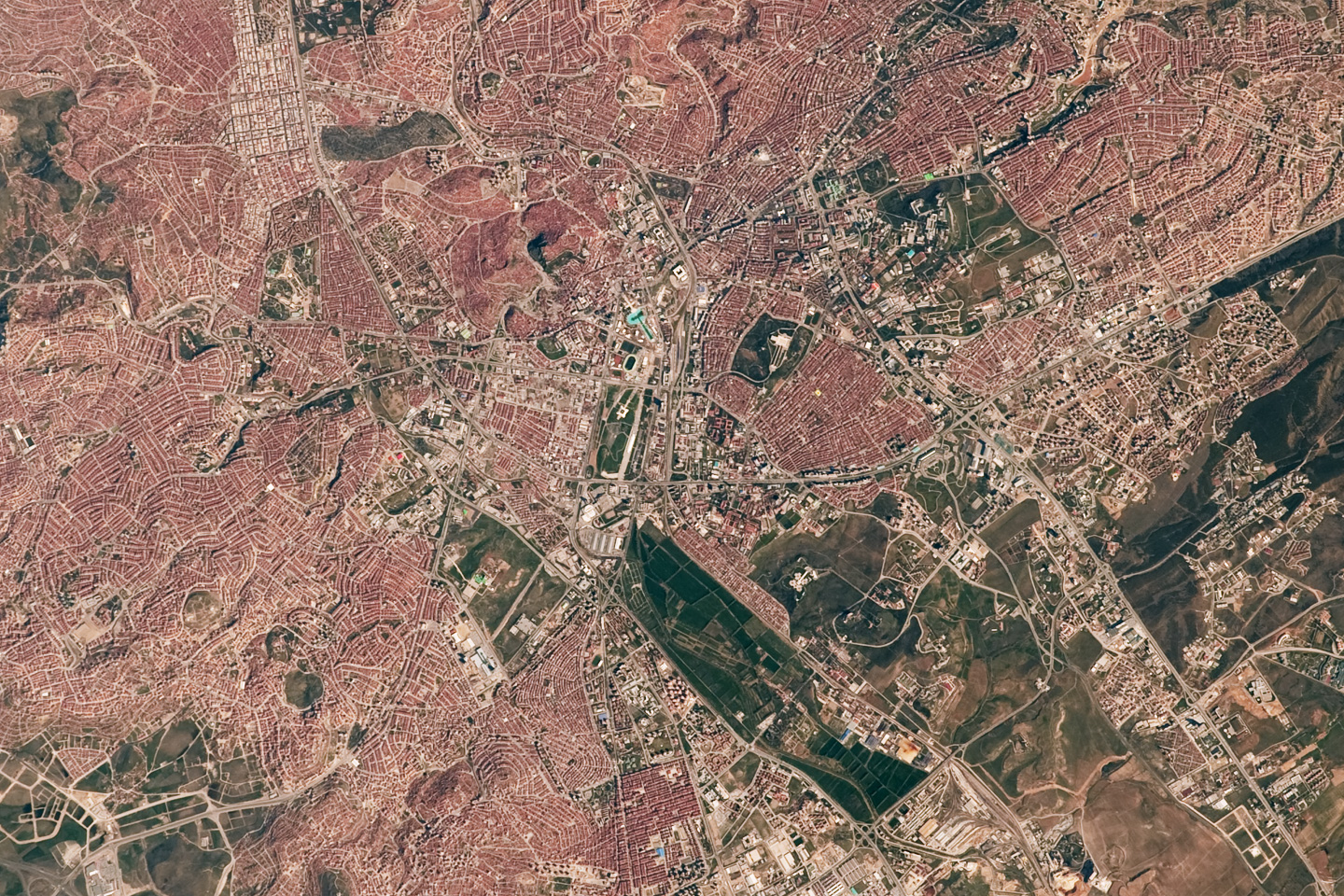
Archive photograph of Ankara taken from the International Space Station on 11 April 2009; this general view of the capital does not represent its urban development in 2026.
 Citizenship, residence and registration are separate questions
Voting depends first on Turkish citizenship and electoral eligibility, then registration on the appropriate roll. Official information explains that the overseas electoral register is based on residential-address data in the Address Registration System and updated for each election. Having a job or residence status abroad does not by itself establish that your electoral registration has become overseas. Nor does a short stay in Türkiye automatically transfer you to the domestic register. Check your registration result and address any discrepancy through the designated bodies.
The service does not cover everyone with a family or historical connection to Türkiye. A resident who is not a citizen, or someone needing to establish their continued citizenship or eligibility, cannot rely on a relative’s status. Family members at the same address may have different records because of a move or the timing of an administrative procedure. Each eligible adult should check their own registration rather than making one assumption for the household. Individual legal questions cannot be determined through a general forum guide.
 Check the official service before asking community groups
Use e-Devlet’s overseas electoral registration enquiry, named Yurt Dışı Seçmen Kaydı Sorgulama in Turkish. Its public page identifies the responsible body and authentication methods; personal records require your own sign-in. Read what the service provides at the current stage, then note the enquiry date and registration type. Do not give your password to a volunteer or intermediary offering to check for you. They can help translate without receiving access to your account.
Outside an active election period, polling-place details may not be available in the same way as during a previous election. An old screenshot cannot fill that gap. Check your address and registration, read public documents and await the announcement for the actual election. When a venue and time become available, reopen the service’s result before travelling. The mission linked to your address and the operational polling venue may differ when ballot boxes are assigned.
 Why your address declaration matters
Official information for overseas voters explains the relationship between address details and electoral registration. If you move to another country or change residence, ask the competent consular office about updating your declaration, then check its effect on the electoral register. A consular appointment does not prove the update is complete: the appointment is one stage, while completion should be evident in the data or an official confirmation. Keep the documents submitted and proof of the procedure to help follow up any continuing inconsistency.
YSK information posters explain checking the overseas register during the period when lists are available for inspection, whether you are abroad or in Türkiye at that time. This guide supplies no fixed deadline copied from an earlier election. Read the actual election’s calendar and instructions for your location when applying, and ask which documents are accepted. Updating an address outside an election period is not necessarily the same procedure as challenging an electoral list while registration is being finalised.
Which elections does the overseas register cover?Official guidance lists presidential elections, parliamentary general elections and referendums as occasions on which overseas-registered voters participate. Do not transfer this guide’s rules to electing a municipal council or neighbourhood muhtar in Türkiye. The election type changes the relevant electorate, lists and documents, rather than simply the candidates’ names. When reading about overseas ballot boxes, identify the ballot type before asking about its venue or interpreting the paper used.
Dual nationality does not give one person two votes in the same Turkish ballot. Registration and checks establish where the right can be exercised under the rules and prevent duplication. Do not plan to vote at a mission and again at a customs checkpoint, or infer from different dates that each location gives a separate opportunity. If your registration status is unclear, ask the competent electoral body before attempting to vote, rather than relying on verbal reassurance from someone without access to the election’s records.
 A consular office and a polling venue may differ
A consulate’s name on your paperwork does not guarantee voting takes place in its usual building. The competent bodies announce venues and times for each election; the address you need may differ from the one familiar from passport applications. Before leaving, check the venue’s full name, city and entrance, if specified, against an official announcement for that election. A building photograph or someone’s assurance that “everyone knows the place” is insufficient: their post may be old or concern another city in the same country.
Save the address in its original language in your navigation app to avoid confusing similar street names. If travelling from another city, allow time to understand entry and transport arrangements in the local announcement. This is journey planning, not electoral endorsement. Families can share transport without sharing political choices; you can help someone find the address while respecting their account privacy and decision. Confirm the venue once more before the actual journey.

Archive photograph of the Turkish Constitutional Court building from October 2020; it does not document a judgment or hearing in 2026.
 Voting at customs checkpoints
Official FAQs explain that a citizen on the overseas register can vote at a customs checkpoint designated by YSK for the election. Read those conditions together: the registration type, authorised checkpoint and announced period. Not every border crossing is a polling site, and an old airport photograph does not announce continuing availability. A holiday abroad does not turn a domestically registered voter into an overseas voter eligible to vote there. Begin with your registration, then check the location.
If you are on the overseas register and visit Türkiye, consult the official list of checkpoints and their dates rather than assuming you can vote at a school near your family home. Arriving after a particular mission’s voting period has ended does not automatically make a customs checkpoint the solution: you still need to establish the calendar, registration eligibility and designated location.
 Polling days, hours and time zones
Overseas polling periods vary between the missions specified in the election’s decisions. There is no single duration for every country and election. Check whether an announcement gives local or Turkish time, and allow for date changes when crossing time zones. Compare the day, month and year on any translated calendar with the official text. “Until Sunday evening” alone may refer to another city or electoral round.
A presidential second round does not mean the first-round timetable continues unchanged. Check the announcement for the correct round and verify its days and available venues again. A travel note can have four lines: ballot type, venue, date and hours exactly as officially stated. Do not guess a missing line. This personal note helps anyone arranging a long journey or fitting voting around work or study, without implying that the forum holds an unannounced calendar.
 Identity documents and preparing your journey
Read the election’s identification instructions. Do not assume a document is accepted because an airline or foreign residence authority accepts it: each administrative purpose has its own requirements. The spelling of your name in host-country transactions may differ from your Turkish document. Ask the mission or electoral body about a particular document’s validity before travelling, and keep its response. Do not post a document photograph in a public group to obtain an answer; identify its type and ask the question without personal details.
Prepare your route, address, appointment or polling time, and the identification required by the instructions. Store the information somewhere accessible offline if necessary. Anyone with particular accessibility needs can ask the body about venue arrangements early, limiting health information to necessary official channels. A companion’s presence does not authorise them to choose or vote on your behalf. Freedom, secrecy and instructions inside the polling site continue to govern the process, even if a companion helps with transport and translation outside it.
 Two examples of different routes
First, imagine a citizen resident abroad who intends to visit Türkiye during voting. They check the overseas register, then the authorised customs locations and election calendar, and arrange travel that allows access to an available venue under the announcement. They do not seek the ballot box at their old family address simply because the school is nearer. If they have recently moved back to Türkiye, they check their address and registration status rather than combining two routes on the assumption that one must accept them.
Now imagine a citizen resident in Türkiye travelling abroad on holiday at the same time. They cannot rely on a mission’s announcement shared in a diaspora group because their domestic registration differs from overseas registration. They check their records and the election’s instructions, seeking an official answer where needed instead of assuming their voting entitlement transfers to the holiday destination. The distinction is registration and instructions, rather than journey length or purpose. These examples explain a common mistake without determining an individual’s eligibility from incomplete information.
 Correcting registration and challenging information
Official guidance identifies routes for challenging the overseas register and the competent electoral body. Submission may be direct or through electoral bodies or consulates, according to the instructions. Describe the precise issue: an address inconsistent with documents, an expected registration missing or uncertainty about the register type. Separate an enquiry from a request to correct an error. Asking a question does not necessarily submit a challenge in the required form and time. Keep proof of receipt and follow the reply through the same channel.
Documents for previous elections contain specific periods and dates; none are carried over here to 2026. If a problem arises during an actual election, consult its announcement for the relevant stage’s start, end and submission requirements. A general complaints platform is not a guaranteed substitute for an electoral procedure with its own body and calendar. This explanation helps you understand the route and prepare a question, while the competent bodies determine admissibility and the outcome under the facts and law.
 Following announcements without message overload
If you live far from the mission, keep a small file containing the latest official announcement, venue, hours and round. Add the date you consulted it and compare new messages against it before changing arrangements. When sharing information with family, include the year, city and round in the text: an image may become separated from its original comment when forwarded. Remove outdated links from the practical travel note after saving them in a historical section, so someone in a hurry does not mistake an old announcement for the current one on travel day. Organising information cannot replace checking registration, but makes the correct information easier to use when needed.
 Preparing to vote abroad
- Establish citizenship and eligibility, then check the official service for your overseas registration.
- Review your address declaration after a move, keeping proof without publishing personal information.
- Identify the election type, round and year, then read the announcement for the actual venue and hours.
- Check identification and access arrangements before booking a journey or arranging long-distance travel.
- If visiting Türkiye, consult the authorised checkpoints under that election’s instructions rather than assuming a local ballot box is available.
- Separate an information request from a formal challenge, and check its competent body, deadline and required form.
 Frequently asked questions
Can any Turkish citizen travelling abroad vote at an embassy?
Travel alone does not establish that. Check overseas electoral registration and the election’s instructions and announced venues.
Does every consulate open its ballot boxes for the same number of days?
There is no fixed duration for all locations. Consult YSK’s and the mission’s announcements for the relevant ballot, reading the hours and time zone carefully.
Can historical photographs identify a polling venue available now?
Do not use a historical photograph to plan where to vote. Rely on the locations and dates announced for the actual election.
Can I vote more than once by using different venues?
Different locations and periods do not give one person more than one vote in the same ballot. Check your registration and do not combine voting routes.
What if family members’ details differ?
Each person should check their details and register type, then seek correction from the competent body. One account’s result does not establish that the rest of the household’s registration is correct.
 Related topics
- Following Public Affairs and Government Decisions in Türkiye
- How Laws and Official Decisions Are Made in Türkiye: A Guide for Residents and Visitors
- Türkiye’s Official Gazette: How to Find Laws and Government Decisions
- Laws, Presidential Decisions and Local Rules in Türkiye: Who Has the Power to Act?
- Municipalities in Türkiye in 2026: Responsibilities, Services and Getting Procedures Right
- Municipal Elections and Local Government in Türkiye: A 2026 Guide
- Municipality or CİMER? Choosing the Right Complaint Route in Türkiye in 2026
- Organising and Storing Important Documents in Türkiye
- Understanding Presidential and Parliamentary Elections and Results in Türkiye: A Guide for 2026
Last edited by a moderator: