

- Joined
- Nov 2, 2025
- Messages
- 282
- Reaction score
- 0
- Points
- 16

Kars Castle on the hill above the historic town.
Kars, in north-eastern Anatolia, brings together a hilltop castle, straight streets lined with stone buildings, and markets selling the produce of the surrounding plateau. Walking through the historic quarters is a good way to recognise its different architectural layers.
Use the centre as a base for nearby sights, with separate days for Ani or Sarıkamış. In Kars itself, historical memory sits alongside the university and everyday services: this is a place to live, study and trade as well as to explore ancient sites.
 The Castle and Historic Quarter
Kars Castle dates to the Saltukid period under Seljuk influence and has been destroyed and repaired several times. Its elevated position reveals the relationship between the fortifications and the neighbourhoods below, making it a useful starting point for understanding the city.
The old quarter includes the stone bridge and neighbouring religious landmarks such as Evliya Mosque and Kümbet Mosque, formerly the Church of the Twelve Apostles. Walk between them at an unhurried pace and allow time for the climb and descent.
 Streets of Baltic-Style Architecture
The legacy of Russian administration from 1878 to 1918 is visible in the grid plan and stone façades of Yusufpaşa, Ortakapı and Cumhuriyet. Look at the windows, ornament and continuous rows of buildings; small details make the architectural character easier to read.
Fethiye Mosque illustrates how a building's use can change: it was originally built as a church during that period. Time mosque visits and photography with consideration for worshippers and the site's instructions.
 Museums That Put the City in Context
Kars Museum holds archaeological and ethnographic collections, while the Caucasian Front War History Museum at Kanlı Tabya explores the city's military past. Together, they add context to the streets and fortifications you see outside.
Choose the museum closest to your interests and check visiting hours before setting out. A museum visit can also provide a break from outdoor walking when the wind is strong or the cold becomes tiring.
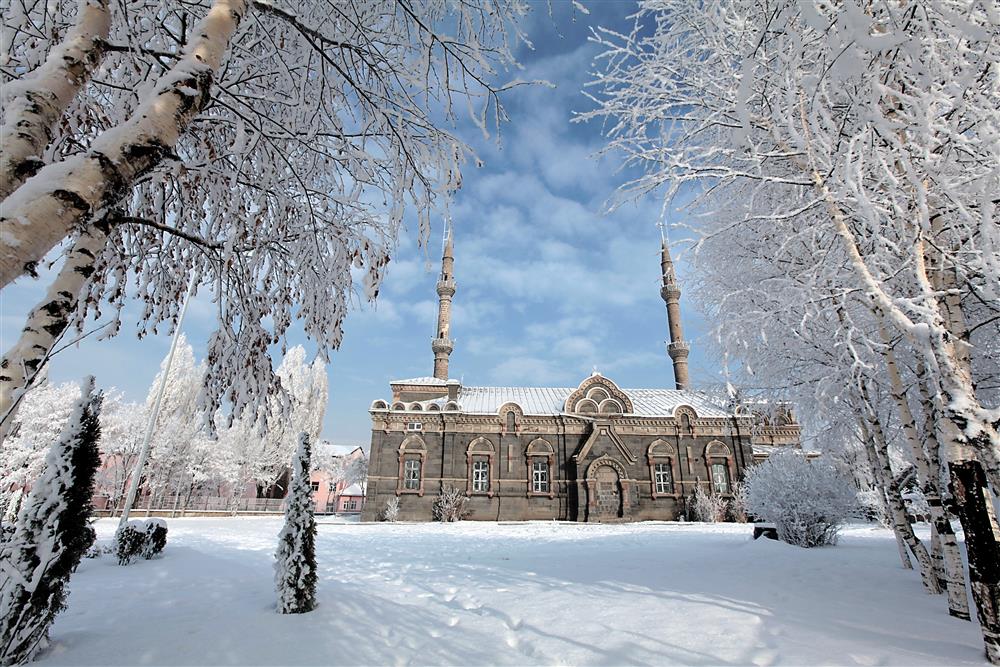
Fethiye Mosque in Kars, in a winter photograph with snow-covered trees and grounds.
 Kafkas University and Everyday Life
Kafkas University is based in Kars, with faculties, research centres and a university hospital, alongside fields connected with veterinary medicine, agriculture and culture. It gives the city an educational dimension and connects it with the needs of the surrounding region.
Set aside part of your walk for cafés, shops and residential streets open to the public. Visits to campuses or service buildings must follow the entry rules of the educational or healthcare institution concerned.
 Markets and the Cheeses of the Plateau
Dairy produce is central to Kars cuisine, notably kaşar and gravyer, alongside other local cheeses. Traditional crafts reveal another side of the economy, including woollen carpets with Caucasian motifs and natural colours.
When buying cheese, ask about its type, maturation and storage during your journey. For craftwork, compare materials and handmade details, and ask the shopkeeper before taking photographs.
 Planning a Day in Kars
Start in the historic quarter and at the castle, then continue through the stone-built neighbourhoods and visit a museum. Leave the market and local food for the final stop. Adjust this suggested order to the weather, admission times and how much walking suits you.
Keep some time for breaks, wear shoes suited to stone surfaces and dress in layers. Check arrival and departure bookings separately from your sightseeing plan, especially if you are continuing to an archaeological site or mountain area.
 Related topics
 - Ani 2026: The UNESCO World Heritage City Near Kars
- Sarıkamış 2026: Pine Forests, Skiing and Railway Heritage
- Kağızman, Digor and Arpaçay 2026: The Aras Valley and Rural Kars
- Ardahan 2026: Castle, Kura River and Highland City Life
- Lake Çıldır 2026: Seasonal Scenery and Fishing Between Kars and Ardahan
- Göle and Hanak 2026: Forests, Dairy Farming and Rural Life
- Posof and Damal 2026: A Border Valley, Red Apples and Highland Heritage
- Erzurum: The Historic Capital of Eastern Türkiye
- Erzincan: A Natural Oasis in Eastern Anatolia
Last edited by a moderator: