

سفير تركيا
Active member
- Joined
- Dec 14, 2025
- Messages
- 127
- Reaction score
- 0
- Points
- 16
An international return requires a complete case file, beyond a refund button
Handle customer rights, parcel movements, reimportation and financial reconciliation separately
Handle customer rights, parcel movements, reimportation and financial reconciliation separately

A returning parcel needs a clear route and documents linking it to the original shipment. — General illustrative photo.
A buyer may refuse a shipment because of charges they did not understand, return a product after delivery, or cancel an order still in your warehouse. All these situations may appear as a ‘return’ in the store dashboard, yet each requires different procedures. Refunding the payment does not bring the goods back to Türkiye, and a box arriving at the warehouse door does not, by itself, establish that its customs or tax case is closed.
This guide builds a workflow from the first notification to closure: locate the shipment, establish responsibility for the return, prepare reimport documents, then reconcile revenue, inventory and costs. It promises neither automatic relief nor recovery of charges paid abroad. The financial examples are hypothetical amounts in lira and must be replaced with actual invoices. The aim is for the store team, carrier and accountant to understand each party’s responsibilities, while keeping the customer clearly informed throughout.
 Classify the case before arranging return shipping
Start with two questions: have the goods actually left Türkiye, and has the customer received them? Cancellation before export requires handling the sale, fulfillment and booked shipment, but it is not the reimportation of goods that have already left. If the goods are with foreign customs or the carrier, do not treat them as recovered inventory.
Also distinguish a parcel refused by its recipient from a product received and subsequently returned, and from a shipment lost or damaged without a physical return. Record the precise status, tracking number and latest documented event, and assign each order an internal case reference. ‘The customer has not received it’ does not establish whether the parcel is in a carrier’s warehouse, awaiting clearance or on its way back.
This classification prevents common errors, such as issuing a refund twice or canceling an invoice while the shipment is still moving. Keep the customer-facing status understandable, while maintaining separate internal details for the goods’ movement and financial action so that one update does not cause another task to be overlooked.
| Case | What to establish first | First action |
|---|---|---|
| Cancellation before departure | Parcel location and declaration stage | Stop fulfillment with the carrier and accountant |
| Refusal in the destination country | Reason for refusal and clearance status | Request written options and a decision deadline |
| Return after delivery | Product, quantity and reason for return | Open a customer-rights case and arrange a return route |
| Damage or loss without a return | Carrier report and evidence | Separate compensation from reimportation |
| Returned to Türkiye | Declaration, goods’ identity and product condition | Close the customs procedure, then inspect the inventory |
 Separate the return policy from legal rights
The store policy organizes communication, addresses, packaging and follow-up, but it does not override mandatory rights applicable to the transaction. Distinguish a change of mind from a defective or misdescribed product, and a consumer purchase from a commercial supply agreement. A blanket statement that ‘international returns are not accepted’ cannot resolve every case.
Transactions covered by Turkish distance-contract provisions are subject to rules on withdrawal, its time limit, refunds and shipping, with exceptions depending on the goods. The seller’s location in Türkiye does not justify applying one Turkish rule indiscriminately to every customer in Saudi Arabia, the UAE or other countries. Review the applicable law, platform terms and contract before setting out obligations.
Explain how customers should notify you, which information is needed, who arranges the carrier, when they will receive an update and how to track the refund. Present the policy before purchase in a language they understand, and resend the instructions relevant to their case. Review the statutory refund deadline separately from the parcel’s progress; a complicated customs case is no reason to change that deadline.
The right to a refund, the right to return a product and relief on its reimportation into Türkiye are separate issues; evidence for one does not establish the others.
 Respond to the notification with actionable information
Assign a case owner and a time for the next update. Request the order number, a description of the problem, and product or packaging photographs where these help verification, while avoiding unnecessary personal data. Do not send the customer indiscriminately between several teams. Collect the information, then allocate tasks internally among customer service, operations and accounting.
Ask the carrier for the parcel’s actual location, the declaration number or available reference, the reason for the delay, and the deadline after which additional storage charges or another procedure will apply. Request the costs of the available options and confirmation of whether movement requires authorization or a document from the recipient. Record the response accurately, and do not turn a preliminary estimate into a guaranteed arrival time.
Tell the customer the confirmed status, next step and update time. Where destination charges are disputed, review the disclosure and delivery term, then identify a lawful solution; do not leave the customer unanswered while the documents are being completed.
 Compare parcel options without delaying the customer’s rights
If the recipient refuses delivery, the carrier may offer redelivery, return or temporary storage; an address change may also be possible under the service. Request a quote for each option, including deadlines and charges. Do not assume that return is automatic or free, or that the customer’s cancellation request immediately stops the carrier’s charges.
Compare the recoverable value of the goods with the cost of return transport, clearance, inspection and reconditioning. Allow for possible damage or expiry and the time until resale. If destruction or abandonment is an option, do not authorize it through an unclear verbal decision. Check the procedure in the country where the goods are located, obtain the parties’ authorization and retain evidence of what happened.
The economic decision determines how to manage the parcel, while your obligation to the customer depends on the contract, law and circumstances. A low product value does not justify refusing a refund that is due. A different solution may be agreed if it is lawful, clear and documented, with inventory movements and financial reconciliation kept consistent with it.
Request the return cost before issuing its label, and check when storage charges will increase.

Documenting the case and its costs helps close the return without duplicate entries. — General illustrative photo.
 Check the conditions for goods returning to Türkiye
Turkish procedures recognize goods that were in free circulation, were definitively exported and return within three years, with a possible extension for unforeseen circumstances or force majeure. Relief from duties on reimportation depends on the declarant’s request and proof that the goods retain the same identity, condition and nature as when exported. The word ‘return’ on the box is therefore insufficient.
Prepare evidence of the reason for return, such as the buyer’s rejection because of a defect or nonconformity, or inability to import the product under destination requirements. Documents from the buyer or competent authorities abroad may be needed. Tell the carrier or customs broker whether the product is returning in full or in part, and whether it has been used, repaired or altered, so they can determine the appropriate procedure without concealing facts relevant to the assessment.
In practice, link the item, model, quantity and serial numbers, where available, to the original shipment. Take photographs before dispatch and after return. If you cannot establish that the item is the same one you exported, resolve that gap with the specialist before promising relief or rapid clearance to the team.
Returning within the time limit does not guarantee every exemption; identity, documents and previous benefits are part of the case.
 Coordinate the BGB procedure and adjustment of previous benefits
If the shipment left through micro-export, ask the carrier for the definitive export details and their link to the transport waybill. A store order number cannot replace the customs reference. Nor should you assume that export limits alone determine eligibility for the return procedure. Request confirmation of the current procedure for the weight, value, goods and circumstances concerned.
The BGB implementation guide sets out the returned-goods procedure, linking the import declaration to the export declaration and waybill, and checking the KDV refund status through the TPS document for returned goods. Any export rights or benefits received must have their adjustment documented; a KDV or ÖTV refund or exemption may require collection on return. Involve the accountant before closing the declaration, rather than only after receiving the product.
Assign responsibilities clearly: the carrier or broker handles customs, the accountant documents tax and invoice treatment, and the store supplies the order, goods’ identity and communication. Request a copy of the closure and associated financial documents, and store them under the same case reference.
Do not copy numerical limits from an old return form; confirm the current return procedure with the specialist carrier before shipping.
 Build one document file for each return
Create one numbered folder or record containing the documents, instead of leaving them scattered across email, the store dashboard and chats. Use clear filenames linking each document to the order, item and stage. For a multi-item order or partial return, specify the returned quantity for each item so the team does not treat the entire sale as canceled.
Check that descriptions, values and quantities agree across the return and original documents. Leave explanations of discrepancies to the specialist rather than altering an accurate document to make it appear consistent. Packaging or the number of boxes may change, but the file must explain how the new parcel relates to the original goods. If the customer mistakenly returns a different product, open a separate case rather than booking it as matching inventory.
The table is an operational checklist; the specialist confirms the documents required for each procedure. Restrict access to files containing customer data and financial transactions.
| Document group | Examples to retain | Practical purpose |
|---|---|---|
| Original sale | Order, invoice and items | Establish what was actually sold |
| Goods’ departure | Export declaration and transport waybill | Link the return to the export |
| Reason for return | Customer notification and photographs or refusal report | Explain the circumstances without assumptions |
| Return route | Carrier instructions and new waybill | Track movements and responsibility |
| Customs and tax | Adjustment documents and import closure | Document completion of the procedure |
| Money and inventory | Refund notification and inspection report | Prevent duplicate reconciliation |
 Send return instructions that prevent mistakes
Do more than provide the warehouse address. Give the customer the case reference, approved shipping method, instructions for placing documents and protecting the product, and ask them not to send unrequested accessories or materials without coordination. Clarify whether one item or all items must be returned, and how to send the tracking number and proof of handover to the carrier.
Coordinate the shipment description, value and documents with the carrier or broker. The returned-product description must be truthful and connected to the original sale. Do not request a zero value or ‘gift’ description to conceal the facts or avoid duties. Where a specific return invoice or document is required, determine its type from the actual procedure rather than selecting an unreviewed online template.
For goods containing batteries, liquids or materials subject to transport conditions, request the relevant service instructions before handover. If damaged packaging affects safe carriage, suggest an acceptable protection method. Keep a label photograph and the waybill number, and check the first tracking event. Creating a label does not prove that the customer handed over the parcel.
Check a return shipment as carefully as a sales shipment: accurate description, suitable protection and consistent documents.
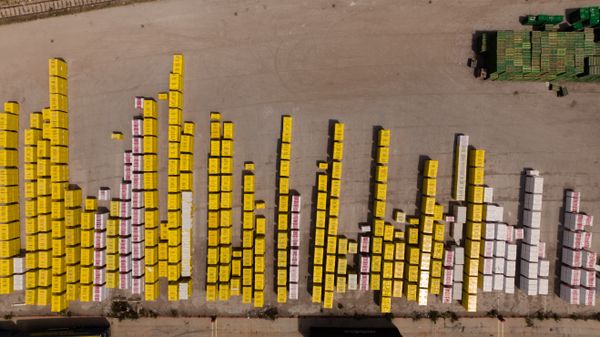
Return transport and import reconciliation are connected stages in tracking the goods. — General illustrative photo.
 Inspect received goods before making them available for sale
When the return arrives, keep it separate from available stock until inspection. Record the receipt time, box condition and item count, and photograph damage before discarding packaging. Then match the model, color, size, serial number and accessories, where applicable, against the sales file.
Classify the outcome as suitable for resale under the product’s conditions, requiring reconditioning, reduced in value or unfit for sale. An opened or damaged product does not become new merely by returning to the warehouse. Assign responsibility for updating its description, discounting it or arranging lawful disposal, with a report explaining the decision.
For damage potentially related to carriage, check the claim deadline and compensation terms and request a report and evidence before they are lost. Expected compensation does not automatically become collected revenue; pursue the claim separately from the customer’s rights. Nor does warehouse acceptance of the box prove closure of the import procedure. Check both in the case file.
 Calculate loss and cash needs without counting the product twice
Assume a hypothetical sale for four thousand lira that is fully refunded. The product cost one thousand two hundred lira and returns undamaged to inventory at the same value, without a write-down. Net revenue is therefore zero, while the product’s value is not a final loss in this example: it remains an inventory asset. Assume no additional tax, compensation or recovered charges.
Unrecovered expenses are six hundred lira for the original transport, eight hundred for the return, one hundred and twenty for payment processing, and one hundred and fifty for storage and inspection. They total one thousand six hundred and seventy lira. Total cash spent on the product and these expenses is two thousand eight hundred and seventy; under the assumptions, the difference of one thousand two hundred lira is represented by the returned inventory.
Do not confuse this with the cash required to execute the refund. If the product purchase, original transport and payment fee have already been paid, you subsequently need four thousand to refund the customer, eight hundred for return transport and one hundred and fifty for storage and inspection: 4950 lira. This is the cash requirement for that stage, rather than an additional loss on top of the earlier expenses.
| Hypothetical item | Value in lira | Treatment in the example |
|---|---|---|
| Sale followed by a full refund | 4000 − 4000 = 0 | Net revenue is zero |
| Product returned undamaged | 1200 | Returned to inventory; no additional loss |
| Original shipping | 600 | Unrecovered expense |
| Return shipping | 800 | Unrecovered expense |
| Unrecovered payment fee | 120 | Unrecovered expense |
| Storage and inspection | 150 | Unrecovered expense |
| Calculated operating loss | 1670 | 600 + 800 + 120 + 150 |
If the product becomes unusable and its value falls to zero without compensation, add 1200 lira, bringing the loss in this example to 2870 lira.
Close four separate statuses within one case file
Use four closure fields for a return: customer, transport, customs and accounting. The customer may receive a refund before transport is complete, or the parcel may return while an adjustment document is still needed. Show outstanding tasks and their owners instead of one indicator implying that everything is finished.
For a refund, retain the reference, amount, currency and date, and distinguish submitting the request to the payment provider from confirmation that it was executed. If a card dispute or platform refund appears concurrently, check the amount actually refunded before issuing another refund. For invoices and inventory, the accountant determines the appropriate document and treatment of the sale or returned portion according to the business’s circumstances.
After closure, classify return reasons and losses by product and country. Choose a concrete improvement in disclosure, sizing, packaging or carrier service, then measure its effect.
| Closure status | Evidence required internally | What is insufficient on its own |
|---|---|---|
| Customer resolution | Refund reference or documented lawful solution | Saying the order was canceled |
| Transport completed | Returned delivery or documented final procedure | Creating a return label |
| Customs completed | Closure and processing of required documents | The box arriving at the warehouse |
| Accounting and inventory | Financial document and product valuation report | Deleting the sale from the dashboard |
Frequently asked questions and return closure checklist
Does refusing delivery automatically send the parcel back to Türkiye?
Do not rely on that. Ask the carrier for the parcel’s location, options, deadline and return cost, then authorize the appropriate action in writing. It may remain in storage or require a document or authorization before moving.
Does a product’s return mean destination duties will be refunded?
That is not automatic. Recovering foreign duties is a separate procedure depending on the country, importer, declaration, reason and documents. Do not deduct an expected recovery from return costs before confirming entitlement and execution, or promise it to the customer without verification.
Should I delete the invoice and restore the item to inventory as soon as I issue a refund?
Handle the tasks separately. The accountant determines the adjustment document, the team establishes the product’s condition and value after receipt and inspection, and the carrier follows up on reimport closure. A financial refund alone does not prove that the item has returned or is fit for sale.
 I identified the shipment’s location, case type and applicable rights. I requested the carrier’s options, costs and deadline and approved the route. I collected the sale, export, reason and identity documents. I coordinated reimportation and benefit adjustments with the specialists. I documented the refund, product inspection and value without counting costs twice. I closed the customer, transport, customs and accounting statuses with linked documents.
 Related topics
 Micro-Exports from Türkiye: BGB, ETGB, Invoices and Export Evidence
- Selling from Türkiye to Arab Markets: Market and Entry Strategy
- Shipping from Türkiye to Saudi Arabia: Personal and Commercial Imports
- Shipping from Türkiye to the UAE: Importers, Customs and Free Zones
- International Pricing from Türkiye: Landed Cost, Currency and Margin
- Shipping and Return Policies in Türkiye: Rights and Practical Procedures
- Refunds and Chargebacks in Türkiye: The Merchant Evidence File
- Reconciling Store Sales in Türkiye: Fees, Refunds, Payouts and Cash Flow
- Order Fulfillment in Türkiye: Packing, Handover, Damage and Loss
Last edited by a moderator: