

- Joined
- Nov 2, 2025
- Messages
- 282
- Reaction score
- 0
- Points
- 16
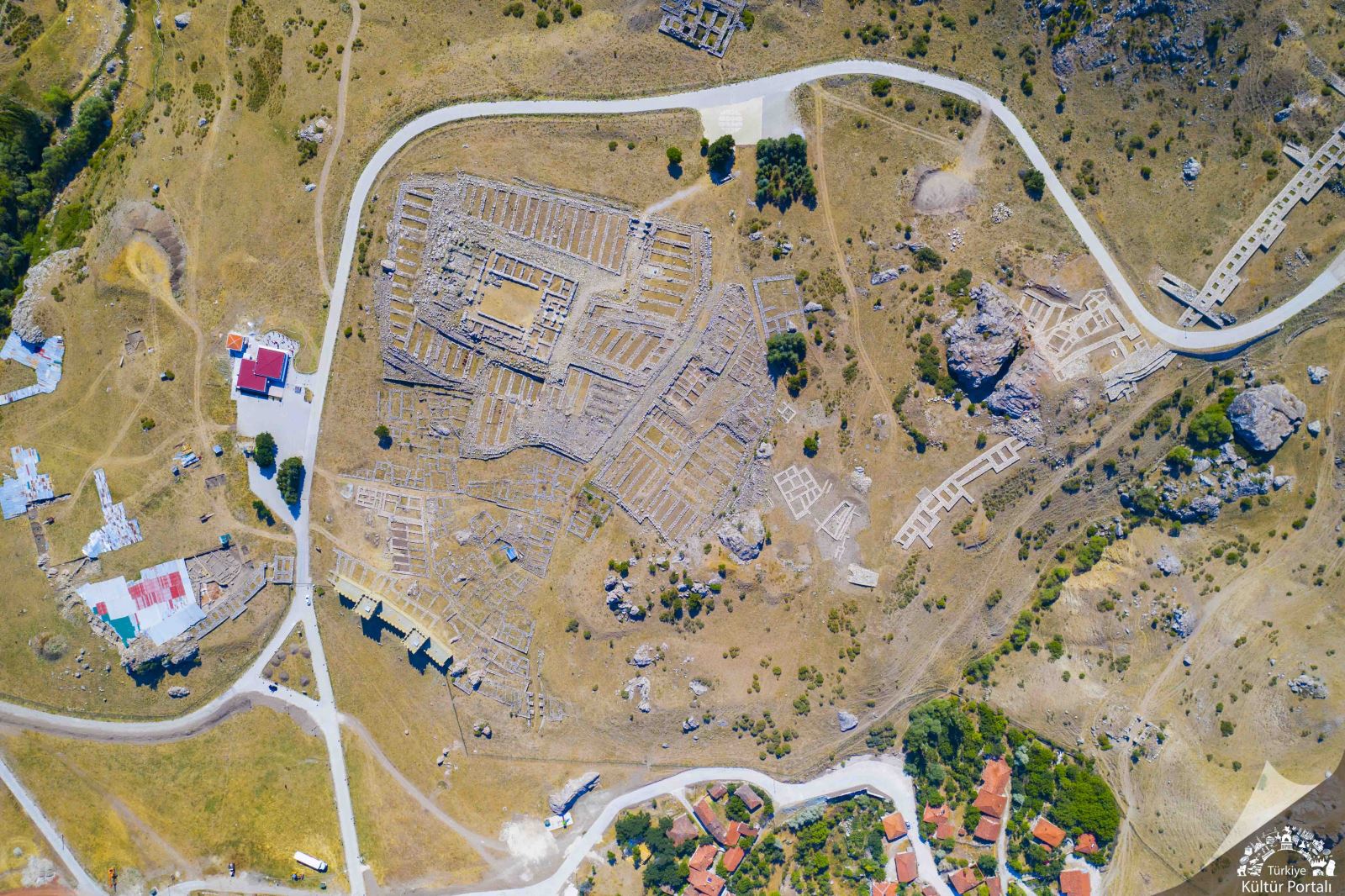
The remains of Hattuşa, the ancient Hittite capital at Boğazkale in Çorum province.
In the inland Black Sea region, Çorum province preserves one of Anatolia's most important concentrations of Hittite archaeology. Hattuşa lies in Boğazkale district, while Alacahöyük is in Alaca district. These are separate sites within Çorum province. Museums complement both, placing gates, walls, temples, sculpture and small finds within the history of a state, a society and everyday life across successive periods.
 Hattuşa, the Hittite capital
Hattuşa was the capital of the Hittite Empire during the second millennium BC. Its remains occupy rising ground, with walls, gates, temples and administrative and residential areas. Their extent reveals a substantial city serving many functions. The surrounding heights and slopes help explain the defences and the relationship between the city's different parts and the terrain.
Inscribed on the World Heritage List in 1986, Hattuşa is significant for its urban planning, architecture, fortifications and written evidence. Its best-known monuments include the Lion Gate, King's Gate and Sphinx Gate, each with its own position and features. These gateways had defensive and symbolic roles. Inscriptions and finds reveal a state with extensive political and religious connections across the ancient world.
 Yazılıkaya and the written archives
The rock sanctuary of Yazılıkaya lies near Hattuşa, outside the city walls. Reliefs of figures and deities appear in natural chambers among the rocks, revealing aspects of Hittite religious thought and the use of the landscape for ritual space. Unlike the city gates, these carvings concern symbolism, ceremonies and representations of divine groups and kingship.
Cuneiform tablets discovered in the area are fundamental to understanding the Hittite state. They include laws, treaties, correspondence, and religious and literary texts, with collections now held in several museums. Written records complement what walls alone cannot explain, revealing specific voices and functions associated with administration, belief and relations between states.
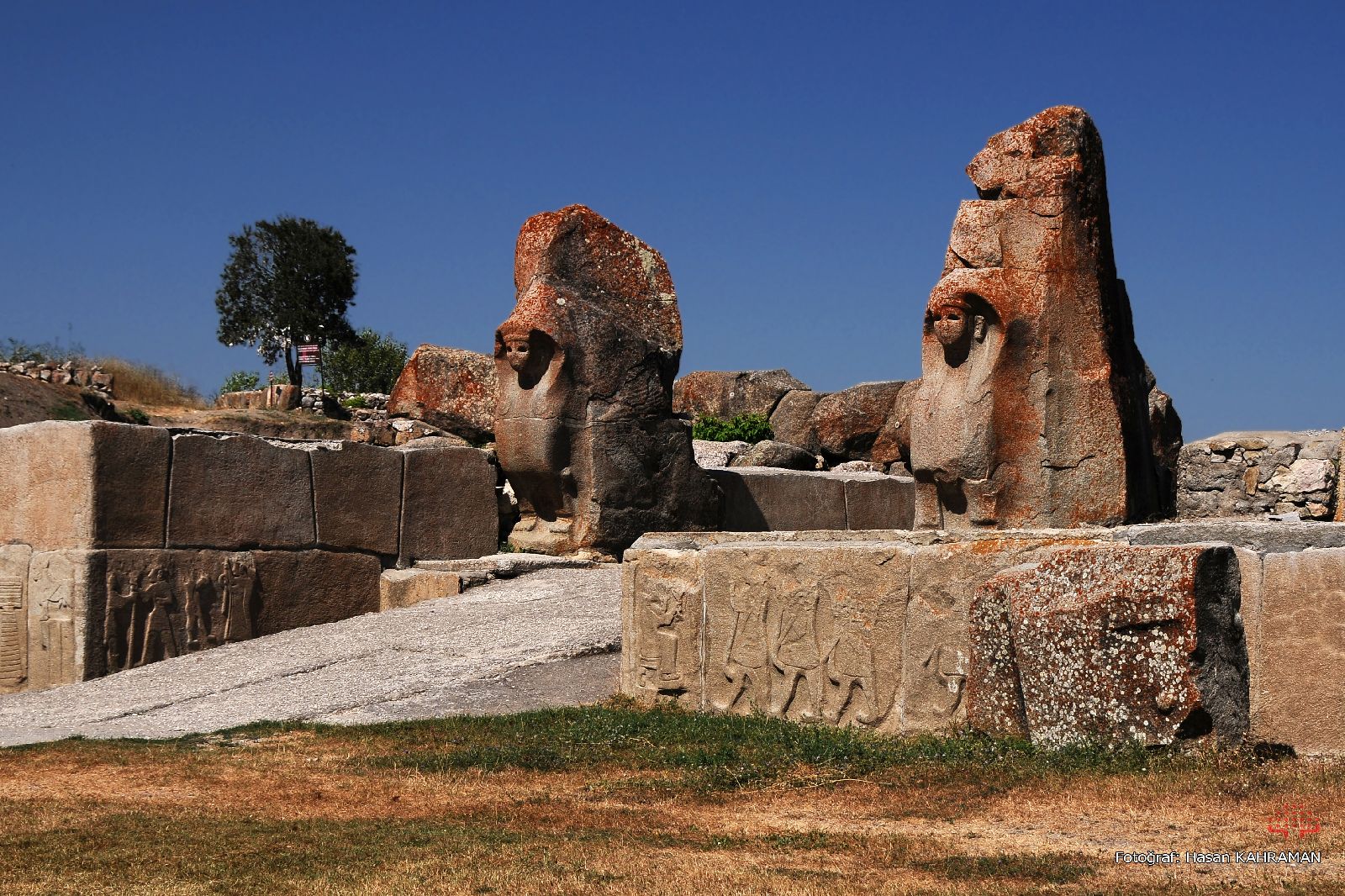
The ancient Sphinx Gate at Alacahöyük in Çorum province.
 Alacahöyük and the period before the Hittites
Alacahöyük contains several layers of settlement and is known for its Sphinx Gate and Hittite stone reliefs. Figures, animals and ritual scenes help explain the role of public art in important buildings. Its gateway has a distinct identity from those at Hattuşa, despite the two sites' shared place within Hittite history in Çorum province.
Excavations also uncovered rich Early Bronze Age graves associated with the Hattian culture that preceded the Hittites. This distinction matters when interpreting objects: some finds belong to earlier communities. The successive layers reveal both change and continuity, while metalwork, vessels and decoration illuminate the development of crafts, rituals and local authority.
 Museums, villages and the regional setting
Çorum Museum holds collections from numerous sites in the province, including archaeological finds, evidence of later periods and local heritage. Boğazköy and Alacahöyük museums complement the nearby sites, helping visitors connect buildings with the objects used within them. Labels are particularly useful for distinguishing when an object was discovered, when it was made and where it originally belonged.
The archaeological sites stand within a landscape of villages, fields and uplands, giving them a clear geographical setting. Rural life continues around the remains, with farming and modern homes beside the mounds that preserve earlier settlement. This completes the picture of Çorum as an inland province combining major archaeological heritage with a contemporary city and an active countryside.
 Practical notes
Hattuşa is extensive and its terrain differs from museum galleries. Check which areas are accessible and observe route boundaries. Do not climb walls or touch reliefs. Read signs distinguishing original remains from reconstructions. Prepare for summer heat, cold and wind at exposed sites, and follow museum photography instructions.
 Related topics
- Amasya 2026: The Yeşilırmak River, Yalıboyu Houses and Harşena Castle
- Amasya 2026: Museums, the Bimarhane and Bayezid II Complex
- Merzifon and Gümüşhacıköy 2026: Heritage and Countryside
- Lake Boraboy, Taşova and Suluova 2026: Water and the Plains
- Tokat 2026: The Castle, Gök Medrese, Taşhan and Historic Houses
- Niksar, Erbaa and Reşadiye 2026: Valleys and Heritage
- Zile, Turhal and Pazar 2026: Castles and Ballıca Cave
- Ereğli, Devrek and Filyos 2026: Archaeology, Crafts and the Coast
- Kastamonu 2026: Castle, Clock Tower and Museums
Last edited by a moderator: