

- Joined
- Nov 2, 2025
- Messages
- 282
- Reaction score
- 0
- Points
- 16
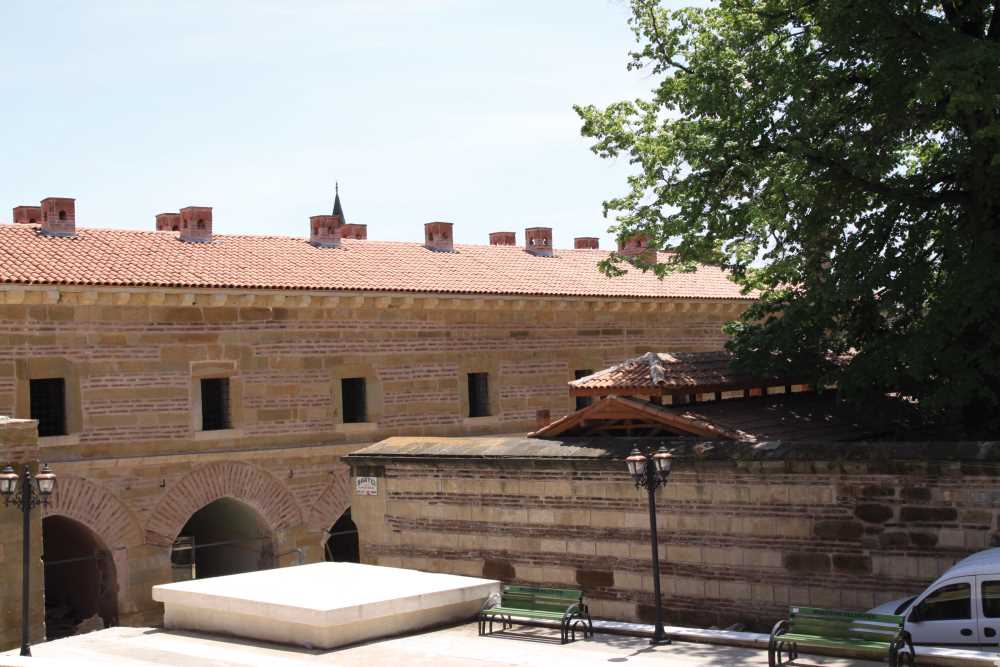
The historic Taşhan caravanserai in Merzifon, with its stone walls and arcades.
Merzifon, Gümüşhacıköy and Hamamözü reveal a side of Amasya Province beyond its riverside capital. They combine towns with historic markets, caravanserais and mosques with agricultural plains and slopes rising towards woodland. The landscape differs from Amasya city's narrow valley, highlighting connections between settlement, rural trade, agricultural production and education. Its built heritage preserves traces of several periods of Anatolian history.
 Merzifon and Its Historic Centre
Several monuments stand close together in central Merzifon, demonstrating the town's importance in commerce and civic life. Kara Mustafa Paşa Mosque, the bedesten and Taşhan illustrate the relationship between worship, market and caravanserai within the old urban fabric. The mosque's dome and interior decoration, together with historic paintings on its courtyard fountain, make craftsmanship and ornament a visible part of the centre's heritage.
The town also preserves buildings associated with Sultan Mehmed Çelebi. Old streets and façades show the transition from large public buildings to smaller homes and shops. Their proximity helps explain Merzifon's role as a centre serving its agricultural hinterland, revealing the original functions of an inland town through several connected monuments.
 Caravanserais and Covered Markets
Merzifon's Taşhan is an Ottoman caravanserai arranged around an inner courtyard, with chambers, arcades and substantial stonework. Its position near the mosque and bedesten reflects the organisation of trade and the needs of goods and merchants. The courtyard demonstrates how circulation, storage and transactions were brought within a building with a clear entrance and a protected interior.
The bedesten represents another form of covered-market architecture, with domes and sturdy walls creating a different environment from open markets. Gümüşhacıköy also has a historic bedesten, giving both towns examples of markets tied to the local economy. Their layouts and entrances, as well as their façades, express ways of trading and organising work.
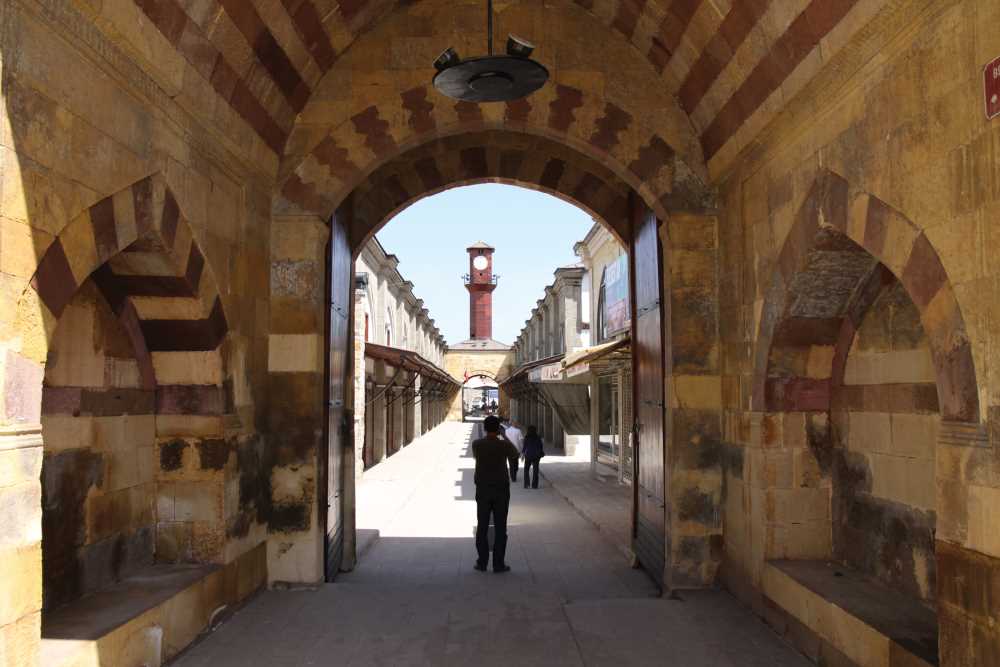
The historic bedesten and clock tower in Gümüşhacıköy.
 Gümüş and Haliliye Medrese
In Gümüş, within Gümüşhacıköy district, Haliliye Medrese is a prominent building dating from 1415. Rooms and classrooms surround its courtyard, with stonework and timber porticoes whose present appearance partly reflects later repairs. The building illustrates the place of religious education within the town, complementing the commercial architecture with a scholarly institution.
The area preserves mosques, bathhouses, a clock tower and other monuments connected with the history of Gümüş. Their variety reflects the continuity of local life. Different in scale and function, they share a place within the civic fabric and residential neighbourhoods. Relating the medrese to the surrounding town helps explain the links between education, work and charitable endowment that are central to its historic identity.
 Villages, Forests and Hamamözü
Vegetation around these towns changes with elevation and the aspect of the slopes. Tavşan Mountain near Merzifon has beech woods alongside other tree species, while pine and oak occur in the uplands around Gümüşhacıköy. These form a natural setting for fields and villages, showing how the province's countryside combines cultivated plains with wooded slopes.
Hamamözü is known for its thermal resources and bathing heritage, with pine and oak woodland in parts of its surroundings. Warm water belongs to both the geography and social memory of the place. The town also has a local sporting and wrestling heritage. Villages, fields and forests complete a picture of western Amasya Province as a landscape with several distinct urban centres.
 Practical Notes
Some historic buildings retain religious or educational uses; follow entry instructions and respect the privacy of their users. Check access to caravanserais and medreses during restoration. Respect villages and private farmland, and avoid entering buildings that are not open to visitors. Thermal water should not be interpreted as a guarantee of medical benefit.
 Related topics
- Amasya 2026: The Yeşilırmak River, Yalıboyu Houses and Harşena Castle
- Amasya 2026: Museums, the Bimarhane and Bayezid II Complex
- Lake Boraboy, Taşova and Suluova 2026: Water and the Plains
- Tokat 2026: The Castle, Gök Medrese, Taşhan and Historic Houses
- Niksar, Erbaa and Reşadiye 2026: Valleys and Heritage
- Zile, Turhal and Pazar 2026: Castles and Ballıca Cave
- Çorum 2026: Hattuşa, Alacahöyük and Hittite Museums
- The Kastamonu Coast and Daday 2026: İnebolu, Cide and Abana
- Safranbolu 2026: Ottoman Town, Houses and Historic Markets
Last edited by a moderator: