

- Joined
- Nov 20, 2025
- Messages
- 221
- Reaction score
- 0
- Points
- 16
You can taste plenty of food in Türkiye and finish the day remembering only that you were full. Or choose three small stops and remember the first bite’s crunch, the main dish’s texture and the final sweet taste. A self-guided food walk gives you that freedom: you set the food quantity, time and distance, and change plans when something appeals or the group needs a break.
 Choose an idea before choosing the venues
Give the day a simple question: how does bread differ between a baked dish and a wrap? How do seafood and grilled dishes compare? How does a meal progress from a savoury bite to a warm dessert? You need no specialist knowledge; the idea only needs to help you choose foods with noticeable differences.
Start with three stops: a modest first bite, a seated main meal, then dessert or a drink. Add a fourth only if appetite, comfort and time allow. This is not a checklist to complete; if the first venue serves more than expected, reduce the next order or postpone dessert.
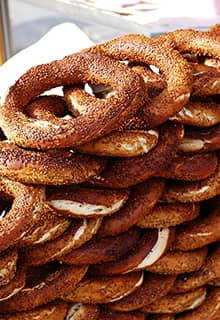
Simit: an example of a light start to a food walk.
 Keep the journey enjoyable
Choose an area where everyone can move comfortably and build the route around your sightseeing plans. Check the actual journey between stops, not the straight-line distance; hills, stairs and crossings can make a short transfer tiring. Find a nearby alternative offering a similar experience for each stop so a full venue does not consume your day with waiting.
If you include a ferry or another transport connection, make it an explicit part of the day and check the service for your intended time. The scenery may justify the journey, but crossing to the other shore for one bite requires thought about timing. For a first attempt, one coherent area allows more time for walking, tasting and sitting down.
 Give each stop a different role
| Stop | Role in the walk | Suggested order size |
|---|---|---|
| Start with a baked item or small bite | Introduce a distinct texture | A small piece or an agreed shared order |
| Main dish | Explore a cuisine or preparation | A portion suited to appetite with limited sides |
| Dessert or drink | Finish differently from the main meal | Shared tasting or individual order, depending on size |
| Optional stop | Try something that sparked curiosity | Decide at the time after considering fullness |
These are planning suggestions, not fixed portions for every restaurant. Ask about serving size and sharing. Different cooking styles create variety: three dough-based filled dishes may feel more repetitive than a baked item, fish and dessert, even with three different names.
 First stop: start with a memorable bite
Choose something you can taste without turning it into a full meal. This might be simit with tea or a small amount of börek after checking its filling. Taste the first bite on its own, then notice the effect of cheese or a drink if added. For a group, do not automatically order a large quantity per person; establish the size first, then decide whether to share using suitable utensils.
Allow time afterwards for a walk or nearby visit according to the group’s comfort. There is no required number of minutes between stops. The right pace preserves appetite and allows children or older people to sit when needed.
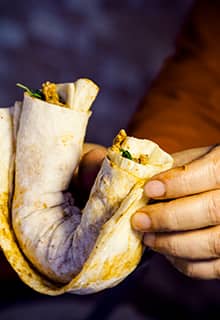
Tantuni: an illustration of a savoury stop where a portion could be shared.
 Main meal: the focal point
Make the second stop the place where you spend a little longer and explore how a dish is served. In Istanbul, for example, choose a particular fish meal or a lokanta’s dish of the day, then check its ingredients, size and accompaniments. If it already contains plenty of bread or rice, consider what starters would add before ordering them.
In Adana, you might start with a small piece of sıkma if available, have Adana kebabı for lunch, and taste a local dessert later. This illustrates an order of flavours; it does not assume the dishes are next to each other or available at every hour. Choose actual nearby stops and confirm the dish and serving time for your day.
 Dessert: choose the difference you want
After a main meal, a little baklava may be enough to appreciate the pastry layers and filling, or a milk pudding if you prefer another texture. For künefe, ask about size, preparation time and serving style; it offers a different experience from a sweet taken directly from a display. Avoid ordering three large desserts simply because their names are famous.
Ask about nuts, milk and any other ingredient that matters to the group before sharing. Coffee or tea without dessert can be the final stop if everyone has eaten comfortably. That choice leaves another dish to discover on a day when you have more appetite.
 Give everyone a role and a choice
Agree beforehand on dishes everyone accepts and a suitable main meal for children, then make tasting optional. One person can follow the route, another read the menu and a third note dishes you enjoyed. This simple division avoids starting the discussion anew outside every shop.
Do not delay a child’s usual meal for a distant stop, and bring what your family needs for comfort. If anyone has an allergy or dietary restriction, ask each kitchen about its own dish and preparation; information confirmed at the first venue does not automatically apply to the other stops.
 Phrases for a flexible food walk
 Küçük porsiyon var mı? — Is a small portion available?
 Paylaşmak için iki tabak alabilir miyiz? — Could we have two plates for sharing? Bir porsiyon kaç parça? — How many pieces are in a portion?
 İçinde neler var? — What ingredients are in it?
 Paket yapabilir misiniz? — Could you pack it to take away?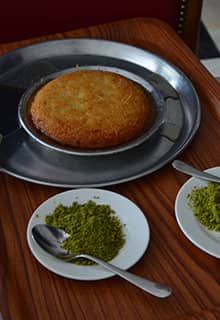
Künefe: an example of a dessert stop to finish the walk.
 Three notes to enrich the experience
After each stop, write the dish name, the most noticeable texture or flavour, and what you would change next time. You might find you prefer the bread on its own, that half a portion would suffice or that a dish deserves a longer visit. A menu photograph preserves the name; your note preserves the experience.
At the end of the day, discuss which bite stayed in your memory rather than how many places you visited. Choosing distance, quantities and breaks carefully creates a story of changing flavours. In the next city, repeat the idea with new dishes and what you learned from the first day.
 Related Topics
 Comparing Menus and Prices in Türkiye: Calculate the Whole Meal
  Vegetarian Food and Allergies in Türkiye: Questions to Ask Before Ordering Restaurants and Cafés in Gaziantep: From Morning Beyran to Baklava Restaurants and Cafés in Mardin: Kibbeh, Spices and Stone Courtyards
  Restaurants and Cafés in Kayseri: Mantı, Yağlama and Talas
  Everyday Lokantas in Türkiye: Choosing from the Day’s Trays
  Ocakbaşı Restaurants in Türkiye: Grills and Fireside Seating
  Fish Restaurants in Türkiye: Choosing the Fish, Weight and Cooking Method
  Terrace Cafés and Views in Türkiye: Choose Your Table and Timing
Last edited: