
 Urban Redevelopment in Türkiye: Buy Documented Rights and a Clear Delivery Plan
A seller may present an old apartment as an opportunity because the building ‘will be redeveloped soon’. Yet owners’ wishes, an official risk report, an approved decision, a funded agreement and a permitted project under construction are very different stages. You could buy an occupied home and lose its use before the replacement is ready. Buying a property proposed for rebuilding in 2026 therefore requires understanding the stage, rights, costs and timing together, rather than relying on an attractive drawing of the future building.
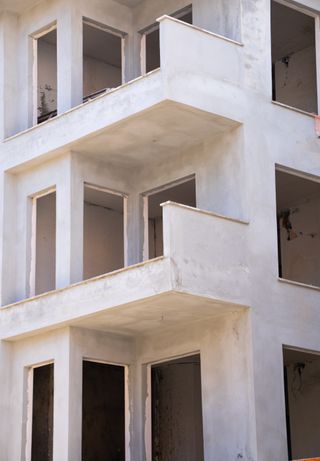
Archival illustration of construction in Antalya, dated 20 November 2022; it does not establish the condition of a property discussed. Photo: Annabel Ritson / Pexels.

 Establish the actual stage before valuing it
First ask which document makes this a redevelopment project. An undocumented meeting or contractor’s visit indicates a possibility, not a fully established project. If an official report or registry entry exists, establish what is final, what still requires action or may be challenged, and which authority handles the file. Different routes may apply according to the area and property; do not group them under one label.
| Stage | Document required | What remains uncertain |
|---|---|---|
| Idea or negotiation | Meeting minutes and written offers | Agreement, funding and timing |
| Official risk designation | Report, notices and current registry entry | Replacement scheme and obligations |
| Owners’ decision | Minutes, ownership shares and terms | Remaining procedures |
| Developer agreement | Agreement, schedules and safeguard | Permit, construction and handover |
| Construction underway | Permit and progress reports | Quality, costs and actual completion date |
Do not value a possible redevelopment as a completed new home. The price should reflect the right being purchased now, the obligations you will assume and the period without use of the property.

 Risk report, notices and current registry record
Under the at-risk-building procedure, licensed bodies carry out the assessment and the report is reviewed before the registry is notified for the appropriate entry. Request the report, its status, notices and current registry record; ‘they inspected it’ is insufficient. Ask about evacuation or demolition decisions, strengthening proposals and deadlines specific to this file. Notice dates can affect procedures, so your lawyer should review the original documents.
A visual inspection or private purchase report is not automatically an official risk designation under this procedure. If the report is not yet approved, do not assume every outcome is settled. Conversely, do not postpone examining obligations once proceedings are active. Your lawyer should explain what can be purchased or registered at this stage and any disposal restrictions affecting the offered share, rather than treating it as an ordinary apartment purchase.

 Read owners’ decisions by ownership share
Current official procedures provide for decisions in covered cases by an absolute majority weighted by ownership shares where unanimity cannot be reached, with notification procedures for dissenting owners and possible sale of shares under the prescribed process. This does not mean five votes against four always suffice. Establish the shares’ weights, legal scope, decision required and who signed or did not sign.
Request the ownership-share schedule, decision minutes and approved offer. Check for different terms for some units, side agreements or a change of developer after the meeting. Do not assume the seller’s earlier signature constitutes your automatic agreement to unseen terms. Have your lawyer review the effect of ownership transfer and how your obligations and authority are established. Any current share-sale procedure or notice also needs review: concealing it may change the transaction’s feasibility.

 Which unit will you receive after rebuilding?
Ask for the replacement unit’s number, floor, orientation, net area, balconies, included areas and land share. ‘You will get a similar apartment’ is not enough: unit count, layout, area and the developer’s allocation may change. A distribution schedule should connect the old unit to the new entitlement and show whether details are final or depend on municipal approval of the project.
| Right | Wording needing clarification | Verifiable detail |
|---|---|---|
| Apartment area | Approximately larger | Net and gross areas and measurement method |
| Floor and orientation | As allocated by the developer | Number, plan and criteria for changes |
| Parking and storage | Available to every resident | Defined right and registry status |
| Finishes | Luxury quality | Specifications and approved alternatives |
| Land share | Will not change much | Before-and-after ownership-share schedule |
If allocation depends on parcel consolidation or an approval not yet issued, specify what happens if that condition fails. Do not assign a certain value to extra floor area whose planning feasibility remains unconfirmed.

 Developer, land ownership and safeguards
Verify the contracting company’s legal name, registration, signatory’s authority, contact details and relationship with the owner or promoter. Completed-project visits help, but ask about actual delivery dates, defects and remedies rather than relying on marketing photographs. Professional registration or a contractor number alone does not establish liquidity for this project.
Review land ownership, mortgages, restrictions and the owners’ agreement with the developer, including the developer’s right to sell its allocation or create obligations affecting the project. Ask who issued the safeguard, for whose benefit, its amount, duration and claim conditions, and whether it remains effective until delivery obligations are closed. An undocumented ‘guarantee’ does not help recover funds or finish construction. Also establish how owners’ payments are recorded and project expenditure independently monitored.

Illustrative document signing; this is not the reader’s title registration, permit or specific transaction. Photo: Alena Darmel / Pexels.

 Costs you may have to bear
The arrangement may require cash from owners, allocation of units or floor area to the developer, or both. Review the full consideration: who pays for demolition, design, testing, permits, connections, finishes and shared areas? What happens if costs rise or the scheme changes? Do not accept broad ‘material-price differences’ wording without a calculation method, evidence, limits and clear dates.
Separate the new apartment’s costs from transition costs. An occupant needs moving, storage and alternative accommodation; a landlord loses rent while the home is unavailable. Financing and legal expenses may continue after demolition. Verify the programme, personal and property eligibility, city and application stage for any advertised support. Do not deduct assistance or an exemption from the budget before establishing eligibility. Possible support is not cash available to meet a payment due now.

 Link deadlines to defined events
‘Delivery within eighteen months’ needs a clear starting point: agreement signature, vacancy, site delivery to the developer or permit issuance? Months may separate those events. Set a sequence for the decision, evacuation, demolition, approvals, construction start, completion, occupancy certificate, registration and handover. Identify responsibility for each step and consequences if it is late.
Ask how justified and unjustified delays are distinguished and evidenced, and about information, inspection, compensation or termination rights under the agreement and law. A written penalty does not ensure immediate recovery from a developer with no assets or security. Combine deadlines with funding, safeguards and monitoring that reveal a stalled project early. Budget temporary accommodation for a period longer than the optimistic schedule.

 Example: purchase followed by redevelopment
All figures are hypothetical Turkish-lira amounts before tax, registration fees and financing. An old property costs TRY 3,500,000 and the project requires a TRY 900,000 cash contribution. The buyer budgets alternative accommodation at TRY 25,000 a month for eighteen months, TRY 50,000 for moving and storage, TRY 30,000 for independent inspections and advice, and a TRY 180,000 reserve. No assistance is assumed.
| Item | 18-month period | If extended to 24 months |
|---|---|---|
| Property purchase | 3,500,000 | 3,500,000 |
| Project contribution | 900,000 | 900,000 |
| Alternative accommodation | 450,000 | 600,000 |
| Moving and storage | 50,000 | 50,000 |
| Inspection and advice | 30,000 | 30,000 |
| Reserve | 180,000 | 180,000 |
| Total | 5,110,000 | 5,260,000 |
An extra six months adds TRY 150,000 for accommodation alone, before changes in rent or construction costs. Compare the result with a similar ready home, allowing for differences in area, rights, quality and timing. If the new home will be let, calculate income from handover in a condition fit for letting, not the purchase date. Lost rent during the wait is a separate consideration; avoid counting it twice in a cash-flow model that already includes vacant months.

 Compare a ready home with rights in a project
A standing home allows you to assess current use, neighbours and expenses, but may carry maintenance work or an unclear redevelopment process. An entitlement in a project depends on a future unit and other parties’ capacity to deliver. Compare more than advertised prices: assess cash required until each home becomes usable and how long that funding is needed.
| Criterion | Ready home with clear documentation | Property undergoing redevelopment |
|---|---|---|
| Start of use | After purchase and handover are completed | After the project stages |
| Establishing area | Measure the property and reconcile documents | Check the future entitlement and agreement |
| Cost | Purchase, furnishing and relatively identifiable maintenance | Purchase, contribution, waiting costs and reserve |
| Reselling quickly | Affected by the market and documentation | Also affected by project stage and obligations |
Choose redevelopment when you understand the risk and can fund it and tolerate the time involved, not simply because the price gap looks large. A ready home may cost more initially but offer clearer cash requirements and availability. A project needs a margin that reflects its actual obligations.

Illustrative residential interior; this is not the location of a property discussed in this guide. Photo: Max Vakhtbovych / Pexels.

 Documents to obtain before buying
- Current ownership record, offered share and restrictions.
- Risk report, status, notices and evacuation-related decisions.
- Owners’ minutes, ownership-share schedule and the offer voted on.
- Developer agreement, every schedule, safeguards and authorisations.
- Available plan, unit distribution, areas and included facilities.
- Owner’s contribution, payment schedule and cost-increase calculation.
- Permit and approval status, with incomplete steps identified.
- Construction schedule, starting event and required handover.
- Legal report on ownership transfer and the buyer’s obligations.
- Budget for alternative accommodation or lost rent and delayed completion.
Do not rely solely on the seller for these files without independent verification of decisive documents. Keep the latest version and its date. A redevelopment can change during your search, so the agreement should reflect the latest established position when you commit.
 Common mistakes in redevelopment offers
Mistakes include treating a risk report as a promise of a free new home or accepting ‘all owners agree’ without minutes and ownership shares. Another is valuing the future apartment using the largest area on the sales display when the owner’s agreement specifies less or leaves allocation unresolved. Support available to a particular person may also be marketed as an entitlement for every new buyer; programme conditions require checking.
Watch for agreements permitting increased contributions without a benchmark or unit changes without defined consent, and safeguards expiring before likely completion. Do not sign broad authority you do not understand in relation to the decision and agreement. Explain its purpose and limits to your lawyer, asking what evidence you will receive when it is used and how your rights are protected if the developer changes or owners dispute the scheme.
 Frequently asked questions
Must I wait for demolition to understand the property’s status?
Start with the report, registry entry and decision. Obligations and stages can affect you before demolition.
Is the majority based only on apartment count?
The official process weights ownership shares in covered cases. Review the minutes and legal scope with your lawyer.
Can government support be assumed in the feasibility calculation?
Include it only after checking eligibility, amount and application stage. Distinguish a promise from documented approval.
Does the agreement alone guarantee the new home?
Read it alongside permits, funding, safeguards and allocation, identifying what happens if delivery fails.
What is the most important question for the seller?
Request a written description of what you buy today, what you pay later and what you receive, with evidence for each part.
 Related topics
 Building Safety Before Buying in Türkiye: Earthquakes and the Limits of DASK Cover Building Permits and Occupancy Certificates in Türkiye: Identifying Unauthorised Work Valuing an Apartment in Türkiye in 2026: Price per Square Metre, Comparables and Neighbourhood Differences Housing Prices and Rents in Türkiye in 2026: Understanding the Indices Property Valuation and the Investment Value Certificate for Foreign Buyers in Türkiye Choosing a Neighbourhood for Property Investment in Türkiye: Demand, Transport and Resale Liquidity Checking a Turkish Title Deed Before Paying a Deposit: Mortgages, Attachments, Shares and Usufruct Negotiating Property in Türkiye: Comparables, Price and Transaction Terms Türkiye Property Guide Index: Buying, Due Diligence, Returns and Management
Last edited by a moderator: