

- Joined
- Nov 2, 2025
- Messages
- 282
- Reaction score
- 0
- Points
- 16
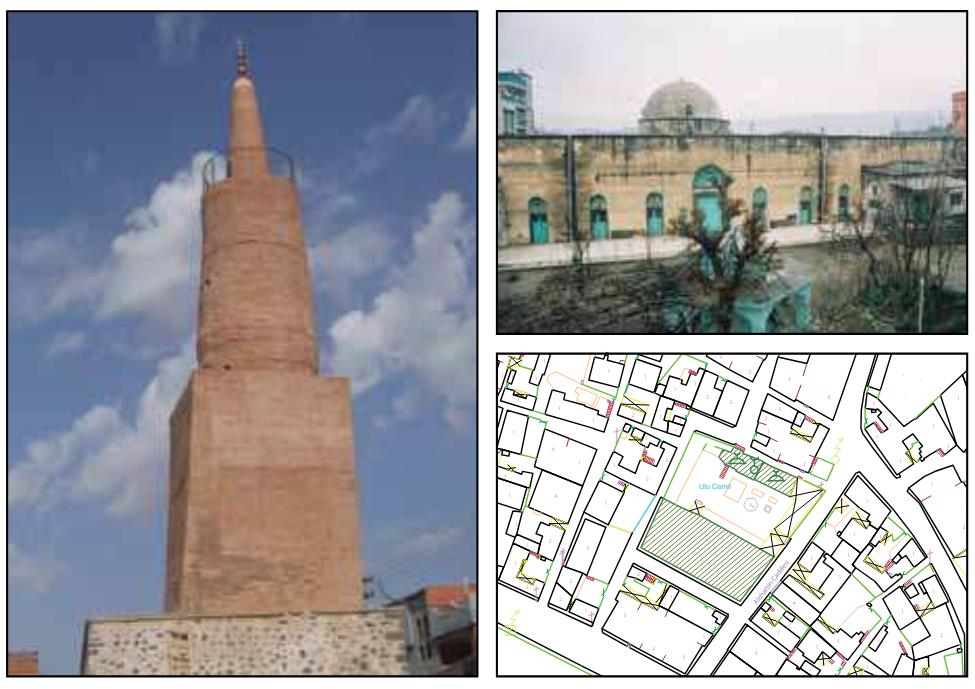
Views of Cizre's Great Mosque and minaret, with a plan of the complex.
Cizre's Great Mosque and Red Madrasa illuminate the city's religious and scholarly life. Combine them in a walk through the centre, allowing time for the courtyards, architecture and details of each building. Both belong to a living community, so fit your visit around their daily activity and include a break in the neighbourhood streets.
 The Great Mosque
Cizre Ulu Camii stands in Dağkapı neighbourhood. Its present form reflects additions and repairs over several periods, with an important phase dating to the twelfth century.
Look at the minaret, courtyard and the mosque's relationship with the surrounding streets. Seeing it within the fabric of the town helps explain how the building has been used over time.
 Where is the famous door?
The mosque is associated with an elaborate metal-clad wooden door and two dragon-shaped door knockers. The door and one knocker are held by the Museum of Turkish and Islamic Arts in Istanbul; the other knocker is in the David Collection in Copenhagen.
This distinction matters when comparing the building with objects transferred into museum collections. If you are interested in the decoration, study photographs of the mosque alongside information about the original object, distinguishing the history of the structure from that of its fittings.
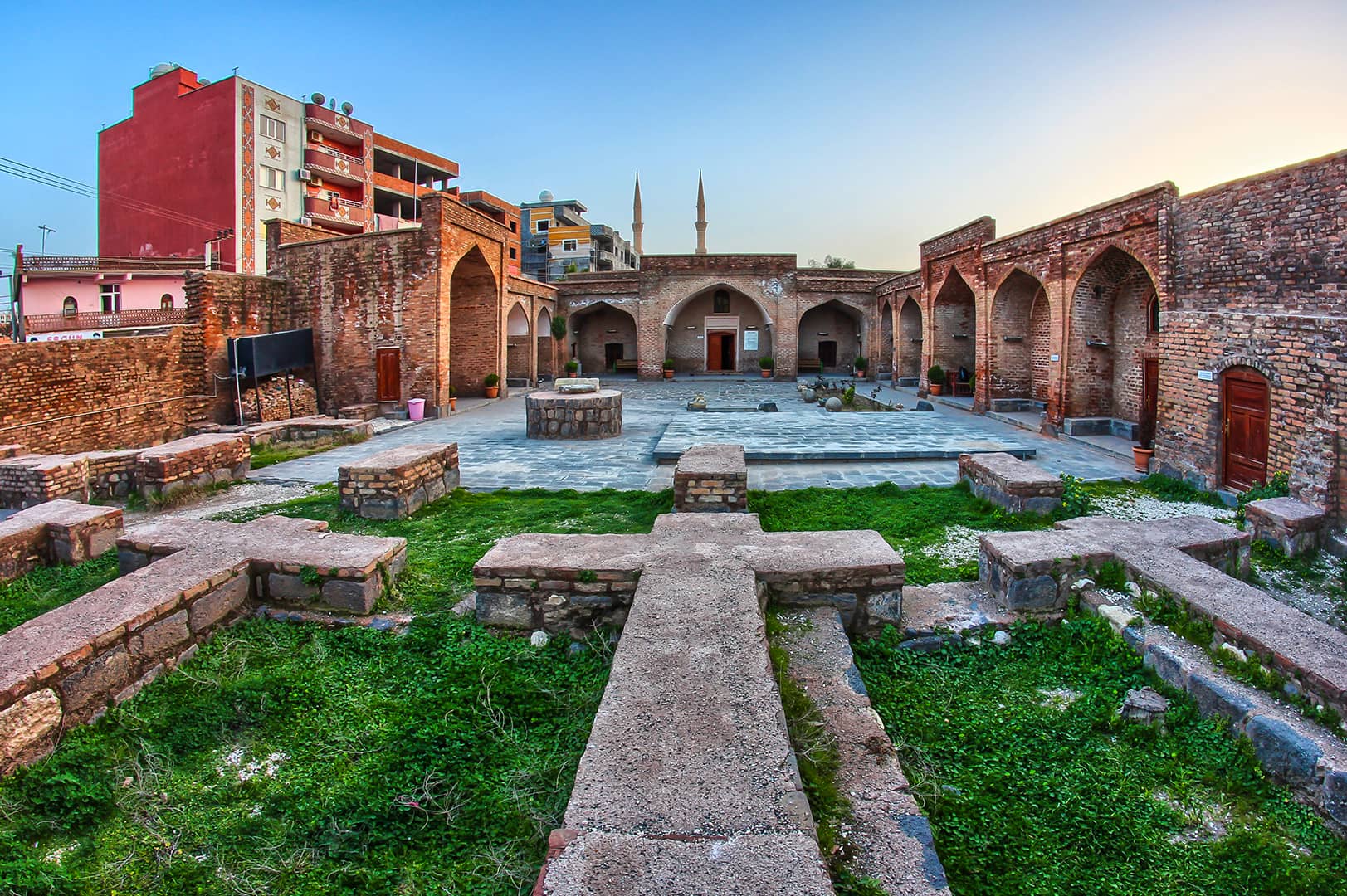
The red-brick construction of Cizre's Red Madrasa.
 Why “Red Madrasa”?
Kırmızı Medrese takes its name from its red bricks and is traditionally dated to the fourteenth century, although its precise construction date is debated. Associated with the education of regional scholars, it is notable for the contrast between the brickwork and its white-stone mihrab.
Its spaces are arranged around an internal courtyard. Take time to examine the arches and walls as well as photographing them: the different materials are fundamental to the building's character.
 The memory of Melayê Cizîrî
The madrasa is associated with Sheikh Ahmed al-Jazari, known in Kurdish tradition as Melayê Cizîrî, a poet and scholar representing Cizre's literary and Sufi heritage. His shrine is in the southern part of the building.
This poet is a different figure from Badi al-Zaman al-Jazari, renowned for engineering and mechanical devices. Distinguishing their fields and periods helps avoid confusion between similar names.
 An unhurried visit
Begin at the mosque outside the busiest prayer times, then continue to the madrasa and ask which areas visitors may enter. Respect spaces used for worship and education, and obtain permission before photographing people or indoor activities.
Save both Turkish names on your map to make asking directions easier. Allow a break for water and tea, especially on hot days, then continue to Cizre's literary sites if time permits.
 Related topics
 Cizre 2026: Mem û Zîn, Local Shrines and the Cultural Centre
 İdil and Öğündük 2026: Meryem Ana and Mor Yakup Churches
 Şırnak and Kasrik 2026: Arrival, the City and the Valley Pass
 Silopi 2026: Görümlü Bridge, Nuh Nebi Madrasa and Behnat Figs
 Güçlükonak 2026: Finik Ruins and Hesta Springs on the Tigris
 Beytüşşebap and Uludere 2026: Faraşin Plateau and Mountain Towns
 Şırnak 2026: Local Food, Şal Şapik and Kilims
 Şırnak: A Gateway to the Eastern Mountains and Local Culture
- Siirt: Local Life and Kurdish and Turkmen Cultural Heritage
Last edited by a moderator: