

- Joined
- Nov 2, 2025
- Messages
- 282
- Reaction score
- 0
- Points
- 16
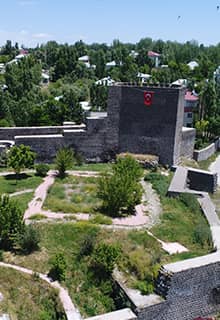
Malazgirt Castle's fortifications, shaped by several historical periods.
Malazgirt offers a focused historical outing, with its castle, victory monument and museum explaining the memory of the battle of 1071. Give this district of Muş a day of its own rather than adding it to a long tour of Muş city and distant rural sites. The aim is to connect the place with the event and understand the landmarks you see.
 Why Is Malazgirt Associated with 1071?
The Battle of Malazgirt, also known in English as Manzikert, was fought between the Seljuks and Byzantines and marked an important turning point in Anatolian history. Use that background to introduce the visit while remembering that the district's history extends beyond a single day. The castle and town reflect earlier periods and subsequent repairs and additions; the monument is a modern commemoration of the battle.
 The Castle in Its Urban Setting
Parts of Malazgirt Castle's fortifications survive after periods of deterioration and restoration. View the line of walls from a public position, then approach sections open to visitors. Climbing the walls is unnecessary: compare their height and position with nearby streets and buildings to understand the stronghold. Watch for uneven ground and loose stone.
 Visit the Museum Before Taking Souvenir Photographs
Malazgirt Museum opened in 2021. It covers the battle of 1071 and Turkish-Islamic history, alongside images, statues and objects from local life. Confirm that it is operating and check visiting hours before making a special journey. Choose several themes to explore inside, then connect them with the castle and monument instead of simply passing through the displays.
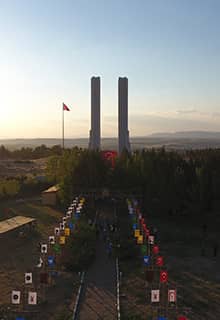
The Malazgirt Victory Monument and its two symbolic pillars.
 The Monument and Its Two Pillars
The Victory Monument stands within the Malazgirt Battlefield Historical National Park. Its design is associated with architect Mustafa Aslaner and his collaborators. The two pillars evoke a gateway into Anatolia. Take in the whole structure and its surroundings, then read any interpretation panels available. This helps distinguish the monument's modern symbolism from the castle's surviving historic fabric.
 Arranging the Stops
Begin with the museum if it is open, pause for food, then visit the castle and monument in an order that suits your route. If a site is closed, use the time for the town or a general view rather than entering an unprepared area. Save all three place names separately so a map search does not direct you to a different commemorative location.
 Choosing the Day
Access and visitor arrangements can change during commemorative events. Check local announcements if your trip coincides with a major celebration. For a quieter visit, choose an ordinary day and allow time between stops. Bring water and sun protection for open spaces, follow photography and pedestrian-area rules, and decide your departure time before becoming absorbed in the scenery or celebrations.
 Related topics
- Muş and Murat Bridge 2026: The City, Plain and Local Food
- Bulanık and Lake Haçlı 2026: The Plain, Lakeside Scenery and Esenlik Mosque
- Varto 2026: Kayalıdere, Hamurpet Lakes and Visitor Access
- Kiğı and Adaklı 2026: Stone Architecture and Bingöl Village Heritage
- Bingöl and Buban 2026: City Walk, Heritage and Rock Formations
- Solhan and the Floating Islands 2026: Location, Landscape and Visiting
- Bingöl by Season 2026: Karlıova Sunrise and Hesarek Skiing
- Bingöl: A Thousand Lakes and the Mountains of Eastern Türkiye
- Muş: Spring Flowers and Rural Life in Eastern Türkiye