

- Joined
- Sep 30, 2026
- Messages
- 47
- Reaction score
- 0
- Points
- 6
 How should we assess new signings in Turkish football?
A guide to tactical roles, playing time, statistics and settling into a team
A player scores on his debut and expectations rise. Another starts on the bench and questions emerge about the value of signing him. Assessing a transfer, however, requires following what the player offers in relation to his team’s needs and the circumstances of his involvement.
Forwards, playmakers, defenders and goalkeepers perform different tasks. Even two players in the same position may receive different instructions from their coach.
This guide explains how to assess newcomers to the Turkish league, using Batrakov, Aké and Nübel as examples. A worked calculation also shows how playing time affects comparisons.
 Last updated: 1 October 2026.
The examples illustrate criteria for observation and analysis. Each player’s assessment during the season must be based on his actual performances and opportunities to play.

 What need was the player signed to address?
Start with this question before comparing names or prices: what tactical problem does the team need to solve?
| Team need | What should we watch in the new signing? |
|---|---|
| Create more chances. | Receiving in useful spaces, defence-opening passes and cooperation with the forwards. |
| Improve finishing. | Movement in the box, shot selection and making use of available chances. |
| Reduce the danger from opponents’ attacks. | Positioning, cover, reading movement and handling individual contests. |
| Play out under pressure. | Creating passing angles, making quick decisions and combining with teammates. |
A player can help his team progress the ball without supplying the final pass. A forward may open space for a teammate. We should therefore relate each contribution to the player’s task within the system.


 Batrakov: how should we assess an attacking midfielder?
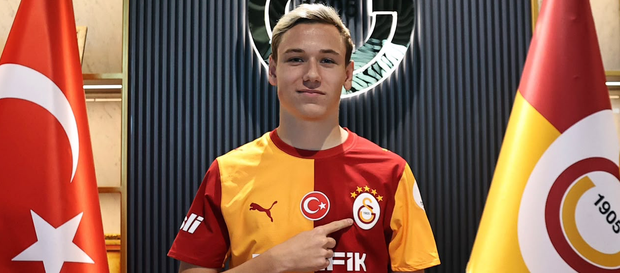
Aleksey Batrakov in his Galatasaray shirt at his summer 2026 presentation.
Galatasaray introduced Aleksey Batrakov as an attacking midfielder who usually operates behind the striker. That provides a starting point for understanding the tasks to watch during his appearances.
Three questions help assess this role:
- Where does he receive the ball? Does he find space between the opposition’s midfield and defence, or receive too far from the areas where he can influence play?
- What does he do next? Can he turn and advance, or find a teammate in a better position?
- How does he combine with those around him? Does his understanding with the striker and wingers improve as he plays more?
Goals and assists are useful indicators. Chance creation and the quality of his decisions under pressure complete the picture.
It is also worth watching what happens when possession is lost: does he help win the ball back, and does he remain connected to the team’s organisation?

 Nathan Aké: his actual position determines the assessment

Nathan Aké — archive image with Manchester City before his move to Fenerbahçe.
Manchester City confirmed Aké’s move to Fenerbahçe and highlighted his experience at centre-back and left-back. That versatility shows why we need to identify the position he occupies in a particular match.
| Role in the match | Important aspects to follow |
|---|---|
| Centre-back | Protecting central areas, covering behind teammates, reading through balls and aerial deliveries, and starting attacks. |
| Left-back | Defending the flank, coordinating with the winger and choosing when to advance and recover. |
How should we read a defender’s statistics?
His tackle count may rise because his team faces frequent attacks. It may be lower because his positioning prevents the ball from reaching dangerous areas. We should therefore examine the quality of the decision, where an intervention occurs and its outcome.
When assessing a defensive error, review the sequence: the player’s position, support from teammates, the space he was expected to cover and what happened before the ball reached him.


 Nübel: assessing a goalkeeper beyond clean sheets
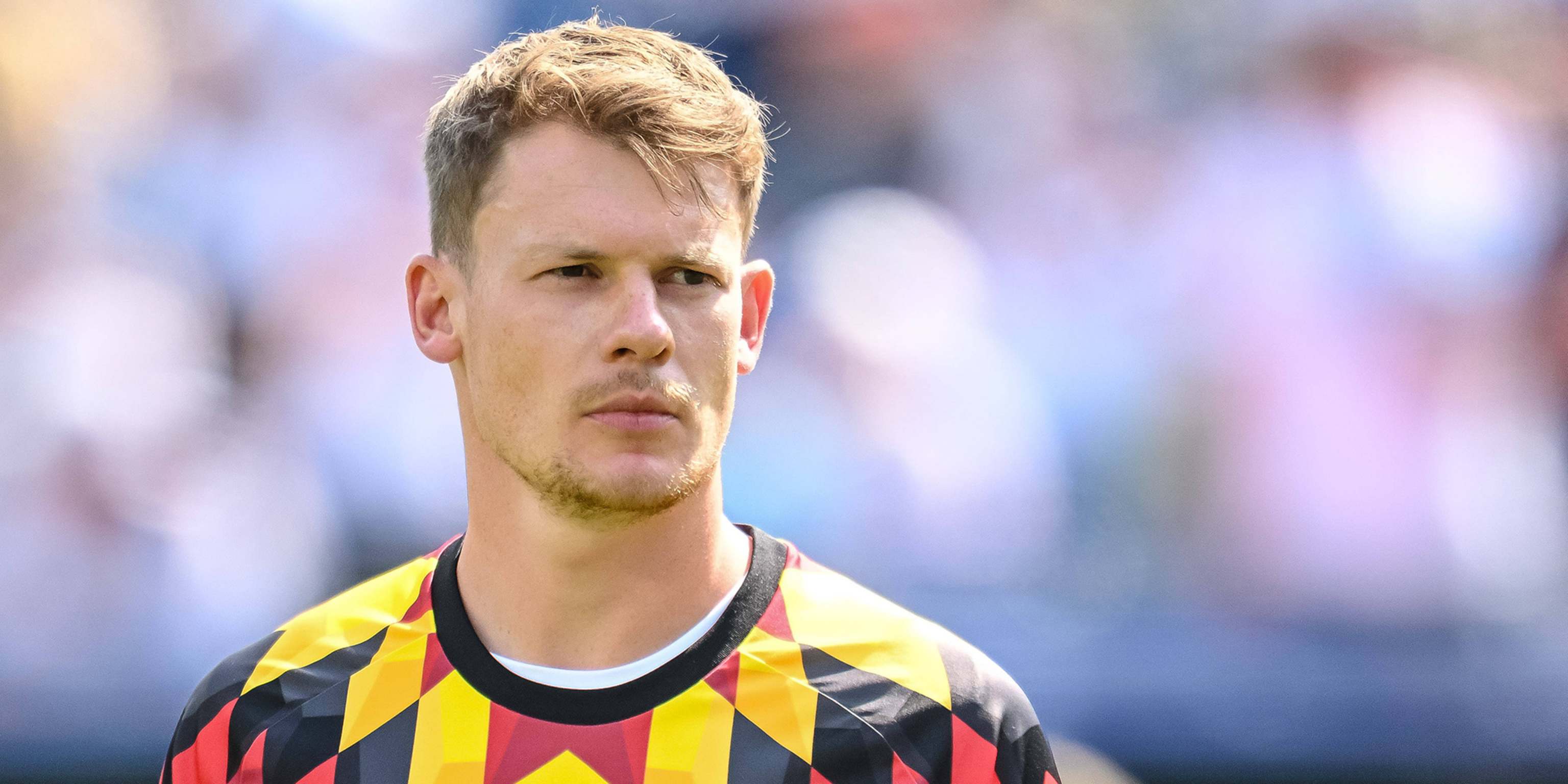
Alexander Nübel in the photograph published with FC Bayern’s announcement of his transfer to Beşiktaş on 8 July 2026. © Imago.
Beşiktaş announced Alexander Nübel’s signing in summer 2026. Following a new goalkeeper requires looking at the chances he faces and his cooperation with the defence.
| Aspect | Question to ask |
|---|---|
| Shot-stopping | How dangerous was the shot, from what distance and angle, and did he have a clear view? |
| Crosses | Does he time his decisions to come out well and deal with the ball appropriately? |
| Positioning | Does he adjust his position as the ball and defensive line move? |
| Building play | Does he choose a pass suited to the level of opposition pressure? |
A clean sheet reflects the team’s work too. A goalkeeper facing few chances operates in different circumstances from one repeatedly exposed to one-on-ones and dangerous shots.
Likewise, watching a goal helps explain why it was conceded. Was it a misjudgement, an exceptionally difficult chance or a problem in the defence’s organisation?

 Compare playing time before comparing totals
A player may make many brief appearances, while another plays fewer games but starts them. Appearance counts alone do not show the extent of a player’s opportunity.
For a numerical comparison, we can use a rate per 90 minutes:
Rate per 90 = contributions ÷ minutes played × 90.
A hypothetical worked example:
| Hypothetical player | Goals and playing time | Goals per 90 |
|---|---|---|
| Player A | Two goals in 180 minutes. | 1.00 |
| Player B | Three goals in 450 minutes. | 0.60 |
This rate helps account for playing time, but still needs context: sample size, chance quality, the strength of the opposition, penalties and the circumstances in which the player entered a match.
A high rate over a short period may change as involvement increases. This is why consistency matters.

 What do statistics tell us, and what context should we add?
| Measure | What helps explain it? |
|---|---|
| Goals | Playing time, chances available, movement and goals from penalties. |
| Assists | Chances created, their quality and how well teammates convert them. |
| Pass completion | The direction and difficulty of passes, where they are played and the pressure faced. |
| Defensive interventions | How often the team is attacked, where the action occurs and its outcome. |
| Clean sheets | The quality of the team’s defending and the number of dangerous chances allowed. |
Check how the publisher defines each measure. Statistical providers may calculate some figures differently, affecting comparisons.
A practical approach combines a reliable figure, observation of the action and an understanding of the player’s role.

 How should we assess adaptation and changes of role?
Joining a new team brings different relationships with teammates and new tactical demands. We can follow a player’s integration by watching:
- How clear his position and responsibilities are, both in possession and after losing the ball.
- His understanding with nearby teammates.
- Improvement in the speed of his decisions under pressure.
- Useful contributions repeated across different matches.
- His ability to perform his role as match circumstances change.
When playing time changes, record the circumstances and any explanation offered by the club or coach. Rotation, fitness and competition for a place should be understood before interpreting the decision.
Limited minutes make some judgements less conclusive. If a player has not received sufficient opportunity, asking about his chances and role is more useful than delivering a final verdict on his ability.

 When does an observation become stronger evidence?
An observation carries greater weight when it recurs in different circumstances. If you notice good passing under pressure, follow it against different opponents. If you see a weakness in covering, check whether it recurs and consider the role the player was performing.
To write a useful assessment:
- State the task you are assessing.
- Identify a match or passage of play that supports your observation.
- Check whether the behaviour recurs in other appearances.
- Separate the player’s performance from the team’s collective performance.
- Explain what needs further observation.
Keep the conclusion specific: “His ability to receive between the lines is improving” or “He needs to judge when to come for crosses more accurately”. Such observations identify the aspect being discussed and make its development easier to follow.

 A simple record for following any new signing
| Item | What should you record? |
|---|---|
| Position and role | The task the player performed during the match. |
| Involvement | Minutes played and whether he started or came on as a substitute. |
| Match circumstances | The opposition, score when he played and any influential circumstances. |
| Positive contribution | A clear action or behaviour that helped the team. |
| Area for improvement | A specific observation supported by an example or recurring pattern. |
| Current assessment | What his performances show so far and what requires more playing time to assess. |
This record makes following new signings more systematic and grounds discussion in what they contribute on the pitch and how their roles develop.
 Discussion:
What do you focus on when assessing a new signing: statistics, tactical role or adaptation to the team? Which position requires the most detailed viewing to assess well?
 Related topics

 Turkish League Transfer Guide 2026–2027: Windows, Registration, Loans and European Squad Lists
- Turkish League Transfers, Summer 2026: Major Signings, Contracts and Tactical Impact
-
 Turkish Clubs’ Departures for Europe, Summer 2026: Transfers, Income and Squad Impact
- Süper Lig after Six Rounds: Standings, Top Scorers and September 2026 Review
-
 Turkish Süper Lig 2026–2027: Clubs, Competition Format and Season Dates
-
 Türkiye’s UEFA Ranking 2026–2027: Coefficient Points and European Places
- Turkish Süper Lig Transfers 2025–2026: Major Signings, Contracts and Fees
-
 Beşiktaş 2026–2027: Squad, Star Players’ Roles, Opening Results and Season Challenges
- Fenerbahçe 2026–2027: Squad, Star Players’ Roles, Opening Results and the Competition Ahead
Last edited by a moderator: