

- Joined
- Nov 2, 2025
- Messages
- 282
- Reaction score
- 0
- Points
- 16
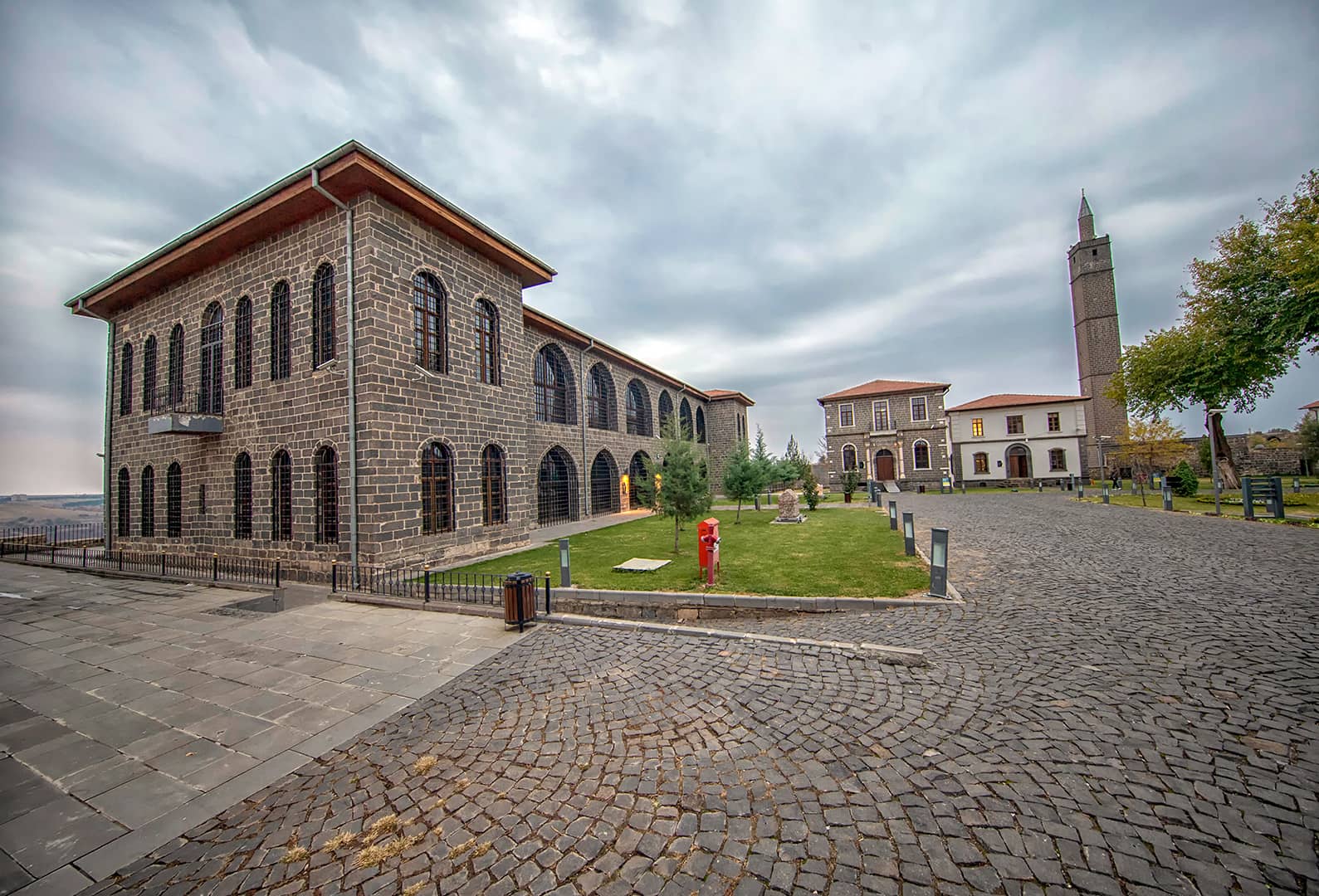
The historic İçkale complex in Diyarbakır.
İçkale, the inner citadel, provides an opportunity to understand Diyarbakır from within its historic complex. The area combines buildings adapted for exhibitions and culture, an archaeology museum and Amida mound, associated with the city's beginnings. Give it a focused visit, reading the interpretation rather than hurrying between buildings.
 The inner citadel and museum location
Search for İçkale or Diyarbakır Arkeoloji Müzesi to reach the complex within Sur. Its buildings are not interchangeable galleries: each has its own history and purpose, and some have administrative or conservation functions.
On arrival, ask about the recommended route and available galleries, and obtain the appropriate ticket before starting. Older descriptions may refer to the museum's former premises outside this complex.
 Exploring the archaeological displays
The collection includes prehistoric and later material, with finds from regional excavations, coins and objects associated with the city's heritage. A chronological arrangement helps explain changes in life over thousands of years.
Choose a few objects and read their labels carefully: material, discovery site and period. This turns the visit into a comprehensible story, making the museum rewarding even without detailed knowledge of Mesopotamian history.
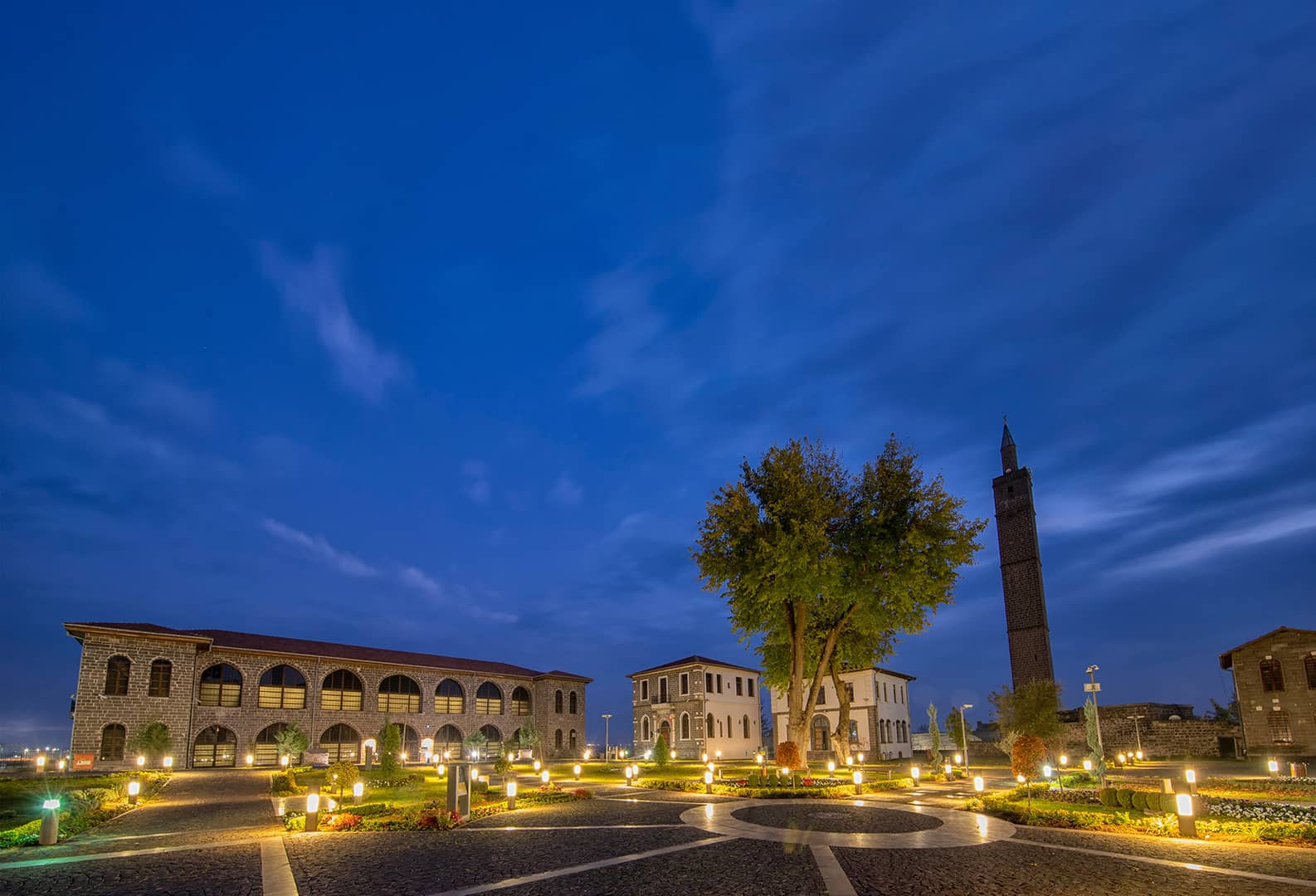
Architecture within the inner citadel and archaeology museum complex.
 A temporarily closed gallery
The official museum platform lists the museum as open, with an explicit notice that the thematic exhibition gallery is temporarily closed. This notice applies to that gallery and does not mean the entire İçkale complex is closed. Ask which galleries are accessible rather than expecting to see every object shown in older photographs.
Confirm current days and hours directly, particularly Monday, for which published seasonal information varies. The museum administration's Turkish telephone number is 0412 224 67 40.
 Amida mound and the Artukid palace
Amida mound lies within İçkale. Its excavations explore settlement history and the remains of the Artukid palace. Research has continued in recent years; this is an archaeological research site rather than an area to climb freely.
View the permitted section from the visitor route and ask for guidance if you want to understand what is visible. Do not enter excavation areas or cross barriers, even when nearby remains appear easy to reach.
 A rest and a nearby addition
After the displays, sit for a while and appreciate the complex's architecture and available views. Süleyman Mosque and the neighbouring tombs associated with the Prophet's companions can be added if accessible, with respect for prayer and religious visits.
A practical approach is to set aside a separate part of the day for the museum and inner citadel, then explore Sur another time. This gives each place more attention than combining the museum with a long sequence of markets and walls at midday.
 Related topics
 Diyarbakır Old Town 2026: Sur, the Great Mosque and Hasan Pasha Inn
 Diyarbakır Walls and Hevsel Gardens 2026: A UNESCO Cultural Landscape
- Ergani, Çayönü and Hilar 2026: Early Farming and Rock-Cut Heritage
 The Ten-Eyed Bridge and Tigris 2026: A Riverside Visit near Diyarbakır
 Diyarbakır Food and Bazaars 2026: Liver Kebab, Kadayıf, Cheese and Crafts
- Silvan and Malabadi 2026: The Great Mosque and Artukid Bridge
 Eğil 2026: Rock Castle, Dicle Reservoir and a Day Trip from Diyarbakır
- Diyarbakır: Black Basalt Walls and Historic Heritage
- Mardin: A Historic City of Golden Stone
Last edited by a moderator: