

- Joined
- Nov 2, 2025
- Messages
- 282
- Reaction score
- 0
- Points
- 16
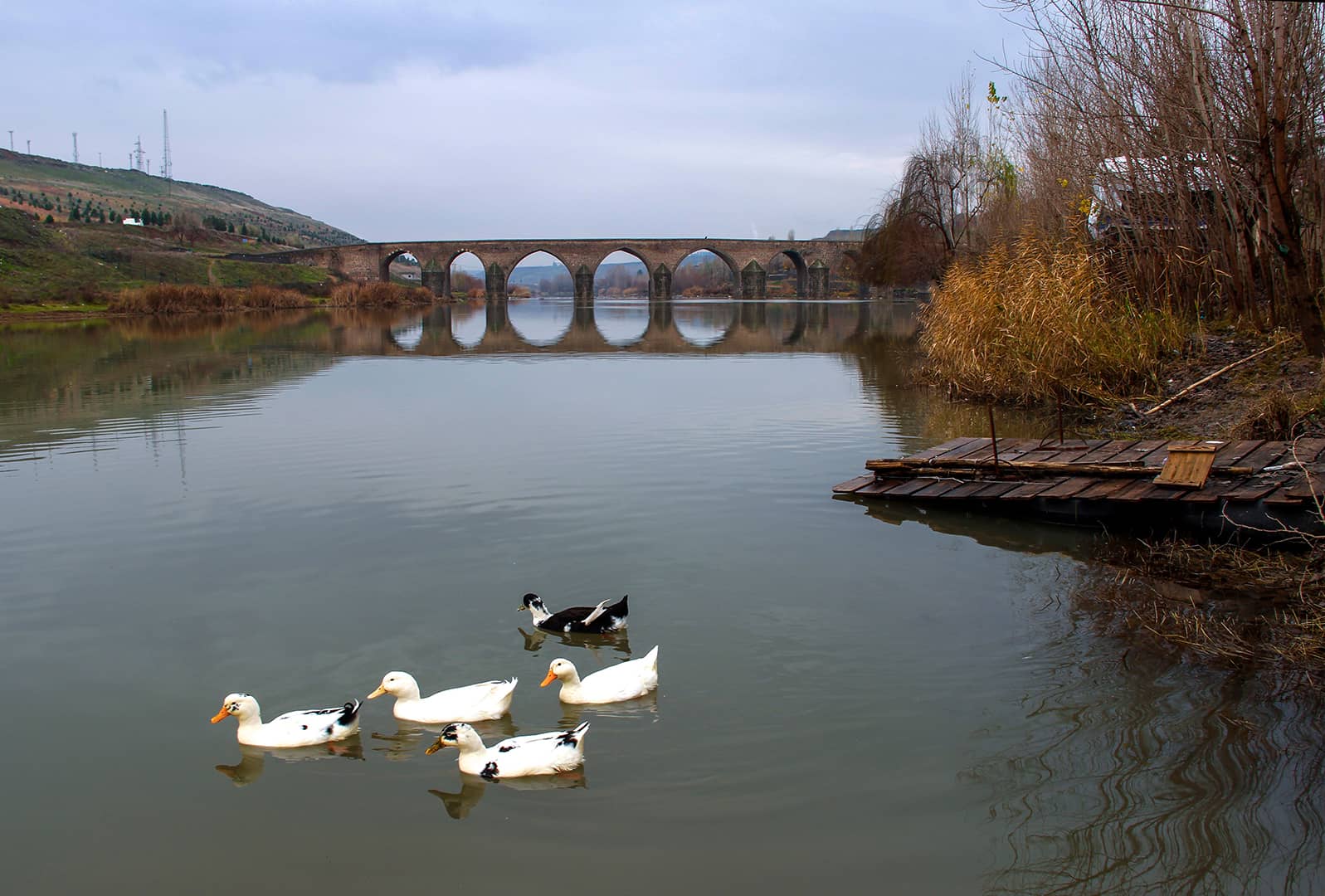
The Ten-Eyed Bridge over the Tigris.
The Ten-Eyed Bridge is one of Diyarbakır's most appealing stops when you want a change of pace after lanes and museums. Its basalt structure crosses the Tigris, with the arches clearly visible from the riverbanks. Come for the view, photographs and a short break, leaving time to return to your hotel or the city centre.
 A historic bridge with ten arches
Known as On Gözlü Köprü, the bridge is also called Dicle Bridge. Its inscription dates the surviving structure to the Marwanid period in 1065. Ten arches and dark basalt give it a form closely associated with the city's image.
View the arches from the riverside, then examine the construction from the accessible route. Appreciating the landmark does not require a long list of measurements: its relationship with the water and city gives the setting its character.
 Getting there from Sur
The bridge lies south of the city, beyond Mardin Gate. Locate the bridge itself on your map and agree on a meeting point if using a taxi, particularly if visiting nearby restaurants or cafés.
Some visitors may enjoy walking, but the route from Sur involves both distance and changes in elevation. Families and anyone who finds climbing tiring can take transport to a clear meeting point and make a shorter walk near the bridge.
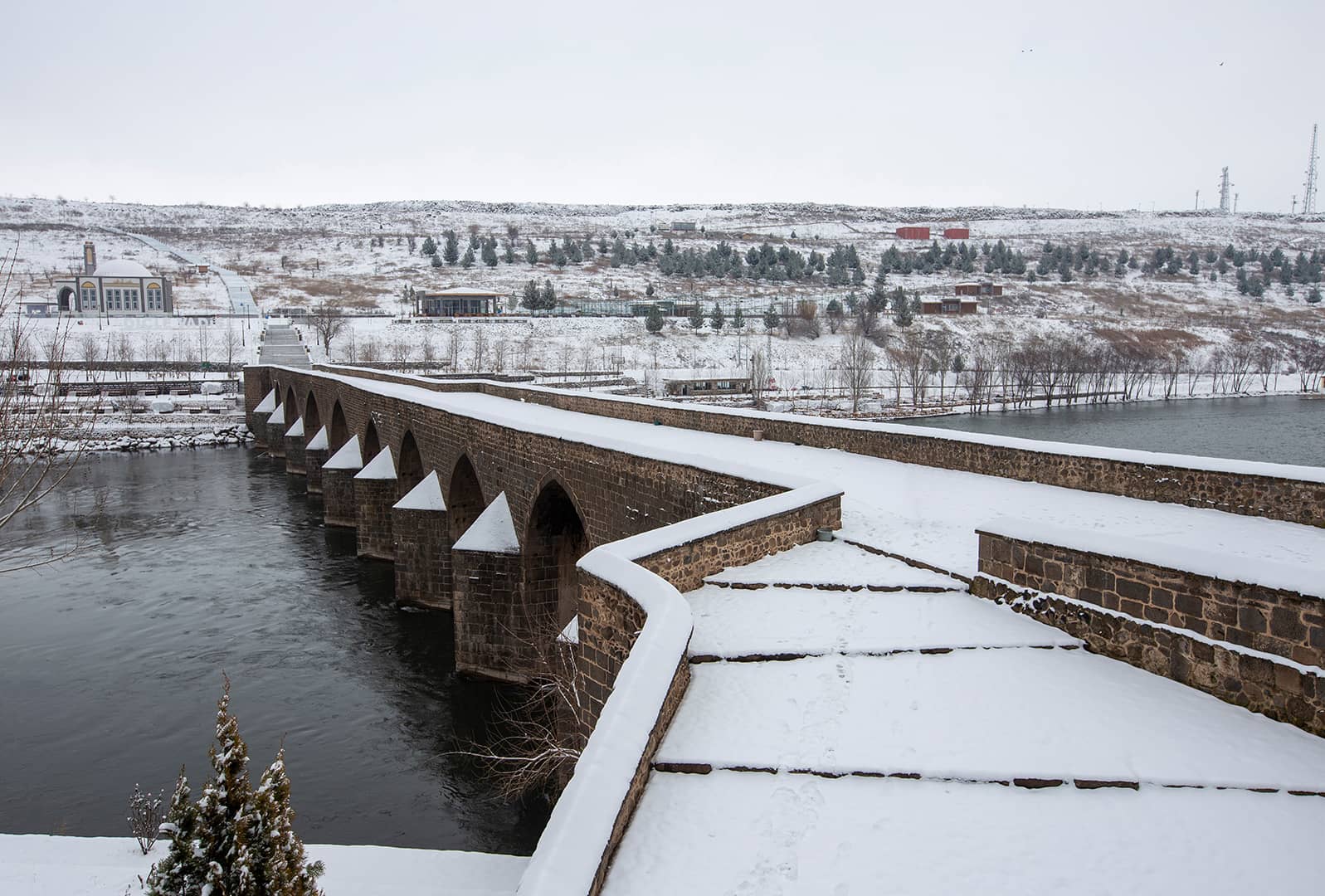
A winter view of Dicle Bridge and its basalt arches.
 Finding a good photographic angle
Begin with a wide photograph from the bank showing the sequence of arches, then capture the stonework from a safe position. Morning and the softer light before sunset can work well, depending on the weather and the direction of the sun.
The river and banks change in appearance with the season and water level. Do not expect the scene to match every published photograph, or approach an edge or climb the masonry for a shot.
 A break by the river
Choose a place where the terms of seating are clear, ask about any minimum order and confirm prices before food is served. For a simple picnic, use a permitted public area and keep your rubbish until you find a bin.
An attractive waterside setting does not establish that swimming is suitable. Keep children nearby, stay away from edges and slippery banks, and do not go down into the river channel.
 Fitting it into your itinerary
Visit after a light walk in Sur, or give it a separate part of a museum day. There is no need to combine a descent towards Hevsel, the museum and the bridge in one long walking route.
Before returning, confirm where your car or transport will meet you. In the evening, use a familiar, well-lit route and keep your hotel's name and address rather than relying on a spoken description of the way.
 Related topics
 Diyarbakır Walls and Hevsel Gardens 2026: A UNESCO Cultural Landscape
 Diyarbakır Old Town 2026: Sur, the Great Mosque and Hasan Pasha Inn
 Eğil 2026: Rock Castle, Dicle Reservoir and a Day Trip from Diyarbakır
 Diyarbakır Food and Bazaars 2026: Liver Kebab, Kadayıf, Cheese and Crafts
 İçkale and Diyarbakır Museum 2026: Amida Archaeology and the Inner Citadel
 Silvan and Malabadi 2026: The Great Mosque and Artukid Bridge
 Ergani, Çayönü and Hilar 2026: Early Farming and Rock-Cut Heritage
- Diyarbakır: Black Basalt Walls and Historic Heritage
- Mardin: A Historic City of Golden Stone
Last edited by a moderator: