

- Joined
- Nov 2, 2025
- Messages
- 282
- Reaction score
- 0
- Points
- 16

Stone gravestones and carved decoration at Ahlat’s Seljuk Meydan Cemetery; photograph from the Turkish Culture Portal.
Ahlat and Adilcevaz combine historic monuments with the scenery of Lake Van in Bitlis province. Ahlat lies on the lake's north-western shore and Adilcevaz to the north. Link them on a journey focused on stonework, the lake and local life.
In Ahlat, give priority to the gravestones and mausoleums. Adilcevaz adds lakeside monuments and Urartian heritage at Kef Castle.
1.  Ahlat: gravestones as historical records
Ahlat is known for gravestones from several historical periods, including examples dating from the 12th to the 15th centuries. The Seljuk Meydan Cemetery contains rows of decorated stones bearing inscriptions and geometric and floral ornament.
First study a stone's shape, then the arrangement of writing and decoration on its surface. Some inscriptions preserve the names of stonemasons and craftspeople, making the stones sources for the history of craft as well as records of the people buried there.
Choose a small number of stones to compare. Follow the site's paths when photographing them, without touching inscriptions or climbing on the monuments.
2.  Mausoleums and heritage status
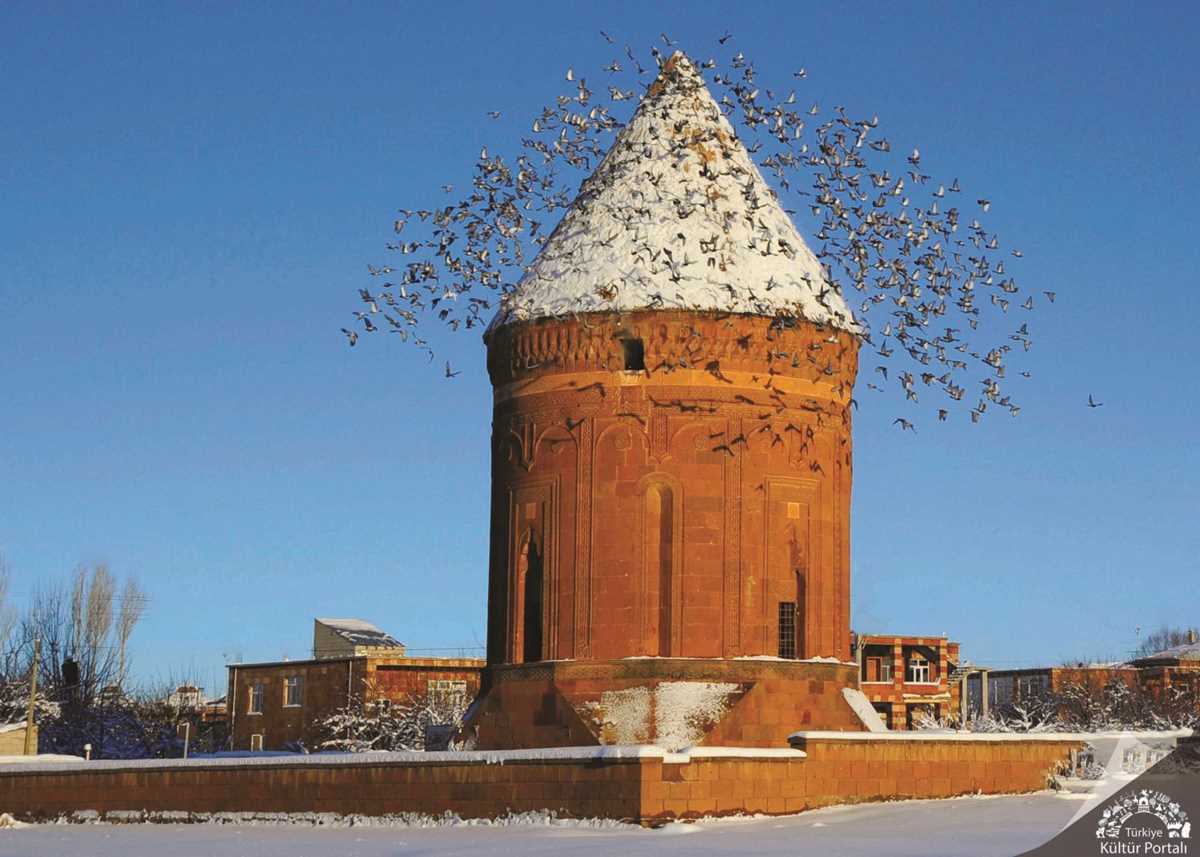
Ulu Mausoleum in Ahlat in a winter scene, with birds around its conical roof.
Mausoleums add another form of funerary architecture to Ahlat, different from individual gravestones. Combine the cemetery with a specific mausoleum to appreciate the variety of construction and decoration.
Ahlat's heritage associated with its tombstones and citadel appears on UNESCO's Tentative List. This records a site proposed for possible World Heritage nomination; bear that status in mind when reading information panels or planning your visit.
3. The museum and cemetery: plan for each separately
The Ministry of Culture and Tourism lists Ahlat Museum as temporarily closed from 21 July 2025 for landscaping works, until the work is completed. Do not make admission to its galleries a guaranteed part of your itinerary.
That notice concerns the museum. On its own, it does not establish access to Meydan Cemetery, the freestanding mausoleums or the mosque in Adilcevaz. Check each site’s entrance and available visitor route, particularly if you need step-free access. Summer or evening programmes also have specific operating periods; do not assume they continue into autumn.

The Ahlat Museum building; this identifying photograph does not indicate that its galleries are currently open.
| Stop | What distinguishes it | Check before visiting |
|---|---|---|
| Meydan Cemetery | Gravestones, inscriptions and ornament | The cemetery entrance, admission hours and available routes |
| Mausoleums | Different forms of funerary architecture | The specific monument and whether an interior or exterior visit is possible |
| Ahlat Museum | Archaeological galleries and collections | A reopening announcement; the official list retains its temporary closure |
4.  Adilcevaz: a mosque on the lakeside road
Zal Paşa Mosque, also known as Tuğrul Bey Mosque, stands near the lake on the Ahlat–Adilcevaz road. Local stone and an arrangement of multiple domes make it an architectural stop along the lakeside route.
Notice how the domes relate to the façade, then the mosque's position beside the lake. An exterior visit and a short roadside break can fit the journey, with due respect for the building's religious use.
The mosque differs in both form and function from Ahlat's gravestones, adding variety to a combined trip.
5.  Kef Castle: a separate Urartian stop
Kef Castle lies north of Adilcevaz and is associated with Urartu. It is separate from the monuments near the shore, so locate it independently on your map before including it in the itinerary.
Be precise about the name when arranging transport: Kef Castle and Adilcevaz's lakeside castle are different sites. Identify your intended destination clearly, then confirm access and visiting arrangements before setting aside time for it.
If your archaeological interests extend beyond Islamic architecture, Kef adds another historical layer. A shorter programme can concentrate on Ahlat, the mosque and the lakeshore.
6.  Local life and the order of stops
Adilcevaz's economy includes agriculture, livestock and fishing, and the area is known for walnuts. Explore this aspect through products in local shops, asking sellers about origin, season and storage.
- Ahlat Cemetery and a nearby mausoleum or historic monument chosen beforehand.
- Zal Paşa Mosque and a stop on the Adilcevaz lakeshore.
- Kef Castle if you have set aside separate time for Urartian archaeology.
Arranging the stops in advance leaves room for a break and a taste of a local product.
| Suggested stage | Programme | Practical arrangement |
|---|---|---|
| Ahlat | The cemetery and a mausoleum selected in advance | Start with a site whose access you have confirmed, allowing time for walking and inscriptions |
| Adilcevaz | Zal Paşa Mosque and the lakeshore | Respect prayer times and choose a break close to your route |
| Optional addition | Kef Castle or local shopping | Add the castle after confirming the road and access, or choose a less demanding town visit |
 Related topics
 - Bitlis 2026: The Historic City, Stone Houses and Castle
- Tatvan 2026: Nemrut Caldera and the Lake Van Shore
- Van Castle, Old Van and Ayanis 2026: Urartian Heritage
- Akdamar and Gevaş 2026: Island Heritage and Stone Architecture
- Muradiye and Erciş 2026: The Waterfall and Lake Van’s Fish Migration
- Edremit 2026: Lake Van Shore, Walks and Viewing Terraces
- Van 2026: University Life, Breakfast and the Everyday City
- Bitlis: An Ottoman Mountain City in Eastern Türkiye
Last edited by a moderator: