

- Joined
- Nov 2, 2025
- Messages
- 282
- Reaction score
- 0
- Points
- 16
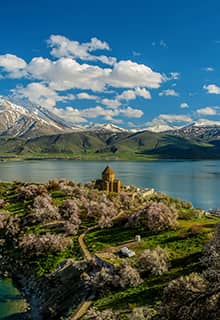
Akdamar Island and its church in Lake Van.
Akdamar and Gevaş combine an island with a historic church and a town preserving architectural and funerary heritage. The boat journey adds views across the lake, while the mainland monuments invite comparisons between building types and decorative traditions.
Gevaş lies near the eastern slopes of Mount Artos and is a useful starting point for this part of the lake. You can combine the island with Halime Hatun's tomb, allowing enough time for the crossing and walking around each site rather than making the boat ride the whole day's focus.
 The Island's Church of the Holy Cross
Akdamar Church was built in the tenth century during the reign of King Gagik I of Vaspurakan, by the architect Manuel. Constructed of red volcanic stone, it has a plan organised around a central dome and is presented today as Akdamar Monument Museum.
Begin by taking in the building as a whole and its relationship to the island, then examine the façades. This places the monument within its setting of water and rock before you turn to its decorative detail.
 Stone Reliefs and Interior Paintings
Reliefs on the façades depict religious subjects, hunting and secular life, alongside human and animal figures. Their detail shows how stone surfaces became a medium for storytelling, with different scenes on each side.
The interior preserves remnants of religious wall paintings. Move unhurriedly between the overall composition and individual details, using available interpretation to understand the imagery. Do not touch carvings or bring equipment close to sensitive surfaces.
 The Crossing Is Part of the Experience
Boats reach Akdamar from the Gevaş side of the lake, along the Van–Tatvan road. As you cross, the island's appearance gradually changes, revealing the church's relationship to its rocky setting and the distant shores. These views complement the close examination of the building.
Confirm actual departure and return arrangements before organising the rest of your day: waiting times and sailings depend on operations and weather. Allow a separate period to explore the island so that the crossing schedule does not squeeze your visit to the monument.
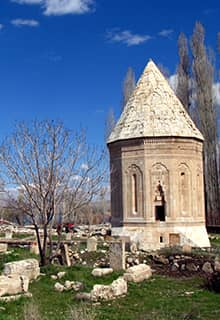
Halime Hatun's tomb in Gevaş.
 Halime Hatun and Funerary Architecture
Halime Hatun's tomb stands east of the historic cemetery in Gevaş and illustrates the region's funerary architecture. A twelve-sided body rises from a square base beneath a pyramidal roof, with vegetal, geometric and calligraphic decoration.
Compare the base, main body and roof, then examine the distribution of windows and ornament. Gravestones in the surrounding cemetery provide a wider context, connecting the building with commemorative traditions that extend beyond a single tomb.
 Gevaş Between Mountain and Shore
The Gevaş area connects the lake's shores with the slopes of Artos, and its monuments belong to several historical periods. A stop in the town places them within an inhabited area with food, services and everyday life.
Allow a mainland stop for lunch or a walk between visits. Choose a view that brings together the mountain, water and buildings: comparing island and shore adds variety to the outing.
 A Day for the Island and Mainland Heritage
Arrange the tomb and town around confirmed boat departure and return times. If the crossing is unavailable, give more time to Gevaş's heritage and leave the island for another visit.
Bring water and an extra layer suitable for breezes on the lake, and check admission information before setting out. Respect the quiet atmosphere and visitor routes in the cemetery and religious monuments, leaving time to read and reflect as well as take photographs.
 Related Guides
 - Edremit 2026: Lake Van Shore, Walks and Viewing Terraces
- Van Castle, Old Van and Ayanis 2026: Urartian Heritage
- Van 2026: University Life, Breakfast and the Everyday City
- Tatvan 2026: Nemrut Caldera and the Lake Van Shore
- Ahlat and Adilcevaz 2026: Seljuk Gravestones and Lake Van Heritage
- Bitlis 2026: The Historic City, Stone Houses and Castle
- Muradiye and Erciş 2026: The Waterfall and Lake Van’s Fish Migration
- Bitlis: An Ottoman Mountain City in Eastern Türkiye
- Van: The Pearl of the East and Its Legendary Lake