

- Joined
- Nov 2, 2025
- Messages
- 282
- Reaction score
- 0
- Points
- 16
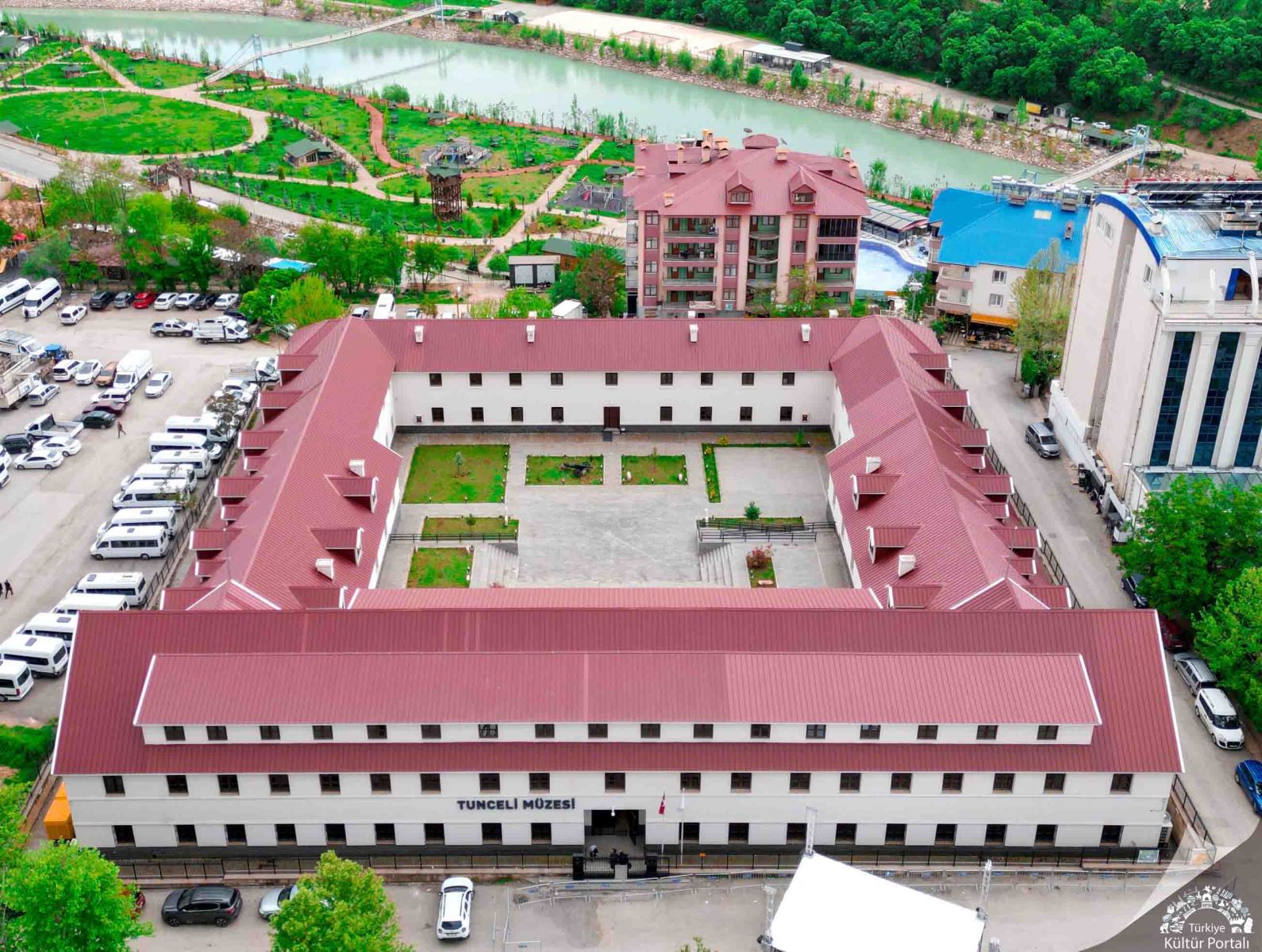
An elevated view of Tunceli Museum and its courtyard, with the river and green spaces behind the building.
Tunceli city stands where the Munzur and Pülümür rivers meet, combining its administrative and service functions with a landscape of valleys and water. The museum and Munzur University add cultural and educational dimensions to a province particularly known for its natural surroundings.
 The River Confluence and Uzunçayır Reservoir
The meeting of the Munzur and Pülümür is central to the city's geography. Gole Çetu, a sacred place with spiritual significance for local Alevi communities, lies at this confluence.
Water's natural importance therefore overlaps with local memory and belief in the heart of the city.
The Uzunçayır reservoir extends into the surroundings along the combined river downstream. It is separate from the Keban reservoir associated with the southern districts of the province.
Distinguishing the two helps explain the distribution of water landscapes and the city's relationship with valleys arriving from the north.
 Tunceli Museum
 formally opened on 24 December 2020 in a former barracks built in 1937. Later used as staff accommodation, the building was restored and converted into a museum. It has heritage value in its own right as an example of early Republican architecture.
The collections cover archaeology, ethnography, coins, traditional farming, plants and animals, beliefs and recent history. These themes connect people's lives with their environment: tools, documents and objects reveal work, customs and local memory.
The tourism directorate describes an active cultural space preserving the province's written and visual record. Its courtyard also accommodates social and cultural activities, extending the building's role beyond its displays into public life.

Uzunçayır reservoir and Tunceli’s built-up area between mountain slopes, in an archive photograph from a hillside viewpoint.
 Munzur University and Student Life
Munzur University includes engineering, humanities, health, arts, economics and aquatic sciences, alongside research and application centres. This range gives the university a varied presence in a city surrounded by natural resources and local questions suitable for study.
In a report dated 29 September 2026, the university described its opening ceremony for the 2026–2027 academic year, attended by academics, students and civil-society representatives. The programme included visits to student-club stands to learn about their activities and projects.
This presence offers opportunities to connect university knowledge with local work through research into water, natural resources and heritage. Students and academic institutions also contribute to a social and cultural rhythm renewed with each academic year.
 Water, Culture and Urban Life
Tunceli offers more than a single scenic view. Its rivers explain the setting, the museum presents the province's memory and the university adds education and research. Together they illuminate the centre's role in serving surrounding districts and expressing their varied identities.
These resources suggest that public-space quality, care for historic buildings and respect for spiritually significant places are important to the city's development. Local cultural and scientific activity can give it a continuing role throughout the year alongside seasonal visits to nature.
 Related topics
- Ovacık and Pülümür 2026: Valleys and Rural Life
- Hozat and Nazımiye 2026: Mountain Towns and Rural Heritage
- Southern Tunceli 2026: Pertek, Mazgirt and Çemişgezek
- Erzincan and Üzümlü 2026: Plains, Cimin Grapes and Urban Life
- Kemaliye and Kemah 2026: Karasu Valley and Local Heritage
- Refahiye and İliç 2026: Forests, Villages and Local Economy
- Tercan, Çayırlı and Otlukbeli 2026: Plains and Rural Heritage
- Erzurum: The Historic Capital of Eastern Türkiye
- Elazığ: Lakes and Deep Anatolian Heritage
Last edited by a moderator: