

- Joined
- Sep 30, 2026
- Messages
- 47
- Reaction score
- 0
- Points
- 6
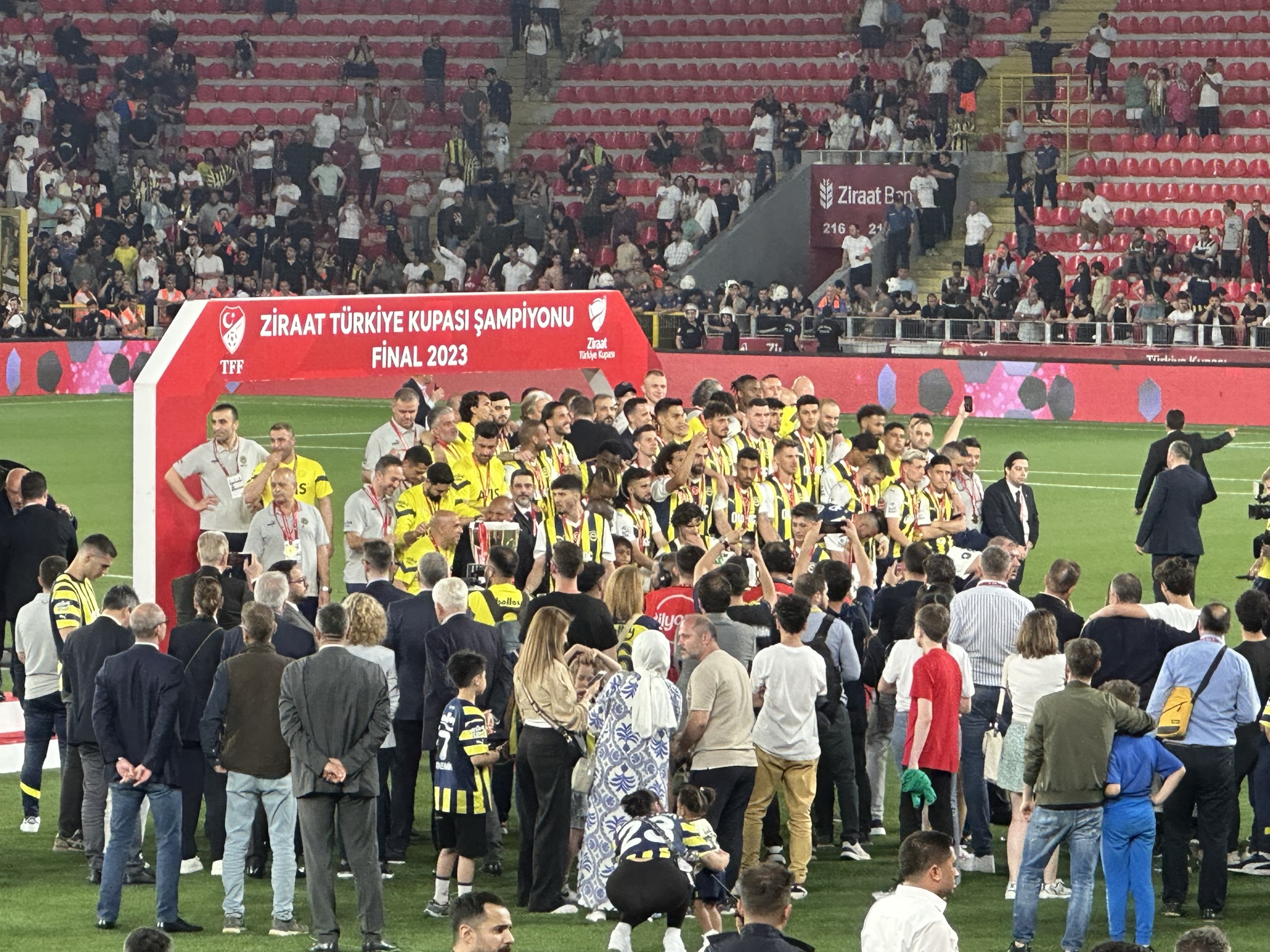
| The 2023 final atmosphere | The 2023 trophy celebrations |
|---|---|

| 
|
| A match from the 2014–2015 competition | The 2022–2023 trophy |

| 
|
 Turkish Cup 2026–2027: From the Opening Round to the Final
The Turkish Cup has a distinctive place in the football season. It brings together clubs from different divisions and allows a single match to transform a team’s campaign. Major clubs pursue another trophy while teams from across the country aim for a deep run, creating a competition with a different rhythm and different demands from the league.
For 2026–2027, the cup returns to a knockout format. Knowing when each club enters, when draws take place and when matches are scheduled becomes an essential part of following it. This guide covers the format, round dates, Süper Lig clubs’ entry points, recent winners, and practical advice for watching or attending matches.
 Information updated to 30 September 2026. The photographs are archival; each caption identifies its date.
Before the Turkish Cup final between Fenerbahçe and Başakşehir, 11 June 2023. Archive photograph by Oltnilhn.
 Competition at a glance
| Item | Details |
|---|---|
| Competition | Turkish Cup — Ziraat Türkiye Kupası |
| Season | 2026–2027 |
| Participating clubs | 146, under the approved regulations |
| Holders | Trabzonspor, winners in 2025–2026 |
| Format | Knockout; only the semi-finals are played over two legs |
| Final date | 29 May 2027, according to the announced calendar |
 What has changed in the Turkish Cup format?
The competition comprises five qualifying rounds, followed by the round of 16, quarter-finals, semi-finals and final.
There is no group stage in 2026–2027. Ties are decided in one match, except for the semi-finals, where each team plays once at home and once away.
A strong start becomes more important in this format: a team that loses concentration can see its cup challenge end early. The draw and squad management also carry considerable weight, particularly when a cup tie falls between important league or European fixtures.
Source: TFF announcement adopting the knockout format
The trophy for the 2022–2023 competition, won by Fenerbahçe. Photograph taken in 2024 by Beshogur.
 Turkish Cup 2026–2027 round dates
| Stage | Dates |
|---|---|
| First qualifying round | 15–17 September 2026 |
| Second qualifying round | 6–8 October 2026 |
| Third qualifying round | 27–29 October 2026 |
| Fourth qualifying round | 1–3 December 2026 |
| Fifth qualifying round | 15–17 December and 22–24 December 2026, according to the match programme |
| Round of 16 | 12–14 January 2027 |
| Quarter-finals | 9–11 February 2027 — revised dates |
| Semi-final first legs | 2, 3 or 4 March 2027 |
| Semi-final second legs | 20, 21 or 22 April 2027 |
| Final | 29 May 2027 |
Two points about the calendar:
• The fifth round has two scheduling windows to accommodate the programme and clubs’ European commitments. Each tie still consists of one match.
• A range of dates identifies the window for a round. Check the detailed TFF programme for each match’s exact day, kick-off time and stadium.
The original competition calendar | Quarter-final date amendment issued on 25 September 2026
 When do Süper Lig clubs enter?
The 18 Süper Lig clubs enter in three groups. A club missing from an early-round draw may simply be scheduled to join the competition later.
| Entry round | Clubs |
|---|---|
| Round 3 — six clubs | Alanyaspor, Eyüpspor, Gaziantep, Gençlerbirliği, Kasımpaşa and Kocaelispor |
| Round 4 — seven clubs | Amedspor, Arca Çorum, Çaykur Rizespor, Erzurumspor, Göztepe, Samsunspor and Konyaspor |
| Round 5 — five clubs | Beşiktaş, Fenerbahçe, Galatasaray, Başakşehir and Trabzonspor |
The first Süper Lig clubs therefore begin in late October, while those entering in round 5 start their campaigns in December.
Source: the official list of clubs and entry rounds
 How does the number of teams change?
The number of participants increases in some rounds because new clubs join the teams advancing from the previous stage.
| Round | New entrants | Total teams | Teams advancing |
|---|---|---|---|
| First | 40 | 40 | 20 |
| Second | 42 | 62 | 31 |
| Third | 41 | 72 | 36 |
| Fourth | 18 | 54 | 27 |
| Fifth | 5 | 32 | 16 |
Round 5 produces the complete round-of-16 field. Eight teams then reach the quarter-finals, four reach the semi-finals and two contest the trophy.
Gençlerbirliği v Konyaspor in the Turkish Cup, 16 December 2014. Gençlerbirliği won 2–0. Photograph by Sabri76.
 Drawn matches, the draw and the final venue
• Single-match ties: If the scores are level after normal time, two 15-minute periods of extra time are played. A penalty shoot-out follows if the teams remain level.
• Semi-finals: The aggregate score across both legs determines who advances. If the aggregate scores are level, extra time is played at the end of the second leg, followed by penalties if necessary.
• Home advantage: Being seeded does not automatically confer the right to play at home. The draw determines the hosts under the rules for that round.
• The final: It takes place at a neutral stadium chosen by the TFF. Consult the venue announcement for this edition before planning to attend.
Source: Turkish Cup 2026–2027 regulations
 Where did the competition stand on 30 September 2026?
The first round was complete, and the second-round draw had taken place on 18 September. Round 2 features 62 teams competing for 31 places in the next stage.
The next fixtures were scheduled for 6, 7 and 8 October 2026, with the programme announced on 22 September. Attention would then turn to round 3, when the first group of Süper Lig clubs joins the competition.
Second-round draw | Second-round match programme
 The last five Turkish Cup winners
Trabzonspor enter the season as holders after beating Konyaspor in the previous final.
| Season | Winners | Runners-up | Final score, winners first |
|---|---|---|---|
| 2025–2026 | Trabzonspor | Konyaspor | 2–1 |
| 2024–2025 | Galatasaray | Trabzonspor | 3–0 |
| 2023–2024 | Beşiktaş | Trabzonspor | 3–2 |
| 2022–2023 | Fenerbahçe | Başakşehir | 2–0 |
| 2021–2022 | Sivasspor | Kayserispor | 3–2 after extra time |
Five different clubs have won the last five editions. Trabzonspor also appeared in each of the last three finals. That history provides useful context for following their new campaign, without guaranteeing how this season will end.
Source: TFF Turkish Cup history and finals archive
Fenerbahçe celebrate winning the Turkish Cup on 11 June 2023. Archive photograph by Oltnilhn.
 What should you follow during the season?
Squad management:
Compare the coach’s selections for a cup tie with those for the league matches either side of it. The number of changes can help explain how workloads are managed, but cannot by itself establish how much the club values the competition.
The draw and match circumstances:
Consider the venue, absences and available recovery time when assessing a team’s prospects. A club’s name and history provide background; the circumstances of the tie help explain its chances.
Lower-division clubs’ campaigns:
Teams that progress through several rounds deserve attention in their own right. Look at their previous opponents and how they advanced, instead of reducing their campaign to the label “surprise package”.
 Watching and attending matches
| What do you need to know? | Recommended step |
|---|---|
| Day, kick-off time and stadium | Check the detailed fixture programme on the TFF website, then the club’s announcement |
| Tickets | Start with the home club’s announcement and follow its designated sales link |
| Entry conditions | Check the requirements for that particular match, including identification, stand and entrance gate |
| Broadcaster | Check the match’s broadcast listing close to the date |
| Travel and accommodation | Finalise arrangements once the match day and stadium are confirmed |
If you are visiting Türkiye during a cup window, start with the city where you will be staying and look for matches there or nearby. Allow time to reach the stadium and get back, particularly if you have a flight or an onward journey to another city.
For official developments:
Turkish Cup page on the TFF website Related topics Turkish Süper Lig 2026–2027: Clubs, Competition Format and Season Dates
 Turkish Süper Lig Clubs 2026–2027: Cities, Stadiums and Planning a Visit Attending Football Matches in Türkiye: Tickets, Passolig and Stadium Entry
Galatasaray: Turkish Football’s Record Champions and European Pioneers
Fenerbahçe: The Kadıköy Giants and the Voice of Istanbul’s Asian Side
Trabzonspor: Pride of the Black Sea and a Force Beyond Istanbul
Last edited by a moderator: