
 A coastal villa combines a property, a seasonal home and a maintenance programme that needs attention throughout the year.
A view, pool and garden are attractive reasons to buy a villa in Türkiye, but reveal little about ownership boundaries, winter suitability or the cost of keeping it ready to use. A property viewed on a sunny summer day may need drainage, insulation or security work during the months you are away. This 2026 guide covers checks for villas and coastal homes, separating family use from a rental business. Financial examples are hypothetical; photographs are illustrative and represent neither sale listings nor guaranteed building rights.
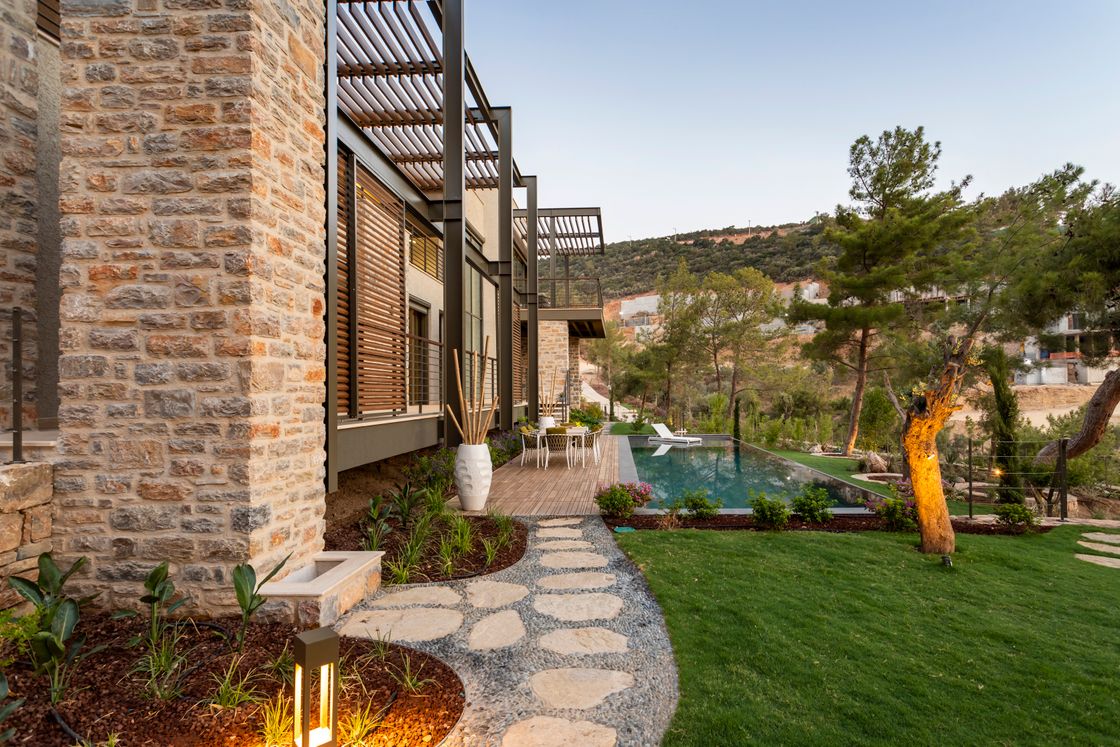
 Illustrative villa; appearance does not establish ownership, building quality or returns.

 Separate personal use from rental operations
Decide how many weeks you will use the house, who will visit during the rest of the year and whether you intend to let it while away. Family use in peak summer may remove the period when rental income would be highest. Do not count a full season's revenue while reserving those same weeks for your own holiday.List essentials such as bedrooms, parking, access and heating separately from cosmetic attractions. A large pool may add maintenance without much benefit to a family making short seasonal visits, whereas good insulation and easy access help year-round. For an investment, test a defined guest market and local management's ability to welcome guests, clean and handle faults. For a family home, assess annual expenditure as the cost of ownership and use, rather than forcing an unsupported return into the figures.

 Check the title and ownership structure
Establish whether the villa stands on its own plot, is a separately registered unit in a complex, or represents a share in land containing several houses. A façade, fence and separate entrance do not establish ownership type. Read the unit number, ownership share and associated facilities, then match them to the register and approved project.Within a complex, review the management plan and boundaries of gardens, parking and pools, establishing whether each is privately owned, allocated for use or shared. Ask about charges, maintenance decisions, future obligations and responsibility for retaining walls or access roads. Request current encumbrances, mortgages and rights, and check foreign-buyer eligibility where applicable. An old title photograph or a listing's claim of 'full ownership' is insufficient. Understand the legal basis for every metre you pay for, especially where the fenced garden exceeds the area allocated in the documents.
| What you see at the viewing | What to verify | Useful document |
|---|---|---|
| A fenced garden | Does the fence match the boundary and usage right? | Approved plans, survey and management plan |
| A private pool | Approval, ownership and associated equipment | Building and equipment records |
| Parking and an entrance | Access rights and allocation | Register and complex plan |
| Two houses on one plot | Separate registered units or ownership shares? | Registry extract and approved project |

 Match the building, alterations and pool to the plans
Review the building permit, occupancy certificate and approved project against the home itself. Look for enclosed balconies, storage converted to bedrooms, additional roofs or wings, or changes to the pool and pump room. Years of use do not establish that an alteration was approved.Have an engineer compare the plans with the property and identify matters requiring clarification in municipal records. Do not demolish, alter walls or extend based on an agent's consent. Some work needs permits or special approvals, and the position may differ within co-ownership or a protected area. For the pool, use appropriate specialists to inspect waterproofing, drainage, filtration, electricity, maintenance access and safety. The decision should include repair costs, whether the legal position can be regularised and the timetable, rather than a general discount from the asking price.

 A sea view does not confer ownership of the beach
The Ministry of Environment confirms that the coast serves the public interest and is open to equal and free enjoyment, with restrictions on ownership and construction. Do not treat the marketing phrase 'private beach' as proof of a property right. Verify actual access, the basis for operating any coastal facility and the limits of what the seller can promise.Check the property's position against the approved coastal boundary line, plans and applicable restrictions. Distance from the water on viewing day is no substitute for the official document. Natural, archaeological or other site-specific protection may also apply. Ask the competent authority to identify current restrictions and their effect on building, alterations and use. A beautiful view does not remedy an existing violation or guarantee neighbouring land stays vacant: examine permitted uses of plots in front rather than accepting a promise that the view will never change.

 Test access and services outside summer
Visit the approach road and surroundings at a different time from the marketing tour, or commission a documented inspection if you are away. Ask about road condition after rain, lighting, slopes, maintenance vehicle and ambulance access, and distances to shops, healthcare and stops. A location that looks close on a screen may require a longer drive along a narrow road.Test water supply and pressure, electricity, drainage, connectivity, heating and cooling. For tanks, pumps or independent wastewater systems, request maintenance records, operating costs and relevant approvals. Do not assume a network that works well in winter can handle peak summer, or vice versa. Ask residents or local management about recurring outages, verifying the information. A villa's usefulness to families or guests depends on reliable services, rather than the sea alone.

 Inspect damp, insulation and maintenance needs
Check roofs, walls near ground level, areas around windows and basements. Ask about any stain, smell or freshly painted patch. Damp may come from roof or pipe leaks, rising moisture or inadequate ventilation; the solution depends on diagnosis rather than new paint.Review ground gradients, rainwater drainage, retaining walls, waterproofing and gutters. Near the sea, have a specialist assess metal components, exterior equipment and their maintenance plan, without assuming every sign of corrosion is structural. Document faults with photographs, repair estimates and warranties. Separate routine upkeep from capital work such as replacing waterproofing, pumps or major equipment. A detached home bears costs apartment residents may share; overlooking them makes the comparison misleading even at the same purchase price.
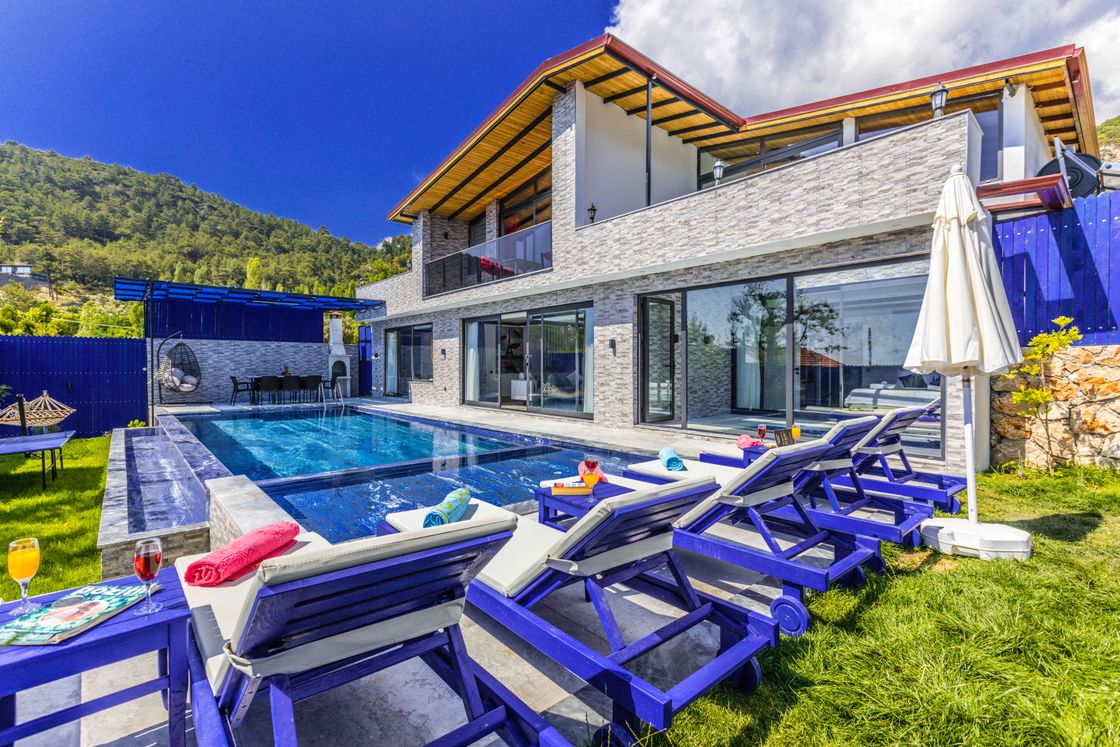 Illustrative villa and pool; permissions and maintenance require verification.

 Arrange security and management while away
Appoint someone to visit regularly, with a record of keys, visits and emergency numbers. Define the checks: leaks, windows, ventilation, pumps, pests and the garden. Security at the complex gate does not mean someone monitors faults inside your house.Set emergency spending limits and approval requirements for larger repairs, requesting invoices and before-and-after photographs. Review cameras and data handling with privacy in mind; cameras alone do not replace technical inspections. If the manager receives guests, define handover, cleaning, records and complaints responsibilities, together with fixed and variable fees. Confirm cover for staff absences and capacity during busy periods. A straightforward, regular programme is better than improvised intervention after serious damage.

 Understand insurance and its limits
Check whether compulsory earthquake insurance applies, and verify the policy and property details, then distinguish it from additional home insurance. DASK explains that its cover concerns earthquake damage and specified resulting events within policy limits. Contents, lost rent and damage unrelated to earthquakes fall outside its scope. A DASK policy does not mean all belongings, leaks or liability to guests are covered.Ask the insurer about pools, gardens, exterior equipment, seasonal closure and rental use, disclosing actual operations. Request limits, deductibles, exclusions, prevention requirements and reporting conditions. Do not assume a family home policy covers commercial activity in the same way. Retain inventories, photographs and important invoices, and name who reports incidents in your absence. Insurance helps manage risk but does not resolve unsafe conditions, violations or deferred maintenance.

 An annual ownership budget
Obtain local quotations for each service, then separate fixed costs, variable costs and equipment replacement reserves. Do not accept a single garden, pool and security figure without a clear scope: visit frequency, water volume and equipment affect the price.| Hypothetical item | Annual cost in TRY | How to monitor it |
|---|---|---|
| Garden | 60,000 | A visit schedule and defined tasks |
| Pool | 50,000 | Cleaning, chemicals and routine maintenance |
| Security and inspections | 40,000 | Reports and coverage periods |
| Insurance | 20,000 | Quotations based on the property |
| Other fixed services | 10,000 | Specified subscriptions |
| Total assumed fixed costs | 180,000 | Before consumption, replacements and taxes |

 Personal use and letting: an example
Assume the property can legally operate and is ready to receive guests before modelling revenue. Short-term tourism lettings in Türkiye require a permit regime. Furnishing the villa or having an independent entrance does not replace checking the permits and approvals applicable to it.At ninety paid nights at TRY 5,000, gross revenue is 450,000. Deduct 45,000 in variable marketing and management fees, 30,000 for cleaning, 40,000 for consumption, 180,000 in fixed costs and an 80,000 reserve. The remaining 75,000 is before tax and financing. With sixty nights and the variable costs below, the result falls.
| Illustrative scenario | Revenue | Fixed costs and reserve | Variable costs | Balance |
|---|---|---|---|---|
| 90 paid nights | 450,000 | 260,000 | 115,000 | 75,000 |
| 60 paid nights | 300,000 | 260,000 | 80,000 | -40,000 |
| Family use only | Zero | 260,000 | Assumed consumption of 30,000 | -290,000 |
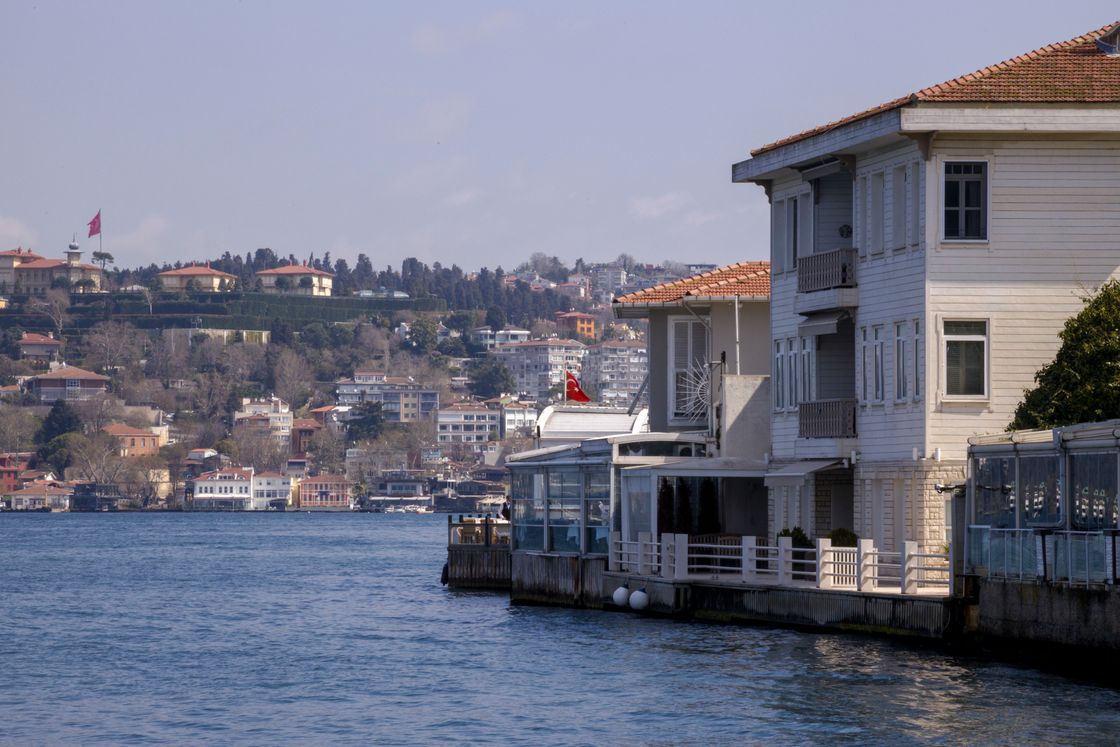 Illustrative waterfront view; the photograph does not establish beach ownership or access rights.
 Checklist before paying a deposit
- Ownership, boundaries, shares, encumbrances, access road and parking.
- Approved project, permits, use, extensions and pool compliance.
- Approved coastal boundary, protection status, permitted use and site-specific restrictions.
- Ground conditions, drainage, insulation, damp, services and fault records.
- Maintenance, insurance and management quotations, with equipment reserves and cash for periods away.
- Tourism permit eligibility where relevant, plus weak and moderate season scenarios.
 Common questions and mistakes
Is a detached villa without complex charges cheaper to run? It may bear garden, security, pump and road costs alone. Compare all expenses rather than the visible service charge.Does a sea view establish private beach access? No. Check ownership boundaries and the legal basis for coastal access and operations.
Can I list it on a rental platform immediately after purchase? Check the property's permit, approvals and obligations before marketing and operating it.
Is a pool always an advantage? It brings operating, maintenance, safety and replacement costs. Assess its benefit against your use and target guests.
What is the most common mistake? Counting peak-season income while overlooking months away and the cost of keeping the home ready. A suitable villa has ownership, permitted use, condition and services that fit your purpose, with expenses you can withstand in a weak year; one attractive viewing is not enough.
 Related topics
 Checking a Turkish Title Deed Before Paying a Deposit: Mortgages, Attachments, Shares and Usufruct Building Permits and Occupancy Certificates in Türkiye: Identifying Unauthorised Work Building Safety Before Buying in Türkiye: Earthquakes and the Limits of DASK Cover Tourist Rentals in Türkiye in 2026: Permits, Building Requirements and Operations Managing Property in Türkiye Remotely: Management Contracts, Rent Collection and Maintenance Renovation Project or Move-in Ready Home in Türkiye? Costs, Timing and Added Value Property in Antalya and Alanya in 2026: Demand, Seasonality and Rental Costs Assessing a Property Investment in Türkiye: Net Rent, Financing and Risk Selling Property in Türkiye in 2026: Pricing, Tax and Net Proceeds
Last edited by a moderator: