

- Joined
- Nov 2, 2025
- Messages
- 282
- Reaction score
- 0
- Points
- 16
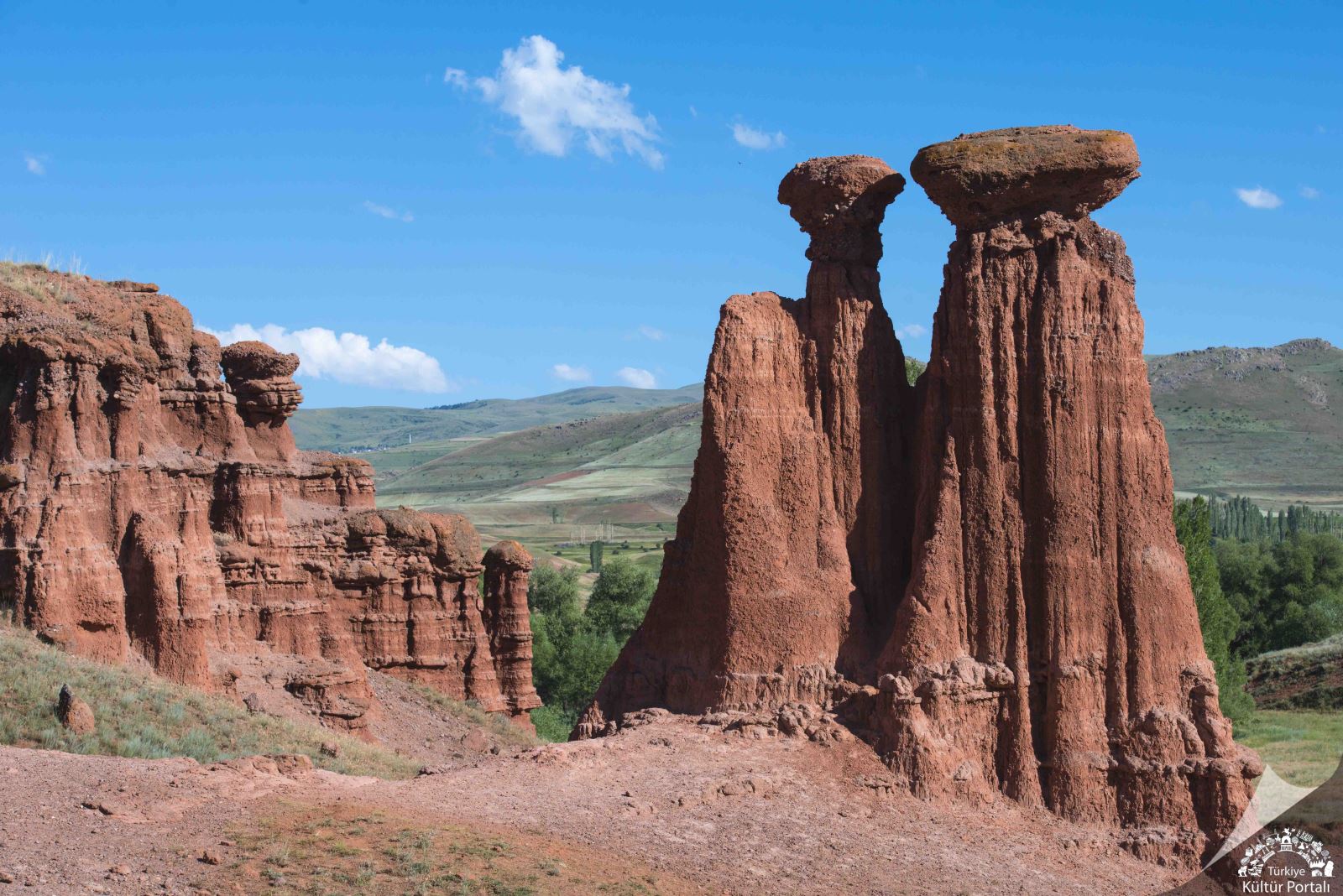
Narman’s red rock formations.
Narman, Oltu, Olur and Şenkaya form a varied area in north-eastern Erzurum province. Rock formations, valleys, forests and pastures sit side by side, revealing the relationship between natural resources and local skills in farming, crafts and oral traditions.
Each district has a character of its own that deserves recognition.
 Narman: Red Rock Landscapes
Narman is known for the red pillars and formations called fairy chimneys. Their material originated as ancient sediments carried by streams into a depositional basin, then shaped by water and wind erosion.
The red colour comes from the oxidation of iron within the rocks.
These processes explain their distinctive geology beyond comparisons with Cappadocia. According to the Turkish Culture Portal, the area was designated a protected natural monument in 2018.
Beyond the rock formations, Narman also depends on agriculture and livestock, with wheat and barley grown in some upland areas.
 Oltu: Stone and Local Craftsmanship
Oltu stone is one of the area’s defining resources. Extracted from local deposits, it is selected, shaped and polished to make prayer beads, jewellery and other objects.
Sometimes combined with gold or silver, it supports a craft tradition passed from experienced makers to apprentices.
The finished object’s value therefore lies in the labour and knowledge involved as well as the stone itself. Oltu’s economy also includes agriculture, livestock, mining and forest products, with climatic differences between valleys and higher ground.
The castle, Arslan Paşa Mosque and Russian church add architectural and historical depth to this picture.
 Olur: Forests and Orchards
Olur lies in the transition between Eastern Anatolia and the Black Sea region. Parts of the district combine forests, including pine woodland, with valleys supporting fruit and vegetable cultivation. Livestock farming is more prominent in higher villages.
Beekeeping and pekmez, a concentrated fruit syrup, also feature in local production.
Oltu stone is extracted in some Olur villages too, linking the two districts through their craft economy. In Çataksu village, the timber mosque highlights traditions of building and carpentry, alongside remains of castles and churches across the countryside.
Here, natural variety intersects with livelihoods and architectural heritage.

Narman’s red rock pillars, with contrasting caps and bases shaped by erosion.
 Şenkaya: Pastures and Weaving
Şenkaya lies on the western slopes of the Allahuekber Mountains, with pine forests, pastures and high plateaux. Agriculture and livestock are principal livelihoods: the grazing land is part of the rural economy as well as a seasonal landscape.
Pardız kilims are among its cultural symbols, alongside Pardız Castle and its mosque. Şenkaya belongs to a cultural area shared with Narman, Oltu and Olur, where traditions of folk poetry and singing accompanied by stringed instruments continue.
Narman is particularly associated with the folk poet Âşık Sümmanî.
 Opportunities for Local Development
These resources suggest opportunities across agriculture, crafts, nature and heritage. Linking products with their local names, passing skills to younger generations and protecting rock formations, pastures and forests could support the area’s future.
Conditions vary between villages: altitude, climate and resources differ even within a single district. Understanding development here therefore begins with the specific place, product and craft, followed by their capacity to benefit residents while preserving the natural and cultural foundations on which they depend.
 Related topics
- Erzurum 2026: Heritage, University Life and Urban Change
- Palandöken and Konaklı 2026: Erzurum’s Winter Economy
- Aziziye, Aşkale and Çat 2026: Plains, Hot Springs and Rural Life
- Tortum and Uzundere 2026: Lake, Waterfall and Valley Villages
- İspir and Pazaryolu 2026: The Çoruh Valley, Beans and Ovit
- Pasinler, Köprüköy and Horasan 2026: Aras Valley Heritage
- Southern Erzurum 2026: Hınıs, Tekman, Karayazı and Karaçoban
- Erzurum: The Historic Capital of Eastern Türkiye
- Erzincan: A Natural Oasis in Eastern Anatolia
Last edited by a moderator: