

- Joined
- Nov 2, 2025
- Messages
- 282
- Reaction score
- 0
- Points
- 16

The façade of Çifte Minareli Medrese in Erzurum, with its carved stone portal and twin minarets.
Erzurum is best understood as an urban centre serving a large province. It brings together a trading heritage, university education, services and connections with the surrounding agricultural uplands and towns.
These roles explain its activity beyond the ski season and the differences between the city centre and the province’s outlying areas.
 The Historic Centre and Markets
Erzurum province has twenty districts, including the central districts of Yakutiye, Palandöken and Aziziye. Çifte Minareli Medrese, Yakutiye Medrese and historic caravanserais stand out in the heart of the city.
These buildings offer more than visitor attractions: they explain Erzurum’s place on old trade routes and show how cultural activity has coexisted with everyday life.
Taşhan makes this connection particularly clear. A historic Ottoman commercial building, it remains associated with the craft of working Oltu stone and selling its products. Heritage here is part of the identity of the market and local employment.
 Atatürk University and Campus Life
Atatürk University is more than a place of study. The university describes a campus combining education, research, healthcare and social and cultural spaces used by the local community. Economically, this range of activity implies continuing demand for services and interaction between city and university.
In an announcement dated 25 September 2026, the university described preparations for the 2026–2027 academic year. These included reviewing vehicle and pedestrian routes, maintaining pavements and asphalt surfaces, caring for green spaces and improving security infrastructure. Such campus preparation supports the everyday use of its spaces and services.
 The Economy and Logistics Connections
The North-East Anatolia Regional Plan for 2024–2028 discusses Erzurum’s role in logistics and includes Palandöken Logistics Centre among the region’s infrastructure. The value of these connections becomes clearer when the city is considered alongside its towns: rural products need markets, transport and services, while urban activity benefits from links with the surrounding agricultural area.
Winter tourism, local crafts and university services operate alongside this role. Their variety helps explain an economy extending beyond a single season.
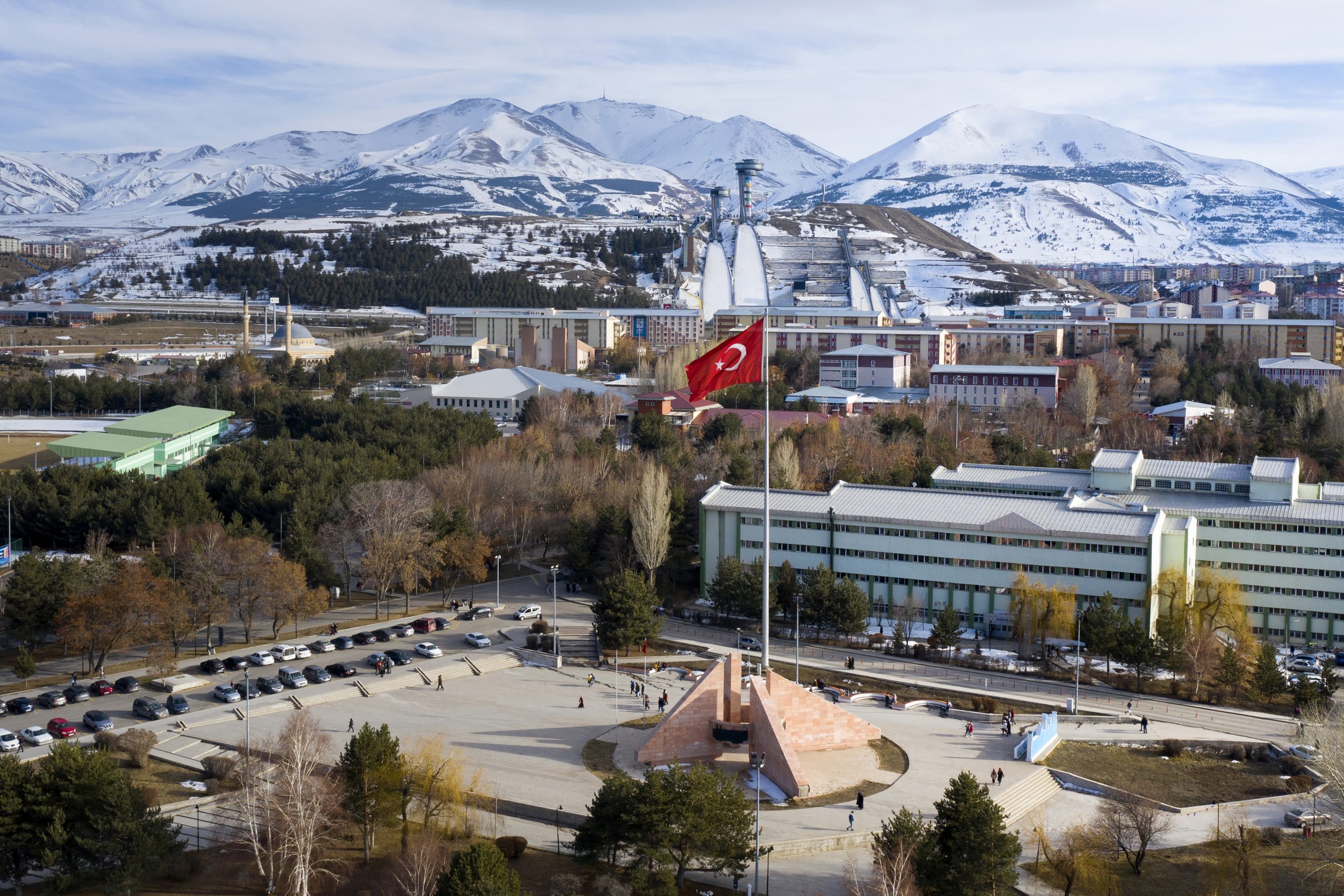
The Atatürk University campus in Erzurum.
 Urban Planning in 2026
The municipality published a notice placing a revised development plan for public inspection. It covers Abdurrahmangazi, Yunusemre and Kazım Yurdalan neighbourhoods in Palandöken district and follows a council decision dated 2 June 2026. Such documents help reveal how the city is being organised and how land uses may change.
Publishing a plan is not the same as implementing a project, nor does it demonstrate that facilities are complete or buildings ready for use. News about expansion therefore needs to be read alongside the relevant documents and stages, particularly when comparing the historic centre with newer neighbourhoods.
 Understanding Erzurum’s Districts
Begin with each place’s role: the centre for historic and commercial identity, the campus for education and services, Palandöken for urban expansion and the winter economy, and the outlying towns for farming, valleys and uplands. This approach clarifies the province’s connections before turning to specialist accommodation or transport guides.
 Related topics
- Palandöken and Konaklı 2026: Erzurum’s Winter Economy
- Aziziye, Aşkale and Çat 2026: Plains, Hot Springs and Rural Life
- Tortum and Uzundere 2026: Lake, Waterfall and Valley Villages
- Narman, Oltu, Olur and Şenkaya 2026: Red Rocks and Oltu Stone
- İspir and Pazaryolu 2026: The Çoruh Valley, Beans and Ovit
- Pasinler, Köprüköy and Horasan 2026: Aras Valley Heritage
- Southern Erzurum 2026: Hınıs, Tekman, Karayazı and Karaçoban
- Erzurum: The Historic Capital of Eastern Türkiye
- Erzincan: A Natural Oasis in Eastern Anatolia
Last edited by a moderator: