

المسافر
Active member
- Joined
- Dec 3, 2025
- Messages
- 189
- Reaction score
- 0
- Points
- 16
 Introduction
Before buying in Istanbul or Antalya, many people ask: ‘How much rent could the apartment earn? Should I let it annually or as tourist accommodation?’This guide offers a realistic way to assess returns, without promises such as ‘a guaranteed 12% yield forever’.
 Annual tenancies and tourist lets: what is the difference?
Annual or long-term letting:
- One tenant under a contract for 6–12 months or longer.
- A regular monthly rent.
- Less intensive management, with one tenant and routine bills.
- Often suits families, students and resident workers.
Short-term tourist letting:
- Stays of days or weeks, arranged through platforms or agencies.
- Potentially higher monthly income during peak periods.
- Requires day-to-day management: arrivals and departures, cleaning, bookings and reviews.
Law 7464 governs the letting of dwellings to users for no more than 100 days at a time for any purpose, within its definition of tourist-purpose letting, throughout Türkiye rather than only in selected cities. Check the permit before operating and establish the route applicable to the property. For an ordinary apartment application, unanimous consent from all unit owners in the building is required; specific building and high-specification residence routes have their own rules. Additional approvals or licences may depend on the building, number of units and operating model, alongside separate tax obligations. Calling a contract monthly does not automatically take it outside the 100-day scope.
 What determines rent and the actual return?
Yield is not a fixed number. It depends on:
- The city: Istanbul, Antalya, Ankara and Trabzon have different markets.
- The neighbourhood: family, student, tourist or older residential areas.
- The property: inside or outside a complex, new or older building, views, parking and lift access.
- Floor area and layout: 1+1, 2+1, 3+1 and the practical room arrangement.
- Furnishing: unfurnished, furnished or immediately ready to occupy.
- Management: whether you manage it yourself or pay a management company a percentage.
A useful calculation is:
> Net annual rental income
> ÷ Total acquisition and preparation cost
> × 100 = Approximate rental yield (%)
 Advantages and drawbacks of annual letting
Advantages:
- Relatively predictable income.
- Easier management with one tenant.
- Often more manageable for owners living outside Türkiye.
- Less exposure to guest complaints and online reviews.
Drawbacks:
- Potentially lower income than tourist letting in tourist destinations.
- Limited scope to change the rent during the contract.
- Risks of late payment or problems arising from poor tenant selection.
 Advantages and drawbacks of tourist letting
Advantages:
- In tourist areas of Istanbul, Antalya, Alanya and Trabzon, peak-season income may be higher.
- You may be able to use the apartment yourself between bookings.
- It may suit owners serving international visitors, including Arab travellers, particularly in summer.
Drawbacks:
- Intensive management: answering messages, frequent cleaning and resolving day-to-day problems.
- Seasonal income, with busy and quiet months.
- Applicable licensing, tax and regulatory obligations must be checked before operating.
 Estimate returns realistically
Practical steps:
Focus on a particular city and neighbourhood. Research annual rents and daily or weekly tourist rates for comparable properties nearby. Ask reliable owners or management companies about actual occupancy throughout the year, rather than only the busiest period. Use conservative assumptions: lower occupancy than the salesperson’s estimate and periods without a tenant.A reasonable yield under conservative assumptions is more useful than an inflated marketing projection.
 Include taxes and running costs
Rental income can bring costs and obligations including:
- Rental income tax under the applicable rules.
- Routine maintenance.
- Residential complex charges.
- Periodic furniture and appliance replacement, especially for tourist lets.
The figure that matters is:
> Income after tax, complex charges, maintenance and any management fees.
 Which approach suits you?
Consider:
- Your available time: do you have the time or a team to manage tourist stays?
- The location: employment and university areas may favour long-term tenancies; tourist destinations may support licensed short-term letting.
- Your tolerance for fluctuations: annual letting may suit you better if you prefer predictability, while tourist letting requires accepting both weak and strong months.
 Practical takeaway
Neither annual tenancies nor tourist lets are best for everyone. Calculate returns using realistic figures, understand the management workload, and choose what suits your time and investment objectives.
Above all:
> Do not buy on the strength of a promise such as ‘12% guaranteed for life’. Investment returns are never certain.
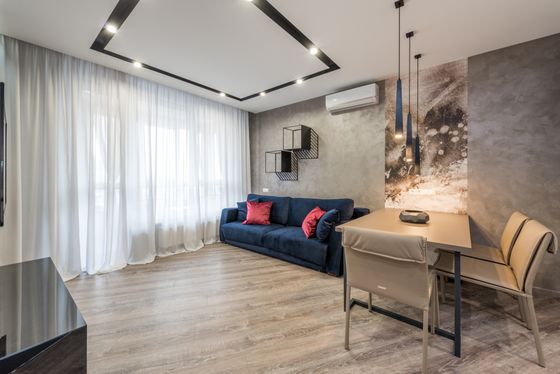
Illustrative residential interior; this is not the location of a property discussed in this guide. Photo: Max Vakhtbovych / Pexels.
 Practical comparison and verification table
| Comparison | Annual / long term | Tourist / short term |
|---|---|---|
| Income basis | Rent actually collected after vacancy | Occupied nights × achieved nightly rate |
| Expenses | Owner-borne charges, maintenance and tax | Management, cleaning, platforms, furniture replacement and tax |
| Permission | Applicable tenancy and use rules | Check the Law 7464 permit for lets of ≤100 days at a time |
| Decision | Compare annual net income using the same cost basis | Do not infer superiority from one peak month |
 Related topics
 Tourist Rentals in Türkiye in 2026: Permits, Building Requirements and Operations A Landlord’s Tenancy Agreement in Türkiye: Rent Increases, Deposits, Maintenance and Records Property and Rental Income Taxes in Türkiye for Non-residents: Records and Returns Assessing a Property Investment in Türkiye: Net Rent, Financing and Risk Co-owning Property in Türkiye: Ownership Shares, Management and Exit Property in Antalya and Alanya in 2026: Demand, Seasonality and Rental Costs Property in Bursa, Kocaeli and Sakarya in 2026: Homes Near Work and Universities Building Safety Before Buying in Türkiye: Earthquakes and the Limits of DASK Cover Rental Income and Property Yields in Türkiye: Gross and Net Returns
Last edited by a moderator: