

- Joined
- Feb 23, 2026
- Messages
- 207
- Reaction score
- 0
- Points
- 16
 Van Castle and Museum: Understanding Tushpa while Planning around the Museum Closure
Van Castle offers a view of the rock on which Tushpa, capital of the kingdom of Urartu, stood, and a chance to compare the elevated site with the old city and lake. Combining it with Van Museum currently needs particular care: the museum is closed for repairs and rearrangement of its displays. Do not book a trip promising access to its collections before a verified reopening announcement. Here we separate a castle visit, subject to the condition of its routes, from an introduction to museum collections that will help explain the site when visitors are welcomed again.
Status documented on 8 October 2026: The Culture Ministry's list and the museum's Turkish-language page record Van Museum as closed from 13 January 2026 until repair and display works are complete. Neither provides a confirmed reopening date. An indoor visit is therefore excluded from the current programme.

Van Castle above its rock; this archive photograph does not establish that every level and route is open.
 Rock, old city and museum: three destinations
The castle stands on a rock near Lake Van's eastern shore, with the castle mound to its north and the remains of old Van to its south. These directions matter. A dome or minaret at the foot of the rock in a photograph is not a room on top of the castle. Likewise, the museum appearing in the frame does not make it part of the castle admission ticket or mean it opens alongside the castle.
Save a separate point for each activity: the castle's public entrance, your vehicle and the lower viewpoint. Avoid saving only “Van”, or confusing Van Castle with Çavuştepe and Hoşap castles. Those are separate sites requiring travel and independent checks. If a driver is waiting, send the exact entrance and meeting time rather than a general photograph of the rock. Keeping these destinations separate lets you change plans without getting lost when a section closes or part of the group decides to stay below.
 Urartu and Tushpa: why is this different from a medieval castle?
The rock preserves remains of an Urartian capital with roots in the ninth century BC. The castle was more than a wall enclosing a handsome view. Cutting the rock, levelling platforms and creating building positions and inscriptions reflect political, religious and urban organisation. Later periods also left their mark, so do not describe every wall or mosque as Urartian.
Carry one question through the visit: how did builders use the rock itself? Notice the difference between a structure made of separate stones and a space carved from rock, or a natural surface and one levelled for construction. This comparison requires no prior knowledge of cuneiform. If a panel names a king or a later period, connect it with the particular feature in front of you rather than the entire rock. Understanding the relationship between elevation, power and settlement adds more to the visit than simply reaching the summit.
 Castle admission is separate from the museum closure
The ministry's list, checked on 8 October 2026, showed €3 admission for a foreign visitor to Van Castle. The museum appears with a separate price and a closed marker. Its presence in a tariff table is not evidence that visitors are being admitted. We do not promise a verified joint ticket, and archaeological-site admission does not include a vehicle or private guide.
The castle's Turkish Museums page gives a seasonal timetable and Monday closure. We do not treat those hours as a final guarantee for your programme: local schedules can change, and the material reviewed does not provide recent independent confirmation of every detail. Call the Van Museum administration responsible for the site on +90 432 216 1139 to confirm castle opening, last admission and available steps. Ask specifically about the castle. Asking “Is Van Museum open?” concerns a different, closed institution. Arrive early instead of buying a ticket near closing in the hope of completing a full visit.
 What can you see in the rock?
The official description includes foundations, walls and floors on platforms cut from the rock, alongside places of worship, inscriptions and rock tombs. Arrange your visit according to the panels and available paths rather than trying to enter every opening. Viewing a tomb façade from outside and entering it are different practical matters. Its presence in an archaeological description does not establish that it is open to the public today.
Notice how walls rest on different terrain and how a staircase or passage connects building levels. Do not date a large stone block from its size alone: reuse and restoration may alter the appearance. Take an overall view of the level, followed by a detail from a permitted distance, and keep the caption identifying what it shows. You can then review the site later without confusing Urartian remains with structures from another period.
 Inscriptions do not invite climbing their surfaces
The castle preserves royal inscriptions and writings in the rock, some difficult to read from the public route. A panel or explanatory photograph is more useful than approaching across a slope not intended for visitors. For an interpretation, ask a specialist guide to identify the inscription's ruler, language and function instead of attributing all writing to one king.
Do not touch an inscribed surface to demonstrate its symbols, or try to clean or wet it to make letters clearer in a photograph. An inscription may record construction, authority or a political action, but cannot explain every event in Van's history by itself. For children, compare cuneiform shapes with writing they know and ask how recording an announcement on rock differs from using paper. This explains the importance of documentation without approaching an edge or raised stone.
 Planning the climb: start with what you can complete
The castle is a rocky site on several levels. A photograph of someone standing high up tells you neither the route's length nor how to descend. At the entrance, ask for a description of the route open that day and identify a point where the group can stop if it chooses not to climb further. This guide does not promise a level path to the summit or complete wheelchair access.
Use the designated route, keep children beside an adult and do not use an edge as a waiting place or somewhere to rearrange bags. Descending needs attention and time just as climbing does, so allow for it before extending the visit. In rain or strong wind, choose a view from below or reduce the height instead of attempting to reproduce an old photograph. If stairs are behind a barrier or works block a section, return to the public path. Leaving part of the site unseen is preferable to entering an area not managed for visitors.
 A visit without reaching the top
A worthwhile experience can focus on the rock's form and surrounding buildings from suitable public places below, explaining the old city's relationship with the site. Ask information staff to identify the nearest permitted spot to your drop-off and whether the approach includes thresholds or uneven ground. Even lower levels can vary in paving and slopes. Without a verified map, we do not describe them as fully accessible.
For someone able to walk only a short distance, make vehicle and rest arrangements clear and keep a meeting time for climbers and those remaining below. Do not leave anyone waiting outside the closed museum on the assumption that its café or indoor facilities are available. Ask about working facilities around the castle rather than relying on those described on the museum page. A guide could explain the site to everyone at the start and then accompany those wanting to walk, provided this is agreed in advance and does not leave the group without support.
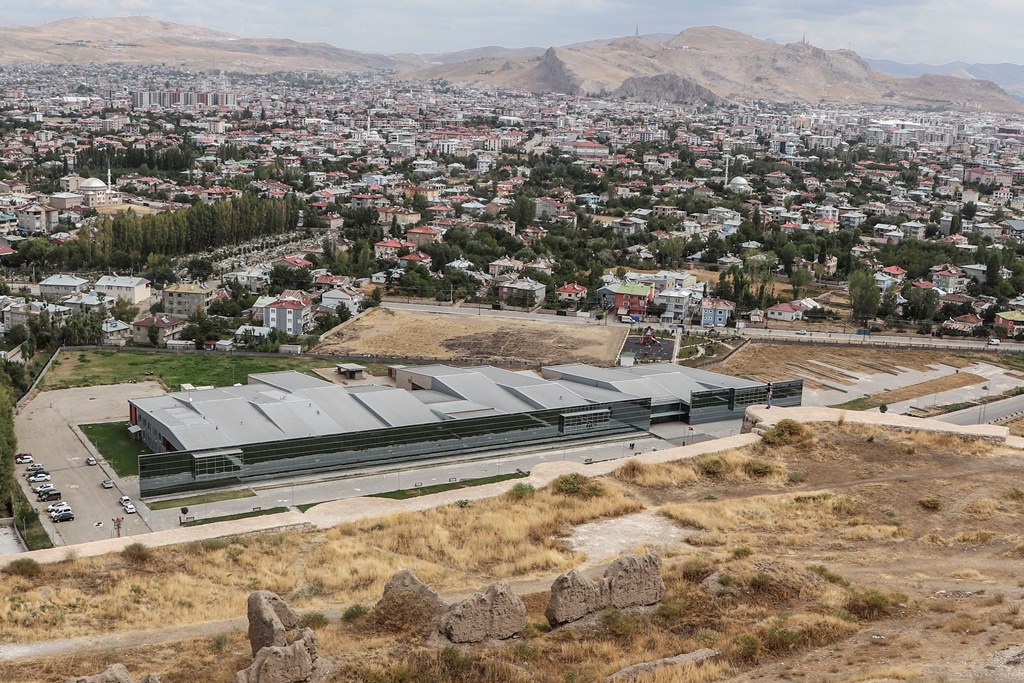
Van Museum's building, photographed in 2023; the museum was closed for repairs and display rearrangement at the 8 October 2026 check.
 Museum collections: what will they add after reopening?
The official description presents chronological collections from prehistoric periods through Urartu and the Persian, Roman, Byzantine, Islamic and Ottoman periods. They help turn building remains into an understanding of life: tools, skills, adornment and relationships extending beyond the rock itself. We are describing the announced collection, rather than suggesting that every gallery or object is on display during the closure.
After a future reopening announcement, start with Urartu and compare the castle with objects and their findspot labels. Distinguish an object from Van from one found in a neighbouring area, and ask about the new arrangement. Redisplay may change the route or the collection's location. Do not use an old gallery photograph as a definitive map. Children's activities, audio services or temporary exhibitions need confirmation after opening, rather than being assumed to continue because educational facilities appeared in the building description.
 Planning around the museum closure
The announced closure concerns repairs and display rearrangement and continues until the work is complete. Without a reopening date, sound planning excludes entry now instead of guessing a month for its return. Before paying for a tour advertised as “Van Museum and Castle”, ask for written confirmation: does it mean viewing the building from outside or entering the collection? What compensation or price adjustment applies if the main service is unavailable?
Do not try a side entrance or request access to a workshop for a brief look. Work is taking place to preserve the building and exhibits. New photographs online also do not prove public reopening. The official evidence needed is a changed visiting status and an announcement from the administration. Introductory material can help interpret the castle, but that is preparation rather than something to describe as an actual museum visit.
 A current programme and a future programme
| Situation | Suggested sequence | What is not promised |
|---|---|---|
| While the museum is closed | An explanation of the rock from below, the available castle route, a break and a selected city walk | Collection access or use of museum facilities |
| After a confirmed reopening | Museum first, a break, castle, then interpreting the old city | Every gallery or rock tomb being open |
For the future programme, allocate a separate museum visit before climbing. Do not book an indoor visit after an expected closing time. If adding a sight outside town, give it a transfer and an appropriate half-day instead of squeezing it between museum and castle. Your return plan should be clearer than your list of desired photographs.
 The lake, light and seasons
The castle's exposed spaces make weather central to planning. Bring a suitable layer if temperatures fall and water on warm days. Do not rely on an open shop at every level. Choose a climbing time that lets you see the ground and return. A beautiful lake view does not justify extending the descent into darkness or beyond the site's closing time.
On a cloudy or rainy day, focus on the buildings from lower points with a clearly accessible approach. The closed museum is not a rainy-day alternative. A boat trip or island is not an immediate substitute without considering transport, weather and its separate ticket. You can turn the day into a short city visit with introductory historical material and postpone elevated walking until conditions improve. Keep some time flexible instead of booking every hour with services that cannot be changed.
 Photography and distinguishing directions
A wide view of the rock shows the castle's relationship with the lake, while a lower view of the old city helps explain a later layer of Van's history. Note the direction and viewpoint. Simply calling a photograph “the castle” may make viewers think the buildings below stand on the summit. Do not step backwards towards an edge for a wider frame; change your phone lens or position within the permitted route instead.
Inside any exhibition opening in future, ask about photography and flash before using them. Do not photograph workshops or storage areas during the closure without permission. The old photograph of the museum building identifies the destination rather than proving it currently welcomes visitors. When posting your experience, state clearly whether you entered the museum or viewed only its exterior. This accuracy prevents another traveller from buying a programme based on a mistaken impression.
 Budget and museum passes
At the checked tariff, two foreign adults entering the castle at €3 each would pay €6, before transport, food and a guide. Do not add the closed museum's fee to today's budget as though it were an available service. If you hold a pass, confirm its name, type and validity for the site. Do not use the conditions of a citizen's card to interpret exemptions for a foreign group.
Compare a vehicle waiting for a stated period with separately arranged outward and return trips, and ask who pays any driver or guide admission needed. For a private tour, specify starting and finishing points and the museum's status in the service description. We do not assume a ticket is refundable if you stay below or do not complete the climb. Ask for product terms before paying. If the Urartian collection is your main reason for travelling, postpone booking that part until an actual reopening announcement appears.
 Travellers' questions
Is Van Museum currently open?
The official 8 October 2026 check confirmed closure from 13 January until repair and display works finish. The pages reviewed give no confirmed reopening date, so the current programme excludes its galleries.
Does the museum closure mean the castle is closed?
They are sites with independent visiting statuses. Confirm the castle and its routes for your day; do not infer one site's status from the other's name or their buildings' proximity.
Does a castle ticket include the museum?
The official list presents them separately, and we do not promise a verified package. Any special offer needs a clear statement of its contents, recognising that museum admission is unavailable during the closure.
Must we reach the summit?
No. Understand the rock and city from below, then choose the amount of walking that suits you. The higher route requires an open path and sufficient descent time. Reaching a particular photography point is not essential to a successful visit.
Can we enter the rock tombs?
Their inclusion in the archaeological description does not prove entry is permitted. Follow the public route and signs, and ask staff about available places without crossing barriers or seeking an unofficial approach.
What replaces the museum in rain?
There is no guaranteed indoor substitute in this programme. Reduce outdoor walking or rearrange the day, and check any other institution before going. An island trip or distant castle is not a direct replacement.
 Confirming your visit
- Castle status, hours, last admission and public route, using the correct site's name.
- Exclusion of Van Museum admission until a verified reopening announcement.
- Vehicle, waiting and return arrangements for those preferring to stay below.
- Suitable shoes, water, a weather layer and a charged phone.
- Enough descent time, respecting barriers and closed sections.
- The contents of any private tour and its cancellation terms before payment.
 Related topics
- Göbekli Tepe and Şanlıurfa: Archaeological Site, Museums and a Balanced Day
- İstanbul Archaeology Museums: Ancient Civilisations in the Historic City
- Attraction Tickets and Museum Passes in Türkiye: Inclusions and Value
- Planning Attraction Visits with Children and Older Travellers: Comfort, Access and Booking
- Seasonal Experiences in Türkiye: Tulips, Snow, Nature and Events
- Türkiye Attractions and Experiences: Guide Index
- Zeugma Mosaic Museum in Gaziantep: Roman Mosaics and the “Gypsy Girl”
- Museums, Palaces and Castles in Türkiye: Regional Highlights and Itinerary Planning
Image credits:
Image 1: Van Castle 1 — Leon petrosyan · CC BY-SA 4.0
Image 2: Van Museum building — Clemens Schmillen · CC BY-SA 4.0