

- Joined
- Feb 23, 2026
- Messages
- 207
- Reaction score
- 0
- Points
- 16
 Safranbolu's Museums and Historic Houses: Ottoman Heritage and a Route through Town
Safranbolu makes sense when you combine a museum explaining the community's history with a house showing how its people lived, then walk the lanes that connected trade and home life. A white building with wooden windows is more than a photographic backdrop: behind its façade lies a system of hospitality, privacy, work and seasonal change. This plan therefore focuses on Safranbolu Museum, also known as the City History Museum, and Kaymakamlar House, with a considered walk through the old market and an optional viewpoint.
This visit suits architecture and social history enthusiasts and families who prefer a quiet experience. Allow a substantial half-day for both visits, or a full day if you want to read the displays and sit in the market. Staying overnight gives you a less hurried morning and a different evening, but does not remove the need to plan entrances, stairs and transport.

 How does this town differ from a major museum city?
Safranbolu was a caravan stop between east and west, and its architecture flourished particularly in the seventeenth century. It entered the World Heritage List in 1994 for the value of its urban fabric and its relationship with trade and topography. Many houses you see date from the eighteenth and nineteenth centuries and the early twentieth, so do not assign every façade the same date.
The historic area has different parts: Çukur around the market in the lower area, Kıranköy with its residential and commercial characteristics, and Bağlar with gardens and summer houses. This suggested walk concentrates on the old town. Do not combine all three areas and Yörük village in a short walking route, or treat occupied homes as open galleries.

 Visit essentials before planning the day
- Main visits: Safranbolu Museum on the hill of the old Government House, then Kaymakamlar House in the market on Hıdırlık Yokuşu Sokak.
- Suggested time: 60–90 minutes for the museum, 35–50 minutes for the house, then an hour or more for walking and breaks. These are planning estimates.
- The route: Uneven stones, climbs and descents, and buildings with several floors; secure footwear matters more than the number of stops.
- Safranbolu Museum in winter: 08:00–17:00, ticket office closing at 16:30, according to the official timetable checked on 8 October 2026.
- Kaymakamlar House: Published winter hours are 09:00–17:30; confirm the visiting day and last admission with the operator.
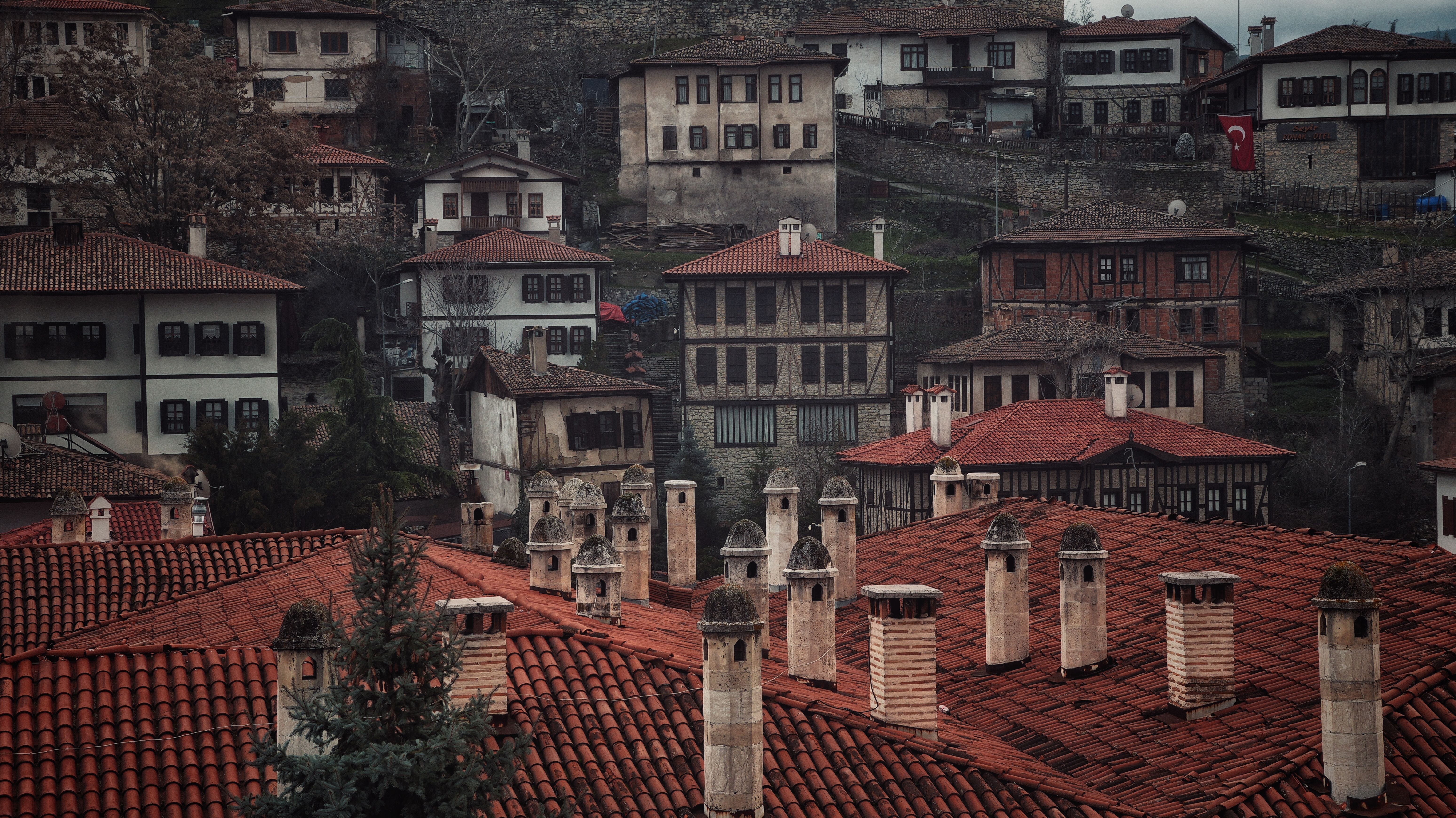
Traditional Ottoman houses and tiled roofs in Safranbolu, photographed in February 2026.

 The City History Museum: its former name and current operation
The stone building on the hill was the government headquarters. Construction began in the early twentieth century, and fire damaged it in 1976. It was restored to display Safranbolu's history and daily life, then passed into the Ministry of Culture and Tourism's operation in 2025 under the name Safranbolu Museum. You may therefore encounter its former name on maps, brochures and local signs; this guide refers to the same building in Kalemeydanı.
Begin by looking at the façade and elevated position before entering. This helps explain how the official building's purpose differed from the wooden houses below. The area is called Kale, meaning castle, but that name does not promise a route along intact castle walls. Its main landmarks here are Government House, the clock tower and the surrounding historic buildings.

 How to read the museum displays
Begin with the maps and the building's history to form a picture of the town, then turn to old photographs, clothing and objects associated with local life. The collection also includes coins and material from several historical periods. Ask how streets and houses changed in use over time, instead of simply recording objects' names.
The crafts section recreates workplaces such as a confectioner's, pharmacy, shoemaker's, blacksmith's and coppersmith's. Choose three trades and look for differences in tools and ways of serving customers. This gives children a clear task and makes the later market walk more meaningful. Follow the open gallery sequence on your visiting day: a gallery's inclusion in the museum description does not guarantee admission during exhibition preparation or internal works.

 Turning the visit into a learning experience
Keep a mental picture of one tool or scene before leaving, then look for the same function in today's market. Does the workshop remain, or has it become a gift shop? Is the product made here or merely offered for sale? A friendly question to a shopkeeper may help more than buying something of unknown origin.
If history interests you, write three short observations: what the photographs reveal about transport, how they show the division of work, and what changed in people's clothing and furnishings. You need not photograph every panel. If the explanations are difficult linguistically, read headings and diagrams first and ask a member of staff to explain one element. Direct explanations or tours in Arabic are not guaranteed services.

 Kaymakamlar House: what will you see?
This is one of the most useful house museums for understanding traditional family life. The official page connects its name with owner Hacı Mehmet Efendi and his military title; it is inaccurate to present it automatically as every district governor's official residence. Its construction date is approximate, with the tourism office page suggesting the early nineteenth century.
Notice the separation of receiving guests from family life and the rotating cupboard that helped serve food between the two sections. A room served several purposes: sitting, eating and sleeping, with cupboards for bedding and an enclosed washing space. Understand this arrangement before judging the limited visible furniture. At the stairs, pause out of the group's passage, then continue calmly to the next floor. Visiting the house demands more attention to confined space than to speed.
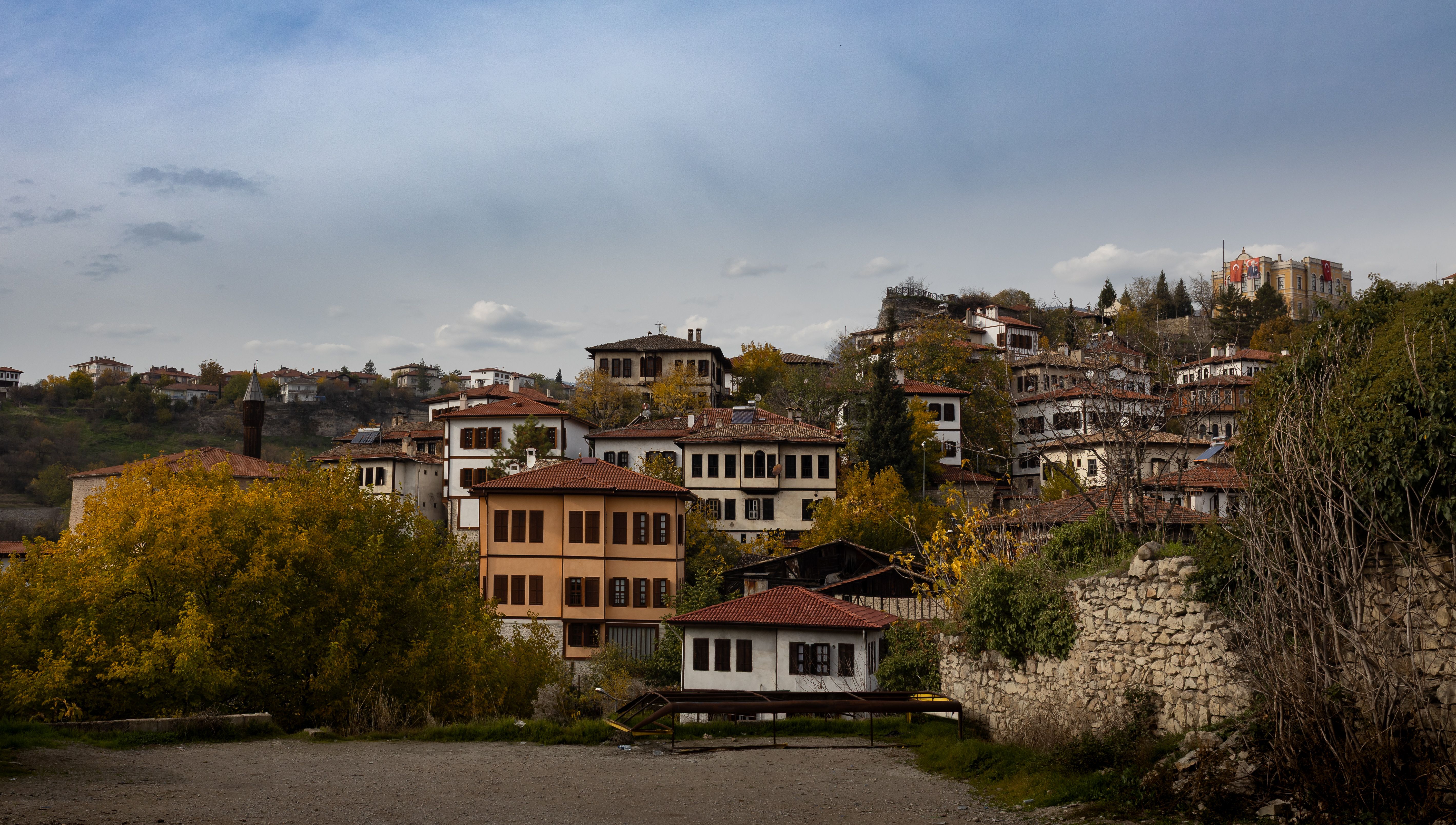
Historic houses in Safranbolu: a view illustrating the town's architecture, rather than the museum interior.

 Architectural details worth a second look
Compare the stone base with the timber-framed upper floors, projections with windows, and the roof's breadth with the surrounding lanes. Decoration is only part of the story: differences between floors show the relationship of storage and work to living space, light and privacy. The internal hall distributes movement between rooms.
Try a simple exercise: from a permitted position in the hall, identify a guest's route to the seating area and a family member's route to the rest of the house. Then compare these with the door's position on the street. Do not open cupboards to test their mechanism or sit on historic furniture unless staff explicitly identify it as interactive; looking is enough to understand its use.
 Other houses: a selected addition
Names such as Mümtazlar, Kileciler and Karaüzümler appear in heritage guides, but access and operation differ between a house museum, tourist building and private property. Choose an additional house after asking the tourist office whether it is open today and offers an interior visit. Avoid planning five successive houses simply because their names appear in an old guide.
Compare the additional house with Kaymakamlar in its layout, garden and façade, rather than its number of photographs. If time is short, one carefully explored house works better for a family plan. Do not enter an open gate at an occupied home or photograph residents or windows closely without permission.

 The clock tower and hill surroundings
The historic clock tower beside the museum area connects the official building with the rhythm of public life. The official account dates it to the late eighteenth century and describes its surviving mechanical system. Look at its position relative to the market and surrounding buildings instead of making it a quick photograph stop.
Include an exterior view with the museum visit. Entering the tower, seeing its mechanism or reaching its top requires separate confirmation; a location on a map does not make climbing available. On wet ground or with a young child, choose a safe, spacious place to look and photograph, then descend without adding more climbing.
⑩  Prices and hours: a distinction that avoids confusion
Safranbolu Museum is free until 31 December 2026, according to the official tourism office. This is a clear time limit, rather than a promise of free entry in the following year. It applies to this museum; do not extend it to Kaymakamlar House, viewpoints or private museums.
 Kaymakamlar House operates separately: We could not establish a clear current admission price for the house, so ask about the amount, children's exemptions and payment method before entering. Do not rely on an old lira price or assume museum passes are accepted.
To check Safranbolu Museum, call 0370 725 25 27. For local guidance, the tourist office is in Kazdağlıoğlu Square, telephone 0370 712 38 63. Ask about closing days, open galleries and last admission; an early ticket office closure alone can make an arrival at the day's end unhelpful.
⑪  Getting there and choosing your starting point
Safranbolu is accessible by road from Ankara, İstanbul and other cities, including via nearby Karabük. Check your bus ticket's destination carefully: arriving in Karabük or at Safranbolu's terminal is different from being dropped at the historic market. Arrange the final leg by local transport or taxi, and ask where stopping is permitted near your starting point.
If driving, save a practical car park's address before entering the lanes. Avoid following the shortest suggested route into a narrow or steep street; parking and walking is preferable. If arriving with large bags, leaving them at your accommodation before the tour reduces the difficulty of stones and stairs. We do not assume that every house museum offers large-luggage storage.
⑫  A town route that avoids repeated climbs
Begin with orientation at the market and Kazdağlıoğlu Square, then plan to climb the museum hill just once. If climbing is tiring, take a taxi to the nearest suitable permitted point and agree where to get out; a short, uneven stretch may remain before the door.
Visit the museum and clock tower surroundings, then descend to the market for a break. Continue to Kaymakamlar House on Hıdırlık Yokuşu Sokak, leaving the higher viewpoint optional according to ability and weather. This avoids repeatedly returning between the hill and house. A suitable finish is in the market or at an agreed vehicle point, rather than the top of distant stairs far from your return transport.
⑬  A half-day programme
- Start: Brief orientation in the market, then about an hour in the museum with room for reading.
- Next stop: View the clock tower from outside and descend at an easy pace; stop for water before continuing.
- The house: Visit Kaymakamlar, choosing specific details instead of following every group along the passages.
- Finish: A short crafts and market walk, then a meal or coffee and a return to transport.
Allow a half-hour reserve instead of booking a tight connection after the last stop. If you start late, shorten the viewpoint and additional house. Removing the museum and leaving only shopping changes the nature of the day you planned.
⑭  A full day or overnight stay
For a full day, make the morning about the museum and house, midday about rest and food, then take a shorter architecture walk in the evening. Add Cinci Han to understand its connection with trade after confirming which sections admit visitors and any charges; historic buildings' uses change between hospitality and sightseeing.
For an overnight stay, ask clearly about stairs, parking, carrying bags and heating before choosing accommodation. A historic house may be beautiful but involve moving between levels. The next day can include a separate journey to Bağlar or Yörük village. Yörük is outside the central circuit; do not add it as though it were the final turn in a short walk.
⑮  Older visitors, wheelchairs and pushchairs
The practical difficulty here is stones, slopes and wooden stairs. We have not verified a continuous step-free route through the two buildings or streets, so call and explain the actual need: a wheelchair, difficulty climbing or a pushchair. Ask about a suitable entrance, the possibility of visiting one floor, toilets and a vehicle drop-off.
Reduce the route to the accessible parts of the museum and views of house façades and the market in a closer area. Avoid a high viewpoint if it would use up the energy needed to return. Carrying a wheelchair up narrow stairs should not be an automatic solution: assess the place and appropriate help. For families, a lightweight pushchair helps in some streets, but carrying a child or shortening the visit may be easier inside the house.
⑯  Families, weather and breaks
Give children the task of finding three building materials, then comparing an old craft tool with a market product. Break reading into short periods and rest before the house so that they do not enter narrow passages already tired. Do not ask them to touch objects or run between rooms to complete their task.
Rain makes the stones more slippery; start with galleries and reduce outdoor walking. In heat, carry water and rest between climbs. Keep a light jacket if your plan continues into the evening. Ask about toilets before leaving the museum; a later café does not guarantee facilities for every passer-by.
⑰  Photography, food and respect for the place
Photograph façades from a position that allows people to pass and ask permission before photographing a workshop or person. Inside the museum and house, follow signs and staff instructions about flash and tripods; we have not established one photography rule covering all sites. Photographing a lit window at night may reveal residents' private lives, so choose a public street view.
Sweets and coffee make a suitable break between visits. Ask about ingredients and allergens before buying, and obtain a receipt for an expensive product. Do not assume everything bearing the name saffron uses the same quantity or quality. Support a workshop whose local work is clear, while preserving museum time before becoming absorbed in shops.
⑱  Frequently asked questions
Are the City History Museum and Safranbolu Museum different places?
This plan refers to the same building; its management and name changed to Safranbolu Museum in 2025.
Does free museum entry include Kaymakamlar House?
We cannot infer that. Confirmed free entry applies to Safranbolu Museum until the end of 2026; ask about the house separately.
Is there a castle beside the museum whose walls I can climb?
The area's name relates to the old castle. This guide does not offer a route along intact walls; the visit covers the museum, clock tower and historic surroundings.
Are all the white houses open to tourists?
No. Some are homes, hotels or private premises. Choose a house museum whose operation is confirmed and respect property boundaries.
How much time do I need if I cannot climb much?
Arrange half a day with transport to the nearest suitable entrance, choosing one indoor stop and a short walk. Confirm step-free entry in advance.
Can I add Yörük on the same day?
Yes, with transport and enough time, after the main visits. It is outside the market walking circuit.
What is the best order for a first visit?
The museum for context, then the house for daily life, then the streets to see their relationship. Reduce stops if late or if the weather changes.
 Related topics
 Museums, Palaces and Castles in Türkiye: Regional Highlights and Itinerary Planning
- Trabzon Castle and City Walls: Historic Defences and Views over the Black Sea
- Trabzon Museum in Kostaki Mansion: Archaeology, Local Life and the Early Republic
- Trabzon’s Museums, Fortifications and Historic Sights: Six Places to Explore
- Attraction tickets and museum passes
- Planning visits with children and older travellers
- Türkiye attractions and experiences index
- Seasonal experiences, nature and events
- Sinop Castle and Archaeology Museum: Reading a City, Harbour and Walls
Last edited by a moderator: