

- Joined
- Feb 23, 2026
- Messages
- 207
- Reaction score
- 0
- Points
- 16
 Reading Türkiye’s Public Budget and the Citizens’ Budget Guide in 2026 Start with the question you want answered
You may read a news report about Türkiye’s education or health budget and want to understand its implications for a service you use. Before looking for a large number, define your question: do you want to know the funding the state allocated, what it spent during the year, or the cost of a particular project? These are different questions, each requiring an appropriate document. Mixing them makes a comparison look straightforward but produces a misleading conclusion even if the figures themselves are correct.
This guide explains how to read the 2026 budget documents available when the original guide was reviewed on 8 October. It does not predict the year’s outcome before the year ends. The Presidency of Strategy and Budget’s website provides the budget law, the citizens’ guide and periodic execution figures. A later year appearing in the budget preparation list means work on future plans has begun; it does not turn that year’s estimates into money already spent.
Start a small record noting the document’s title, year, institution, type of figure and unit. When you return to it weeks later, you will know whether you were reading the opening plan, an update or results for part of the year. This helps students, researchers and residents following public services, and reduces reliance on a short news headline that leaves the data’s limitations unexplained.
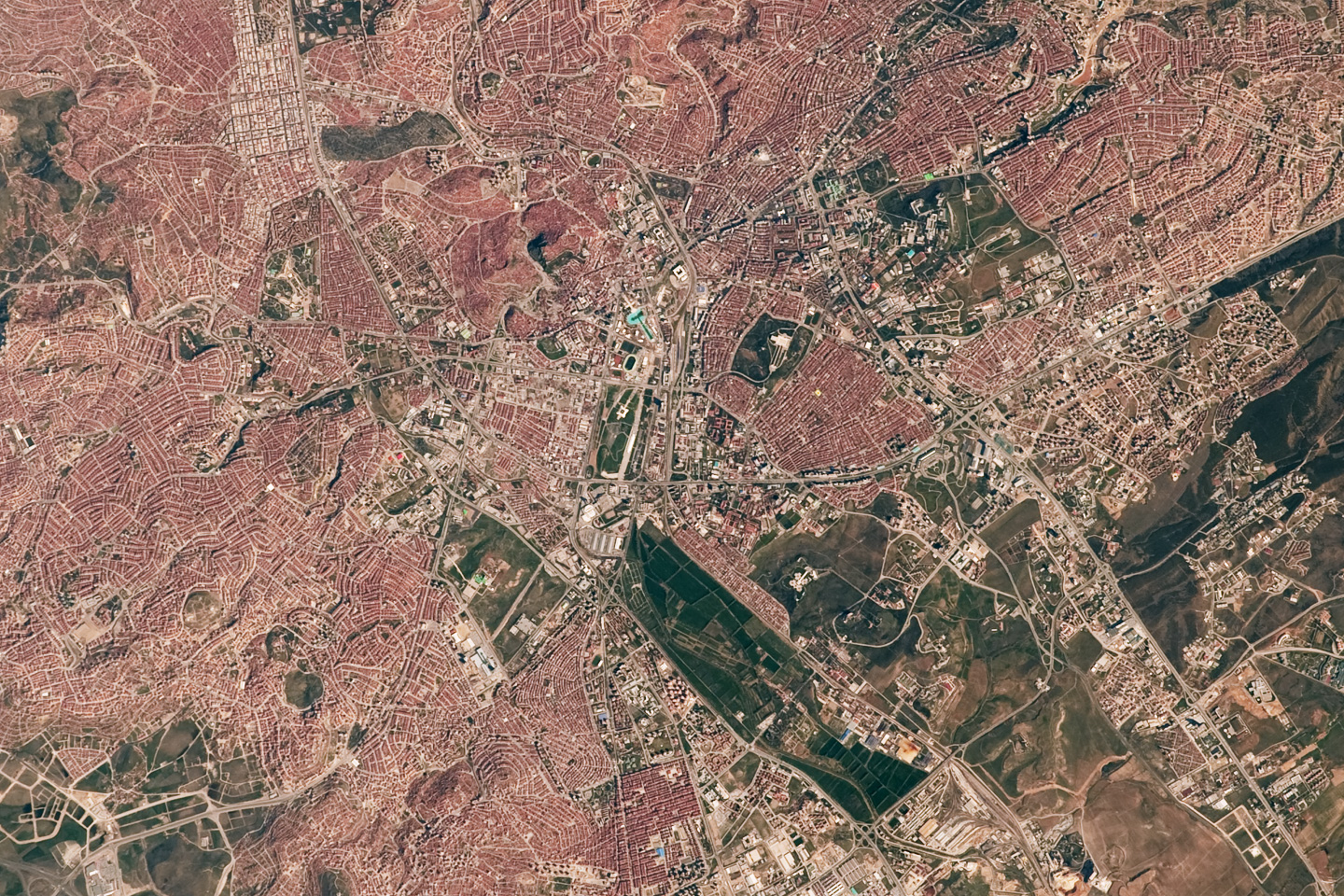
Archive photograph of Ankara taken from the International Space Station on 11 April 2009; this general view of the capital does not depict its built environment in 2026.
 What is the citizens’ budget guide for?
The Citizens’ Budget Guide, Vatandaşın Bütçe Rehberi, offers an accessible starting point for understanding terminology and the broad allocation of resources before tackling long tables. Its official page presents the 2026 edition dated January. Use the page for the 2026 guide to reach the file, then retain its title so you do not confuse it with an earlier edition appearing in search results.
The simplified guide helps you organise your questions, but cannot replace an institution’s table or execution report when you need a particular detail. If it presents a broad sector such as education, do not assume that total represents the budget of a school in a particular neighbourhood. Ask a more precise question: which institution, programme and level of service? Moving from the overall picture to a specific line is more useful than arbitrarily dividing a national amount among the population.
You can read in two stages: first browse the contents and concepts, then choose a section relevant to your interests. You do not need to memorise every Turkish term. A short list pairing each term with its meaning and the question it answers is enough to consult whenever you open another table. This allows understanding to develop over time, without the file’s size becoming a barrier.
 An approved budget differs from a budget proposal
The central government budget laws archive contains the laws and their schedules. The law for 2026 is Law No. 7567, adopted on 21 December 2025 and published at the end of that month. A file link dated 2025 with a title referring to 2026 is therefore entirely normal: a document’s issue date differs from the financial year it governs.
Look for the word Teklif if you receive a document during the debate stage: it means a proposal. Do not compare an old proposal with execution results as though both belonged to the same stage. Look for Kanun for the enacted version, while checking any later amendment relevant to your question. The filename alone is insufficient; read the cover and table headings.
When comparing a public statement with the budget law, record exactly what was said and what the document establishes. An appropriation for a programme shows its approved funding framework, but does not by itself prove that all its activities have been completed. This remains true for official headlines: announcing an intention, an allocation or an opening describes different stages that should remain clear in your published summary.
 Understand a table’s scope before adding figures
The central government budget does not automatically encompass all public money in the country. Read the document’s scope instead of using “the state” in an unrestricted sense. Your interest may be a ministry, university, regulator, municipality or affiliated body; these do not appear in the same way in every financial presentation. An institution’s absence from a table’s scope does not prove that it has no budget.
The 2026 law page presents schedules classified by institution type, tables allocating expenditure by programme, and revenue estimates for later years. Choose the table suited to your question: examining programme expenditure differs from finding a particular institution’s appropriation. Do not add a sector total to the totals of institutions participating in it before checking that the amounts are separate, as you might count the same money twice.
Label each working sheet with its boundaries: institution, year, table type, and whether the figures are estimates or results. If you change the scope during your research, start another sheet instead of merging values. Differences between amounts then become understandable differences in coverage; an apparent disagreement between sources may disappear without either being wrong.
 Six financial terms to help you read
Ödenek means an appropriation; Gider means expenditure or expenses, depending on the table’s context; Gelir means revenue; and Gerçekleşme denotes actual execution during the period shown. Tahmin means an estimate, while Bütçe Dengesi is the budget balance, or the difference between revenue and expenditure. Retain the original term in your notes: a brief translation can conceal the distinction between a planned column and an actual one.
Do not treat planned revenue as a guarantee of full collection, or an appropriation as a transfer already received by a beneficiary or a contract already performed by a company. Other figures may concern commitments, amounts due or financing, each serving a different purpose. When you encounter an unfamiliar term, read the table heading and the note beneath it before inferring a number’s meaning from its position on the page.
The unit is part of the number. If a table uses millions of lira, any figure reproduced from it needs that unit. Commas and full stops may follow conventions different from those you are used to in Arabic or English. Test the format against an easily understood figure, and do not convert numbers automatically before confirming the file’s convention.
 Track execution in 2026 over a clearly defined period
The monthly central government budget execution page is the appropriate starting point when your question becomes: what has happened so far? When this guide was reviewed, the list displayed August 2026 data. The file presents both the individual month and the January–August period, so every summary should clearly name the period selected.
To examine a change in revenue in a particular month, use the corresponding monthly comparison. To follow the year’s course, read the matching cumulative period in the comparison year. Do not compare eight months of this year with an entire previous year, or describe August’s results as the final outcome for 2026. Even after much of the year has passed, some expenditure and revenue may be concentrated towards its end.
An execution percentage also needs a defined denominator. Does it measure the actual amount against the annual appropriation shown, or the change compared with an earlier period? An identical percentage sign does not make the meanings identical. Reproduce the column label alongside the value; if you recalculate it, state your calculation so another reader can check it against the same document.

Archive photograph of the Turkish Constitutional Court building from October 2020; it does not document a judgment or hearing in 2026.
 Read expenditure by purpose and by nature
You may need two complementary perspectives: the service or programme receiving the money, and the nature of the expenditure itself. Wages, purchases, transfers and capital expenditure serve different functions. Increased operating expenditure on an existing service does not by itself establish that more facilities are being built; lower construction expenditure during a particular period does not prove that all work has stopped.
To assess a service, start with the programme, then seek a performance indicator or activity explaining the appropriation’s use. Be specific: what output is expected, what has been announced as completed, and when was it measured? An institution may spend on maintaining facilities instead of building more; a broad line may encompass several activities that its heading alone cannot distinguish.
The Presidency of Strategy and Budget provides an introduction to programme budgeting. Practical reading does not require a complete technical study of the system: connect the financial line with the programme description, then find the appropriate report when needed. Avoid judging service quality solely by its funding share. Beneficiary numbers, geographical distribution and continuity require other evidence.
 Worked example: a school appropriation is not a completed school
Imagine a hypothetical education programme with an appropriation of 100 financial units and reported expenditure of 40 units during a specified period. Expenditure is 40% of that appropriation in this example, but this does not mean that 40% of a school has been completed. Spending could include design, equipment, maintenance or payments associated with different stages; physical progress requires a separate monitoring document.
If you want to know when a building will enter use, bring together the project’s identity, contract information, execution reports and the competent institution’s service-opening announcement. If your question concerns the allocation of money, stay with the budget documents and the programme’s justification. Both are legitimate questions, but combining their evidence in one headline without distinction makes the conclusion exceed what the data supports.
For a short report on this example, suitable wording would be: the report recorded expenditure of 40 units during the specified period, but that line contained no measure of the building’s completion. This is verifiable and lets readers distinguish what is known from what requires another document. These figures are purely educational, not data about a school or institution in Türkiye.
 Comparing two years requires more than nominal amounts
An increase in lira may be nominal, while your question concerns service volume, purchasing power or beneficiary numbers. Do not say the capacity to provide a service rose by the same percentage merely because its appropriation increased. For a comparison in real terms, explain the indicator, base year and method used. Where suitable comparison tools are unavailable, identify a nominal result as nominal.
Check for changes in programme names or the transfer of responsibility for an activity between institutions. An institution’s spending may look lower because some work moved to another body. Consult the notes and classification, keeping a consistent definition for the series compared. If the scope cannot be aligned, state that the comparison is limited instead of presenting a precise number that implies a match where none exists.
Do not conclude that a province benefited less from a national total with no geographical breakdown. A location-specific question requires a distribution table, project file or institution’s report. Keep discussion of general priorities separate from conclusions about a particular place: a project located in one province may also serve others.
 Create a record you can update
When saving a file, give it a name identifying the year, period and document type, such as August execution or the budget law. Note the page used rather than relying on a cropped screenshot hiding the heading and unit. If you find a new report version, retain both with their dates so you can explain any correction or presentation change.
Begin each reading session with one question: a programme’s appropriation, a change in a line or a period’s result. Record other questions for later instead of jumping between tables with different scopes. A three-sentence summary can state the document type, what it shows and what you could not establish. This small record makes monthly follow-up practical and helps explain corrections when newer data becomes available during or after the year.
 Checklist before sharing a budget figure
- Does the document concern 2026, and is it a proposal, enacted law or execution report?
- Are the institution and budget scope clear, and have you found the table suited to your question?
- Have you recorded the unit, currency and number format?
- Does the period cover one month, a cumulative period or a full year?
- Are you comparing appropriation with appropriation, or actual execution with actual execution for the same period?
- Have you avoided adding overlapping amounts or treating expenditure as a measure of physical completion?
- Have you saved the link, page number and review date to make corrections easier?
You can turn this checklist into a short card accompanying a chart or post. A link at the end is insufficient if the headline leaves the figure’s type unclear. Put the document title, period and unit beside the result, then explain in one sentence what that result can establish. Debate about funding choices becomes more precise and less reliant on guesswork.
 Frequently asked questions
Does the citizens’ guide give me an individual financial entitlement?
Its purpose is to explain the public budget. Eligibility for an allowance, service or individual entitlement requires the relevant institution’s conditions and programme provisions; it cannot be inferred from a general budget line in the guide.
Can the whole year be assessed now?
You can assess the period covered by a published report, distinguishing what happened from what remains a forecast. The annual outcome requires completed-year documents once published.
Why might a ministry’s figure differ from a sector’s figure?
Their scope, classification and included institutions may differ. Compare headings and notes before assuming an error or contradiction.
Should I start with the law or the monthly figures?
Start with the guide for general understanding, the law for an appropriation question, and periodic execution reports for actual spending. Then consult the document that complements your specific question.
 Related topics
 Following Public Affairs and Government Decisions in Türkiye
 How Laws and Official Decisions Are Made in Türkiye: A Guide for Residents and Visitors
 Türkiye’s Official Gazette: How to Find Laws and Government Decisions
 Laws, Presidential Decisions and Local Rules in Türkiye: Who Has the Power to Act?
 Municipalities in Türkiye in 2026: Responsibilities, Services and Getting Procedures Right
 Municipal Digital Services in Türkiye in 2026: Payments, Requests and Tracking
 Municipality or CİMER? Choosing the Right Complaint Route in Türkiye in 2026
 Organising and Storing Important Documents in Türkiye
 Türkiye Public Affairs and Politics: Guide Index 2026
Last edited by a moderator: