
 A commercial property should be assessed around a business that can operate there and a tenant who can pay the rent.
Buying a shop or office in Türkiye may provide suitable income, but differs from buying an apartment in licensing, fit-out, demand and contract terms. An attractive frontage does not remedy unsuitable use, and a well-known tenant does not make every purchase price reasonable. This 2026 guide examines the transaction from an investor-landlord's perspective, with a hypothetical calculation showing vacancy and fit-out costs. Office photographs are illustrative; figures are neither market prices nor guaranteed yields.

 Illustrative office interior; the photograph does not establish licensing or suitability.

 Choose the tenant type before the unit
Ask who will pay the rent and why they need the location. A neighbourhood shop depends on footfall and frontage; a service office on access, lifts, parking and internet; a food business has requirements unlike an accounting office. Do not group them all as 'commercial' and apply the same comparables.Define the prospective tenant's space, fit-out capacity and likely rental budget. Observe comparable occupied and vacant units, repeated listings and surrounding buildings, but do not turn limited observations into a verified occupancy rate. If the property is sold with a tenant, request evidence of the existing rent. A unit difficult to relet to another business after that tenant leaves needs a larger reserve and different negotiation, however comfortable today's contract appears.

 Match ownership and permitted use
Check the unit number, position, approved area and description against the register, project, building permit and occupancy certificate. Establish whether storage, a mezzanine or exterior space included in the price is an unapproved addition. If frontage or part of the operating area occupies shared space, verify usage rights rather than assuming private ownership.A unit registered as residential but used commercially needs specific checks on use, building approvals and the activity: years of office use are insufficient. Review the management plan and restrictions on activities, signs and noise. Request a response from the municipality or licensing authority tied to the proposed activity and the specific unit and address. The document establishing ownership is different from the permit authorising a business; buying the property does not replace checking the latter.
| Check | Main question | A point needing clarification |
|---|---|---|
| Registered unit | Does the property match the register and approved project? | Unrecorded storage or an extension |
| Use | Is the intended activity compatible? | A residential unit operating commercially |
| Shared areas | Is use permitted and documented? | Seating or signs without approval |
| Licensing | Is the activity's file valid and capable of being updated? | A licence for another operator or activity |

 Review licensing before committing to fit-out
Municipal procedures require workplace licensing that takes account of the activity, location, building records and safety. Fatih Municipality advises reviewing a business premises file before taking over an existing operation, including planning, fire, security and applicable distance requirements. 'There is a licence' is therefore insufficient without identifying its type, holder, activity and update status.Request the existing licence, if any, and ask what changing the operator, activity or floor area entails. Do not assume a shop licence permits a restaurant or transfers automatically with the property purchase. Some activities need additional approvals, and technical requirements determine the necessary work. For the investor, make letting to the target business conditional on establishing suitability, and define who pays for required work and what happens if licensing fails.

 Inspect frontage and access during working hours
Visit on a weekday morning and evening, rather than only during a quiet tour. Observe visibility from pedestrian routes, road crossings, stopping and loading, entrance height and columns obstructing sales space. Wide frontage on a road where customers cannot stop may be less useful than a smaller frontage near a clear everyday destination.For an office, test lifts, stairs, ventilation, parking and building opening hours. Check whether clients can arrive through suitable entrances, and whether the address is clear and signage permitted. Assess accessibility and activity-specific requirements with a specialist, and actual connection speeds rather than the advertised network. Explain what these features mean for the tenant: fewer usable hours, higher fit-out costs or a narrower customer base. This turns a viewing into an economic assessment rather than a visual impression.

 Cost the fit-out and future changes
Review electrical capacity, water, drainage, air conditioning, ventilation, service routes and, where relevant, floor loading. Fitting a shop for one business may leave equipment the next tenant does not need. Separate improvements to the property from activity-specific equipment: the former may remain useful, while the latter may need removal, maintenance or transfer.Request a technical report and quantities before accepting a general improvement allowance. Define in the lease who owns installations at the end, what must be reinstated and who repairs removal damage. An owner's consent alone should not authorise alterations to the building or shared areas where further approvals are required. Keep photographs, a pre-fit-out condition record and approved drawings to distinguish ordinary wear from damage or unagreed alterations.

 Assess the tenant and existing lease
For an occupied property, obtain the lease, supplements, payment schedule, deposit and correspondence about rent changes. Reconcile actual collections with the contract: a high paper rent is unhelpful if recurring discounts or arrears reduce it. Verify the signatory's capacity and representative's authority, and whether guarantees continue after ownership changes.Ask about rent-free periods, repairs promised by the seller, disputes, assignments, subletting and actual use. Have a lawyer review transfer of rights and obligations, tenant notification and payment arrangements rather than informally replacing the lease. Distinguish buying the unit from buying the tenant's business: its name, customers and equipment may be excluded. If the tenant is related to the seller, test whether the arrangement will realistically continue after completion.
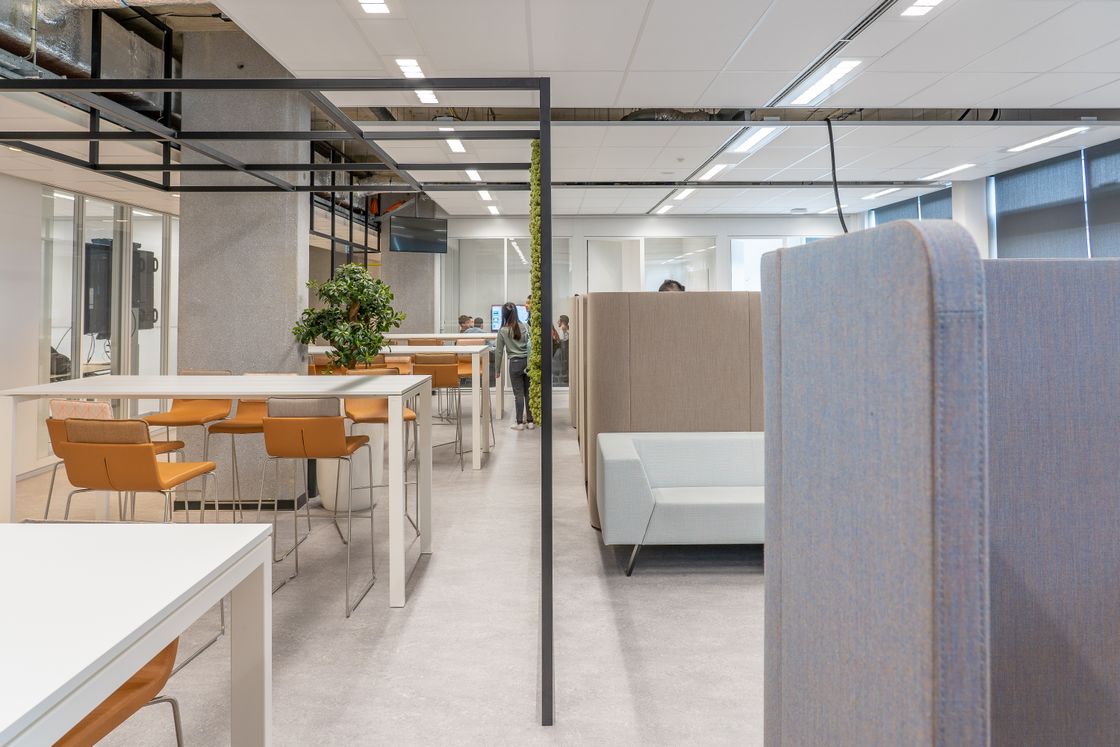 Illustrative office space; actual fit-out and services require inspection.

 Lease terms that affect returns
Returns depend on the commitment period, rent-free periods, allocation of maintenance and charges, and rent commencement. Specify whether payment starts at key handover or after fit-out, and define the landlord's works. Describe the activity clearly, with conditions for changes, assignment and required approvals, without assuming every agreed clause is enforceable in the same way.Review rent adjustment, termination and security under the rules applicable to the workplace lease. A long term does not mean unlimited increases or automatic eviction for any breach. Do not model annual increases merely because they appear in an advertisement. Agree the collection account, payment descriptions, supporting records and evidence that other obligations are paid. Obtain a final version both parties understand, with appropriate translation if needed, keeping supplements with the lease rather than scattered across messages.
| Term | Financial effect | What the lease should clarify |
|---|---|---|
| Rent-free period | Months without income | Start, end and handover conditions |
| Fit-out | Upfront spending or a tenant contribution | Ownership, removal and approvals |
| Charges and maintenance | Changes to actual net income | Each party's responsibilities |
| Security | Protection is not income | Purpose, use and return |

 Separate cash receipts, tax and expenses
Have an accountant establish whether contractual rent is gross or net to the recipient, whether the tenant must withhold tax, and how withholding is documented and reflected in the owner's return. Treatment depends on the parties, property and owner's tax status; invoicing and VAT may also arise. Do not apply a residential rental model to commercial property without this review.Keep collection, withholding and expense records, distinguishing bank receipts from gross taxable income. Withholding is not an ordinary operating expense to ignore in the tax calculation: its treatment must be understood. Standardise currency, period, taxes and charges when comparing offers. Do not call a yield 'net' if only maintenance has been deducted. The following example explicitly excludes tax and financing because their amounts depend on the investor's circumstances and actual contract.

 A hypothetical vacancy and operating income example
Assume a purchase price of TRY 5,000,000 and additional acquisition and fit-out costs of 400,000, giving invested capital of 5,400,000. Assume gross contractual rent of 40,000 a month, with two months without collection because of vacancy or agreed rent-free periods. Recognised revenue in this scenario is 400,000. Deduct 80,000 in operating expenses borne by the owner, leaving 320,000 before the owner's tax, financing and further capital expenditure.| Annual assumption | Gross receipts | Operating costs | Balance before tax and financing |
|---|---|---|---|
| 12 paid months | 480,000 | 80,000 | 400,000 |
| 10 paid months | 400,000 | 80,000 | 320,000 |
| 8 paid months | 320,000 | 80,000 | 240,000 |

 Consider resale before buying
Who will buy from you: an owner-occupier, an income investor or a developer needing a particular site? A property suitable only for a narrow activity may attract fewer buyers even with good current rent. Do not assume the space can be divided or its use changed: verify planning and technical feasibility.Compare units with similar areas, frontages, floors, uses and occupancy, distinguishing listings from verified sales. A long lease at a weak rent may deter investors, while a vacant unit needing fit-out may affect an occupier's interest. Retain collection, maintenance and document histories: a clear file makes buyer due diligence easier and reduces uncertainty. Do not assume guaranteed appreciation; test continued ownership if a sale cannot be achieved on your intended timetable.
 Illustrative office for comparing layouts; this is not a sale or letting offer.
 Checklist before paying a deposit
- Match ownership, approved plans, area and use, including all additions.
- Review the licensing file and intended activity with the competent authority.
- Inspect frontage, access, services, safety and fit-out costs.
- Audit the existing lease, receipts, deposit and earlier promises.
- Define rent, charges, maintenance and taxes in a clear financial model.
- Test longer vacancy, a new fit-out, a lower selling price or a delayed sale.
 Common mistakes and questions
Is a shop always better than an apartment? It depends on demand, fit-out, lease terms and liquidity. Higher gross yields may come with longer vacancy and greater changeover costs.Does the current tenant guarantee success? Check their lease, ability to continue and actual payments, then assess suitable alternatives.
Does an old licence cover any activity? Check the activity, operator, premises and required approvals: changes may need an update or a different procedure.
Should I count the deposit as revenue? No. It carries contractual obligations and should remain separate from rent and operating cash flow.
What is the most common mistake? Advertising a yield by dividing twelve months' rent by the purchase price, omitting acquisition, fit-out, vacancy, expenses and tax. Start with a property that can operate, a comprehensible lease and provable payments; price and return can then be assessed more realistically.
 Related topics
 Checking a Turkish Title Deed Before Paying a Deposit: Mortgages, Attachments, Shares and Usufruct Building Permits and Occupancy Certificates in Türkiye: Identifying Unauthorised Work Property Valuation and the Investment Value Certificate for Foreign Buyers in Türkiye A Landlord’s Tenancy Agreement in Türkiye: Rent Increases, Deposits, Maintenance and Records Property and Rental Income Taxes in Türkiye for Non-residents: Records and Returns Managing Property in Türkiye Remotely: Management Contracts, Rent Collection and Maintenance Assessing a Property Investment in Türkiye: Net Rent, Financing and Risk Selling Property in Türkiye in 2026: Pricing, Tax and Net Proceeds Co-owning Property in Türkiye: Ownership Shares, Management and Exit
Last edited by a moderator: