

المسافر
Active member
- Joined
- Dec 3, 2025
- Messages
- 189
- Reaction score
- 0
- Points
- 16
Urban renewal in Istanbul involves building safety, earthquake assessments, neighbourhood regeneration, infrastructure, and financial or rental support, as well as replacing old buildings.
Owners and tenants have several routes for investigating a building. The crucial distinction is between rapid screening, a statutory risky-building assessment and a detailed engineering analysis. Each serves a different purpose.
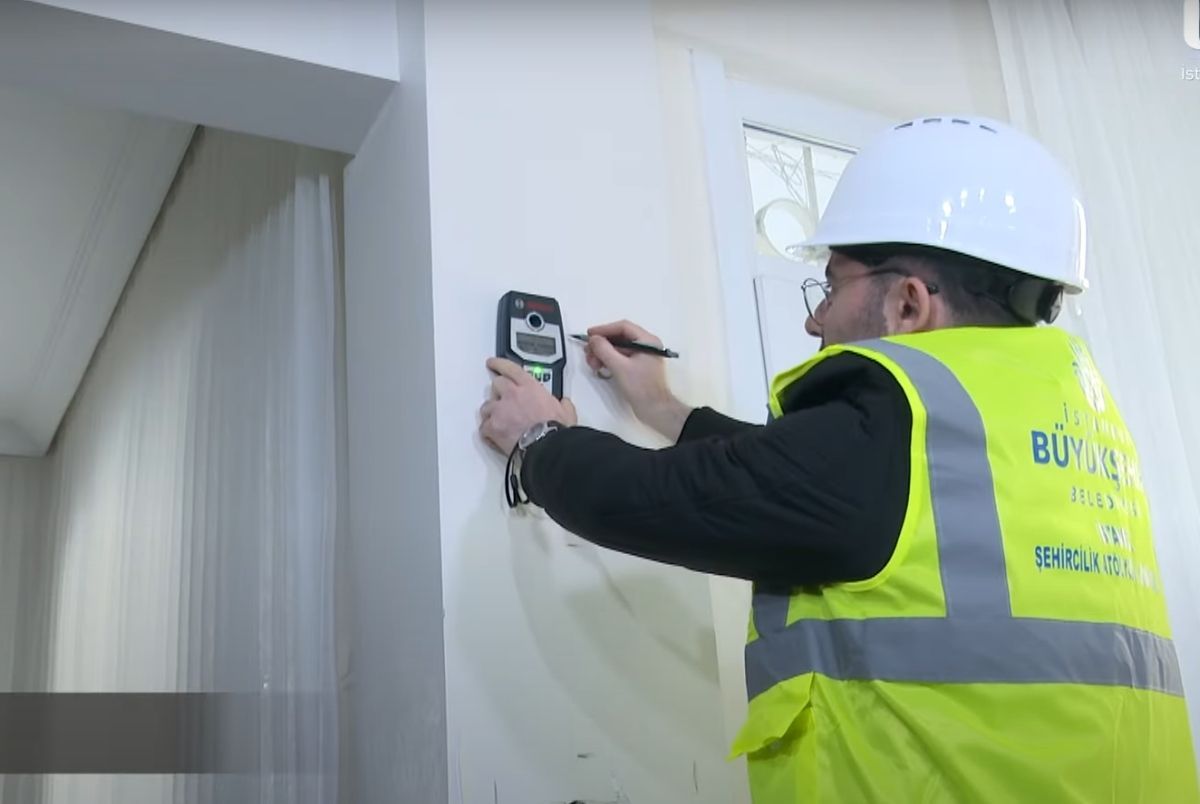
Rapid building screening in Istanbul, shown in a report published in February 2024.
1.
The 16 August 2026 report quoting the Ministry of Environment, Urbanisation and Climate Change gives the following counts of independent property units in Istanbul:
Do not add these totals together as separate projects. Programmes can overlap and authorities may count units differently.
2.
An old building is not automatically replaced by something taller or more expensive. A properly planned process includes:
3.
The municipality’s free building-screening service provides an initial assessment. Work generally includes measuring size and height, recording column and shear-wall dimensions, rebound-hammer measurements, local inspection of reinforcement, bar diameter and corrosion checks, and analysis to produce an initial score.
Concrete core samples are not taken as part of this rapid screening.
The official FAQ primarily covers pre-2000 residential buildings: reinforced-concrete frame or frame-and-shear-wall structures up to ten storeys, and masonry buildings up to five. The published scope also limits the concrete buildings’ total height to 30 metres and excludes certain special or mixed structural systems.
An owner, authorised representative or tenant may apply. Access and the absence of objections from the relevant parties are needed for the inspection to proceed.
This procedure falls under Law 6306 and must be carried out by an authorised organisation or office. A visual inspection or rapid screening does not replace it.
The procedure includes notification and objection rights; once the risk determination becomes final, the applicable evacuation, demolition, owner-agreement and support processes follow. Consult the ministry’s risky-building FAQ.
Specialist engineers may take concrete samples, identify reinforcement, model the structure, study foundations and soil, review alterations, and assess strengthening feasibility and cost.
This provides the technical basis for a serious comparison between strengthening and demolition and reconstruction.
4.
The Istanbul-specific programme is a major renewal-support route. A February 2026 amendment brought buildings whose statutory risky-building classification is approved by 31 December 2026 within the programme. Acceptance remains subject to its eligibility rules; the deadline does not guarantee automatic payment.
Published support for an eligible home is:
For larger estate-based schemes, TOKİ or Emlak Konut may undertake delivery. The grant is deducted from project cost and the balance is repaid under the approved model’s terms.
Acceptance depends on legal and ownership status, the risk report, project type and required documents, rather than age alone. The total includes a repayable loan, not solely a grant.
5.
The İstanbul Yenileniyor platform helps owners begin renewal through three stages:
Municipal companies including KİPTAŞ and İstanbul İmar A.Ş. participate in guidance, technical offers and oversight. This differs from simply signing directly with a private contractor.
A separate strengthening route exists for certain buildings classified E in municipal rapid screening, where strengthening is structurally feasible and legally permissible.
6.
The municipality’s risky-building rental-support page sets out the amounts below for eligible owners and tenants of priority buildings classified D or E through municipal rapid screening, after statutory risky-building assessment, evacuation and demolition have been completed:
Municipal arrangements also cover strengthening of buildings identified as structurally risky through rapid screening when a strengthening permit meeting the required standards is obtained. Eligibility, amounts and duration must be confirmed with the municipality; expansion of this route was announced in March 2026. Other area-based schemes for risky and reserve areas have different terms.
The single-building renewal programme also reports construction support of up to 65% for certain low-income owners, subject to eligibility.
National and municipal assistance cannot always be combined automatically. Building status, area and project type matter. Obtain written confirmation of the accepted programme, actual support, duration, each owner’s contribution, repayment start date and rules for combining grants, loans and rent assistance.
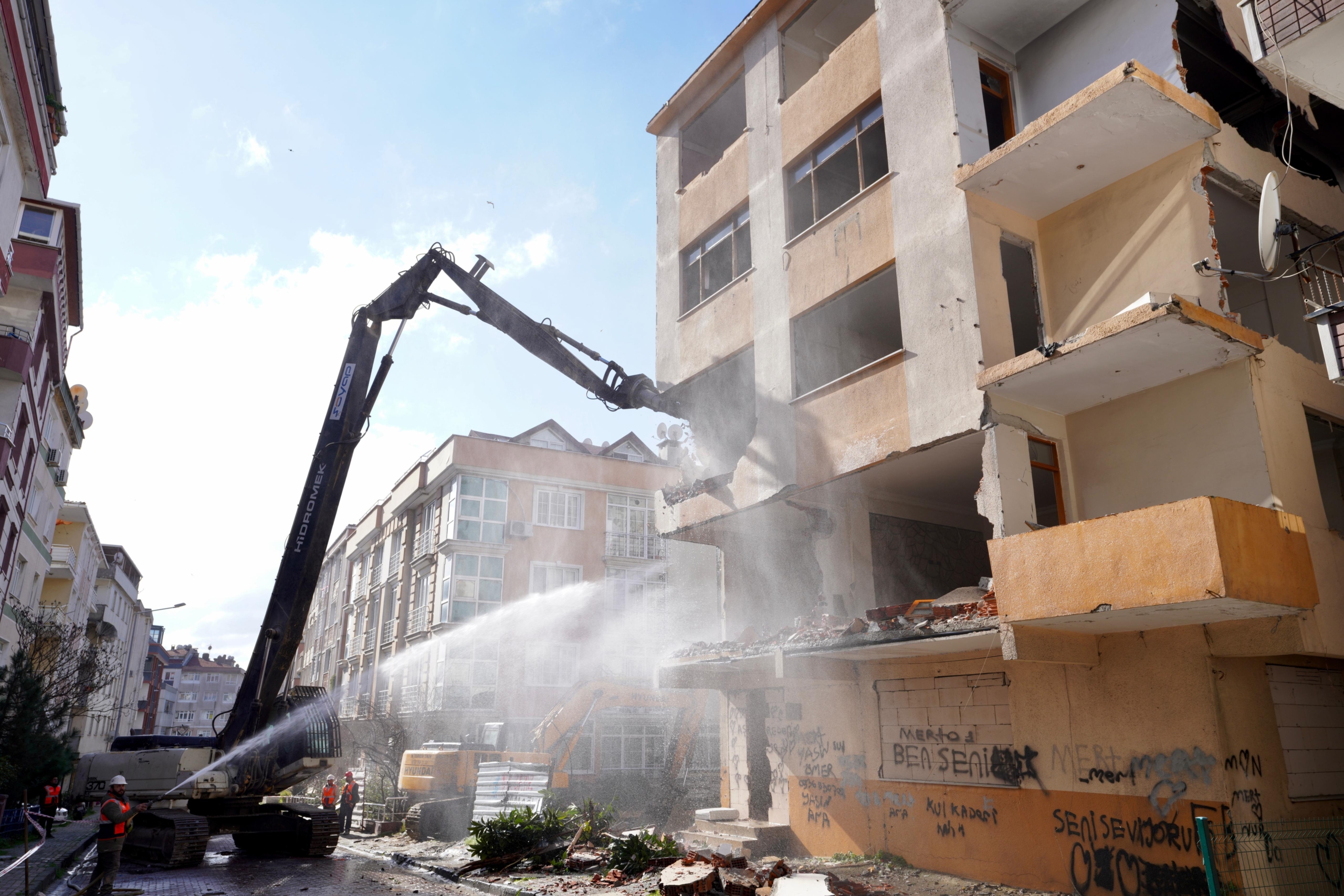
Demolition during an urban-renewal project in Avcılar in 2025.
7.
Prepare the Tapu title deed, block and parcel numbers, building permit (Yapı Ruhsatı), occupancy permit (İskân), architectural and structural drawings if available, construction date and alteration history, and owners’ details and land shares.
Free rapid screening may establish priority, especially for older buildings. It should not be the sole basis for a major financial decision.
If concerns arise, obtain a licensed statutory assessment or detailed seismic analysis to investigate strengthening.
Compare strengthening, demolition and reconstruction, and inclusion in a larger site-based scheme.
The official risky-building process explains that, where unanimity cannot be reached for the new implementation, decisions may be taken by a simple majority calculated by ownership shares, subject to the statutory risk determination and prescribed procedures.
Non-participating owners’ shares are subject to the law’s notification, valuation and sale procedures. This should not be treated as an unrestricted majority power outside that legal process.
The contract should specify:
8.
Age alone is insufficient, but assessment is especially important where there are:
9.
A neighbourhood name cannot establish a building’s safety. Actual risk combines earthquake hazard, ground conditions, building quality, use and maintenance, local density and emergency access.
Municipal microzonation studies and ground maps help explain local geology. They cannot assess an individual block of flats. Adjacent buildings can perform differently because of design, materials, construction and later alterations.
10.
The decision depends on engineering results, legal status, costs, expected remaining life, final unit sizes, evacuation time and owners’ ability to fund the work.
11.
Ask about the building, not only its neighbourhood and price:
12.
13.
Renewal succeeds through safer construction, protected owner and tenant rights, clear financing and effective supervision, as well as the number of units completed.
Collect information, obtain an assessment, arrange the appropriate engineering or legal report, compare support programmes, then make the decision with a clear contract and independent advice.
A building’s safety depends on its ground, design, materials, construction, maintenance and proper engineering evaluation.
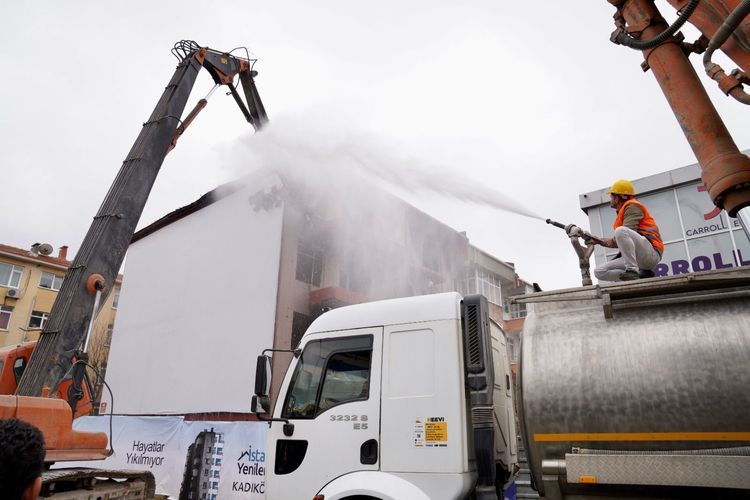
Building demolition in Istanbul, photographed for the municipality’s March 2026 urban-renewal support announcement.
 Related topics
Owners and tenants have several routes for investigating a building. The crucial distinction is between rapid screening, a statutory risky-building assessment and a detailed engineering analysis. Each serves a different purpose.
Support amounts below are those described in the dated programme information. Eligibility and amounts can change. Obtain confirmation from the responsible authority before signing a contract or arranging evacuation and demolition.
Rapid building screening in Istanbul, shown in a report published in February 2024.
1.  The scale of renewal
The 16 August 2026 report quoting the Ministry of Environment, Urbanisation and Climate Change gives the following counts of independent property units in Istanbul:- Brought within renewal since 2012 — 1,298,000
- Renewal completed — 1,007,000
- Renewal ongoing — 291,000
- Entered the Yarısı Bizden programme — 384,553
Do not add these totals together as separate projects. Programmes can overlap and authorities may count units differently.
2.  What urban renewal involves
An old building is not automatically replaced by something taller or more expensive. A properly planned process includes:- Assessing the structure.
- Investigating ground and geological conditions.
- Deciding whether strengthening is feasible or rebuilding is necessary.
- Agreeing the project, funding and contractor among owners.
- Obtaining permits and approvals.
- Lawful evacuation and demolition where required.
- Supervising construction through to occupancy permission.
- Providing for temporary housing, rent and moving needs.
3.  Understanding building assessments
| Assessment | Purpose | Effect |
|---|---|---|
| Rapid screening | Initial comparison and prioritisation | Preliminary indicator, not a final legal decision |
| Riskli Yapı Tespiti under Law 6306 | Formal determination of statutory risk | Starts the relevant legal process once finalised |
| Detailed seismic-performance analysis | Comprehensive engineering assessment | Supports decisions on strengthening or rebuilding |
 Rapid screening — Hızlı Tarama
The municipality’s free building-screening service provides an initial assessment. Work generally includes measuring size and height, recording column and shear-wall dimensions, rebound-hammer measurements, local inspection of reinforcement, bar diameter and corrosion checks, and analysis to produce an initial score.Concrete core samples are not taken as part of this rapid screening.
The official FAQ primarily covers pre-2000 residential buildings: reinforced-concrete frame or frame-and-shear-wall structures up to ten storeys, and masonry buildings up to five. The published scope also limits the concrete buildings’ total height to 30 metres and excludes certain special or mixed structural systems.
An owner, authorised representative or tenant may apply. Access and the absence of objections from the relevant parties are needed for the inspection to proceed.
A rapid-screening result is neither a statutory risky-building report nor a certificate that a building is completely safe.
Concerning results should lead to detailed engineering assessment or the licensed statutory assessment procedure.
 Statutory assessment — Riskli Yapı Tespiti
This procedure falls under Law 6306 and must be carried out by an authorised organisation or office. A visual inspection or rapid screening does not replace it.The procedure includes notification and objection rights; once the risk determination becomes final, the applicable evacuation, demolition, owner-agreement and support processes follow. Consult the ministry’s risky-building FAQ.
 Detailed seismic-performance analysis
Specialist engineers may take concrete samples, identify reinforcement, model the structure, study foundations and soil, review alterations, and assess strengthening feasibility and cost.This provides the technical basis for a serious comparison between strengthening and demolition and reconstruction.
4.  Yarısı Bizden — “Half from Us”
The Istanbul-specific programme is a major renewal-support route. A February 2026 amendment brought buildings whose statutory risky-building classification is approved by 31 December 2026 within the programme. Acceptance remains subject to its eligibility rules; the deadline does not guarantee automatic payment.Published support for an eligible home is:
- TRY 875,000 grant.
- TRY 875,000 loan.
- TRY 125,000 evacuation and moving support.
- Total: TRY 1,875,000.
For larger estate-based schemes, TOKİ or Emlak Konut may undertake delivery. The grant is deducted from project cost and the balance is repaid under the approved model’s terms.
Acceptance depends on legal and ownership status, the risk report, project type and required documents, rather than age alone. The total includes a repayable loan, not solely a grant.
5.  İstanbul Yenileniyor
The İstanbul Yenileniyor platform helps owners begin renewal through three stages:- Başvuru — application: building and property information.
- Teklif — proposal: technical studies and an initial offer.
- Uzlaşma — agreement: negotiations and the required owner approvals.
Municipal companies including KİPTAŞ and İstanbul İmar A.Ş. participate in guidance, technical offers and oversight. This differs from simply signing directly with a private contractor.
A separate strengthening route exists for certain buildings classified E in municipal rapid screening, where strengthening is structurally feasible and legally permissible.
6.  Rental and construction-cost support
The municipality’s risky-building rental-support page sets out the amounts below for eligible owners and tenants of priority buildings classified D or E through municipal rapid screening, after statutory risky-building assessment, evacuation and demolition have been completed:| Category | Published support |
|---|---|
| Resident owner | TRY 10,000 monthly for 18 months |
| Retired resident owner | TRY 12,000 monthly for 18 months |
| Non-resident owner | TRY 6,500 monthly for 18 months |
| Tenant | TRY 10,000 monthly for 12 months |
| Retired tenant | TRY 12,000 monthly for 12 months |
The single-building renewal programme also reports construction support of up to 65% for certain low-income owners, subject to eligibility.
National and municipal assistance cannot always be combined automatically. Building status, area and project type matter. Obtain written confirmation of the accepted programme, actual support, duration, each owner’s contribution, repayment start date and rules for combining grants, loans and rent assistance.
Demolition during an urban-renewal project in Avcılar in 2025.
7.  A practical renewal route
 Collect property information
Prepare the Tapu title deed, block and parcel numbers, building permit (Yapı Ruhsatı), occupancy permit (İskân), architectural and structural drawings if available, construction date and alteration history, and owners’ details and land shares. Obtain an initial assessment
Free rapid screening may establish priority, especially for older buildings. It should not be the sole basis for a major financial decision. Arrange formal or detailed assessment
If concerns arise, obtain a licensed statutory assessment or detailed seismic analysis to investigate strengthening. Compare options
Compare strengthening, demolition and reconstruction, and inclusion in a larger site-based scheme. Agree among owners
The official risky-building process explains that, where unanimity cannot be reached for the new implementation, decisions may be taken by a simple majority calculated by ownership shares, subject to the statutory risk determination and prescribed procedures.Non-participating owners’ shares are subject to the law’s notification, valuation and sale procedures. This should not be treated as an unrestricted majority power outside that legal process.
 Review the contractor’s agreement
The contract should specify:- Each unit’s area before and after renewal.
- Technical specifications and materials.
- Construction and payment milestones.
- Completion guarantees and delay penalties.
- Responsibility for rent during construction.
- How cost increases are handled.
- Owners’ rights if the contractor stops work.
- Termination or contractor-replacement terms.
- Occupancy-permit and title-delivery arrangements.
8.  Which buildings should be assessed first?
Age alone is insufficient, but assessment is especially important where there are:- Pre-2000 construction or unclear permits and structural drawings.
- Open ground floors used for shops or parking.
- Removed walls or columns, or unauthorised alterations.
- Corroded reinforcement or concrete breaking away to expose steel.
- Deep, diagonal or recurring cracks.
- Visible settlement or leaning.
- Persistent moisture around foundations or basements.
- Additional storeys or loads absent from the original design.
- Major changes in column layout between floors.
9.  Can a whole neighbourhood be called safe?
A neighbourhood name cannot establish a building’s safety. Actual risk combines earthquake hazard, ground conditions, building quality, use and maintenance, local density and emergency access.Municipal microzonation studies and ground maps help explain local geology. They cannot assess an individual block of flats. Adjacent buildings can perform differently because of design, materials, construction and later alterations.
10.  Strengthening or rebuilding?
- Strengthening: May be faster in some cases — Demolition and rebuilding: Creates an entirely new structural system
- Strengthening: May cost less where the existing structure is suitable — Demolition and rebuilding: Often costs more and takes longer
- Strengthening: Not suitable for every building — Demolition and rebuilding: Can address outdated layouts and services
- Strengthening: Needs detailed foundation and structural study — Demolition and rebuilding: Can change unit sizes and layouts
- Strengthening: More than façade repairs or filling cracks — Demolition and rebuilding: Requires agreement, funding and temporary homes
The decision depends on engineering results, legal status, costs, expected remaining life, final unit sizes, evacuation time and owners’ ability to fund the work.
11.  Before buying or renting
Ask about the building, not only its neighbourhood and price:- What is the actual construction year?
- Are building and occupancy permits available?
- Has it received rapid screening or a statutory assessment?
- Have there been unauthorised alterations or removals of walls or columns in shops?
- Is it in a renewal programme, and are owner agreements documented?
- Are there proceedings, annotations or restrictions linked to renewal?
- What is the flat’s land share?
- Will its net area change after reconstruction?
- What payment is expected beyond support?
- Who is the contractor, and what have they completed?
- What do available studies say about the ground?
- Can ambulances and fire engines reach the building easily?
Mandatory earthquake insurance, DASK, is important. It is not a certificate of structural safety.
12. Mistakes to avoid
- Judging safety by a renovated exterior or age alone.
- Treating screening as a final legal determination.
- Believing guaranteed-support advertising.
- Signing without specifications and delay terms.
- Making large payments before meaningful progress.
- Ignoring changes in flat size.
- Overlooking rent, moving and future maintenance costs.
- Assuming immediate or guaranteed property-value gains.
- Choosing by neighbourhood name without examining the building and ground.
13.  A careful sequence
Renewal succeeds through safer construction, protected owner and tenant rights, clear financing and effective supervision, as well as the number of units completed.Collect information, obtain an assessment, arrange the appropriate engineering or legal report, compare support programmes, then make the decision with a clear contract and independent advice.
A building’s safety depends on its ground, design, materials, construction, maintenance and proper engineering evaluation.
Building demolition in Istanbul, photographed for the municipality’s March 2026 urban-renewal support announcement.
Related topics - Istanbul: History, Culture and Life across Two Continents
- Choosing an Istanbul Neighbourhood to Suit Your Lifestyle
- Comparing Living Costs in Marmara: Istanbul, Bursa, Yalova, Kocaeli and Sakarya
- Where to Live or Invest in Marmara: Comparing Five Locations
- Marmara’s 11 Provinces: Character, Highlights and Who They Suit
 Marmara Beyond Istanbul 2026: Choose a Destination to Suit Your Trip
- Getting Around Marmara: Trains, Ferries, Coaches and Sensible Routes
- Day Trips from Istanbul in Marmara 2026: Seven Destinations and Practical Plans
- Istanbul in 2026: Population, Tourism, Transport and Urban Growth