

المسافر
Active member
- Joined
- Dec 3, 2025
- Messages
- 189
- Reaction score
- 0
- Points
- 16
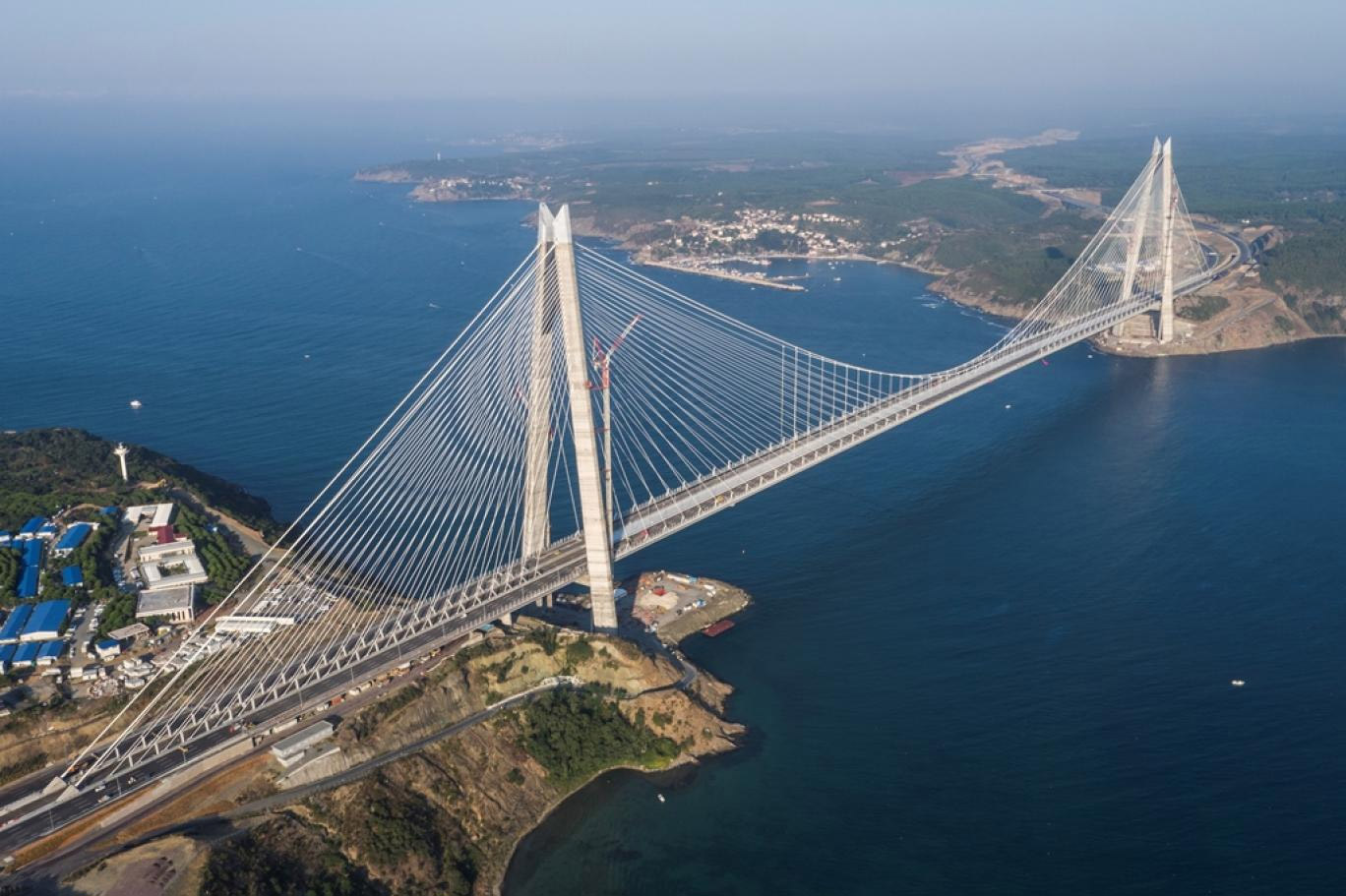
An archival view of Yavuz Sultan Selim Bridge over the Bosphorus, from its operator’s gallery.
1.  A new railway between Istanbul’s two continents
The Yavuz Sultan Selim Bridge opened to road traffic in August 2016, with space reserved for a railway from the outset. A decade later, plans for that railway have reached financing and procurement.Officially the Istanbul North Rail Crossing Project (INRAIL), the scheme would become the Bosphorus’s second railway crossing after Marmaray.
The route extends far beyond the bridge: from Çayırova near Gebze via Sabiha Gökçen Airport, the bridge and Istanbul Airport to Çatalca, connecting with the Halkalı–Çerkezköy railway towards Europe.
The project is at the procurement stage, ahead of main construction. The project had moved from broad studies into financing and a design-and-build tender.
2.  What is INRAIL?
The official project description sets out a high-capacity railway separate from the existing central Istanbul routes.The planned total is around 127 km, with electrified tracks and modern signalling and control systems. It is designed to accommodate:
- Intercity passenger trains.
- Rail connections between Istanbul and Sabiha Gökçen airports.
- Domestic and international freight trains.
- Trains travelling between Asia and Europe.
- Services connected to the Middle Corridor and Development Road.
- Connections with the Halkalı–Kapıkule corridor.
3.  The planned route
Çayırova → Sabiha Gökçen Airport → northern Asian side → Yavuz Sultan Selim Bridge → Istanbul Airport → Çatalca- Çayırova: connection to the national railway and the Marmaray corridor from Gebze and the Asian side.
- Sabiha Gökçen Airport: a national-rail connection in addition to the existing M4 metro.
- Yavuz Sultan Selim Bridge: the Bosphorus crossing through the railway space incorporated into its design.
- Istanbul Airport: a national passenger and freight railway connection alongside the existing M11 metro.
- Çatalca: connection with Halkalı–Çerkezköy and onward towards Edirne, Kapıkule and the European border.
| Planned route point | Intended connection |
|---|---|
| Çayırova | National network and Marmaray corridor |
| Sabiha Gökçen Airport | National rail alongside M4 |
| Yavuz Sultan Selim Bridge | Bosphorus crossing over the bridge |
| Istanbul Airport | National rail alongside M11 |
| Çatalca | Halkalı–Çerkezköy and onward to Europe |
The railway forms a northern arc around the dense city centre, providing an alternative to routing freight through central Istanbul.
4.  The engineering works
The ministry’s July 2026 tender announcement lists:- 122.3 km of double-track main line.
- 4.7 km of single-track connections.
- Five twin-bore tunnels excavated by tunnel-boring machines (TBMs) with a stated total length of 36.2 km.
- 22 tunnels built using the New Austrian Tunnelling Method (NATM) totalling 23.3 km.
- 17 cut-and-cover tunnels totalling 3.7 km.
- Extensive viaduct and elevated works.
- Around 40 bridges within the tender scope.
- Stations, operating centres and technical facilities.
- Electrification, signalling, communications and control systems.
5. Why use this bridge?
The bridge was designed with a central railway reservation. Using it aims to:- Add a second Bosphorus rail crossing.
- Keep some freight trains away from central Istanbul.
- Allow round-the-clock railway movement without relying solely on Marmaray’s operating windows.
- Connect the two airports.
- Provide a more direct route between the Asian network and Thrace and Europe.
- Increase Türkiye’s Asia–Europe freight capacity.
6.  How does it differ from Marmaray?
Marmaray runs beneath the Bosphorus through central Istanbul, serving many urban stations between Halkalı and Gebze. It focuses on everyday passenger travel and accommodates some freight trains within designated operating windows.INRAIL would run across northern Istanbul, serving intercity and international passenger and freight traffic. It crosses above the Bosphorus on the bridge and is designed for high-capacity movement throughout the day.
INRAIL would complement Marmaray rather than replace it, moving some through and freight traffic onto a separate corridor.
7.  Connecting the airports
A key aim is a railway linking Sabiha Gökçen on the Asian side with Istanbul Airport on the European side.A direct rail corridor does not establish an approved passenger timetable, journey time or stopping pattern. The procurement documents do not establish final details for:
- Airport-to-airport journey time.
- Daily train frequency.
- Intermediate stops.
- Fares.
- Rolling stock.
- The start of passenger services.
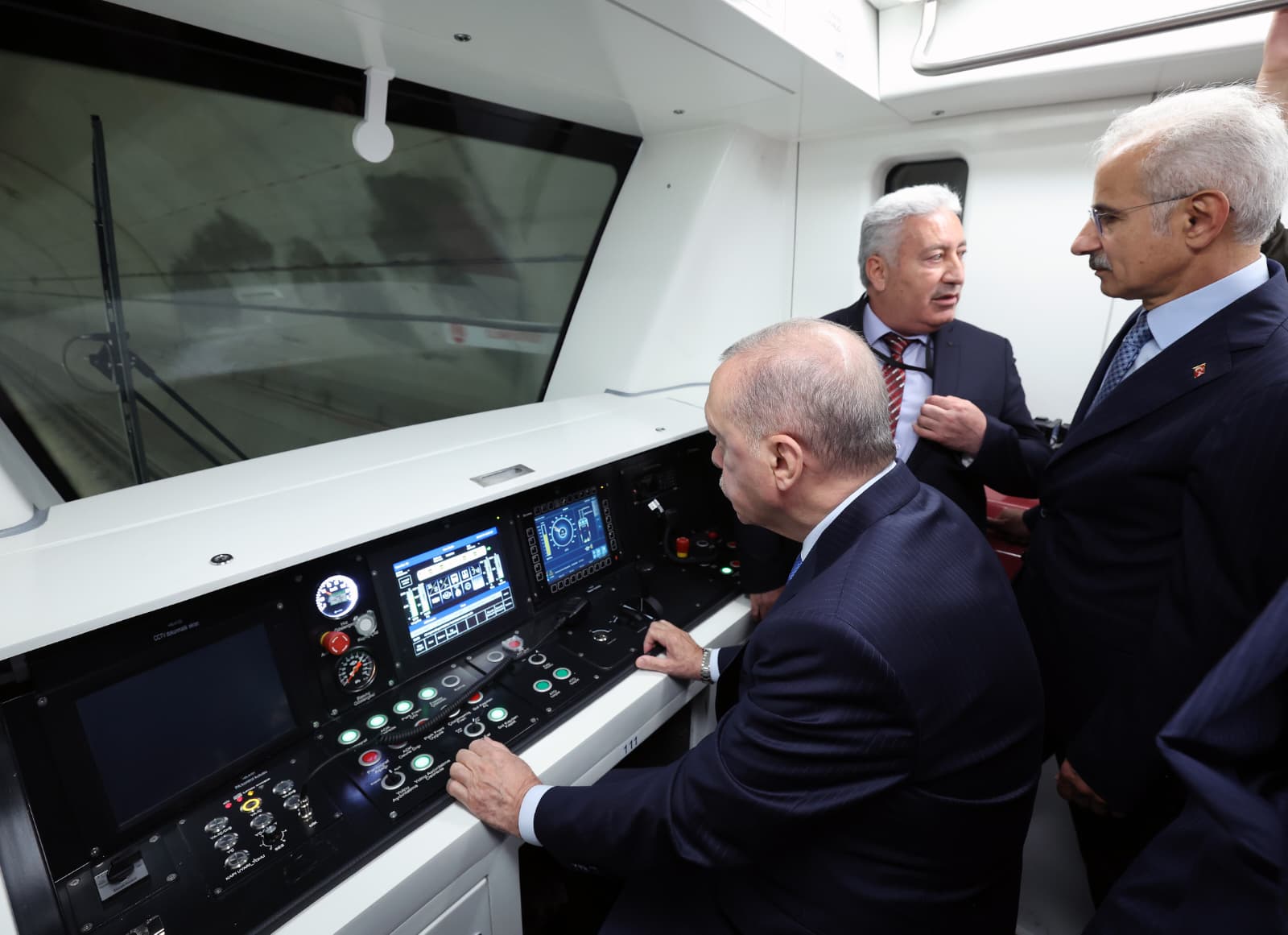
The existing Istanbul Airport M11 metro; INRAIL is a separate national railway project.
8.  Why freight matters
Asia–Europe trains currently depend on a Marmaray crossing shared with intensive urban passenger operations. A northern route is intended to:- Move freight away from the centre.
- Allow goods trains throughout the day.
- Reduce waiting before crossing the Bosphorus.
- Improve the reliability of international freight services.
- Connect ports and industry with European corridors.
- Shift some freight from lorries to rail.
- Support the Baku–Tbilisi–Kars railway and Middle Corridor.
- Join the Halkalı–Kapıkule corridor at Çatalca.
9.  Financing
Türkiye announced a coordinated international financing package of US$6.75 billion, involving six development and financing institutions:- World Bank.
- Asian Infrastructure Investment Bank.
- Asian Development Bank.
- Islamic Development Bank.
- European Bank for Reconstruction and Development.
- OPEC Fund for International Development.
The announced financing package should not automatically be treated as the final outturn cost. Contract values and detailed design can change during procurement and implementation.
10.  The 2026 procurement stage
Steps reported during 2026 included financing arrangements, the World Bank approval, consultancy and supervision procurement, and the publication of design, construction and electrical works tenders split into implementation packages.The July announcement originally set 14 October 2026. However, official Addendum No. 1, dated 9 October 2026, extended proposal submission to 11 November 2026 at 14:30 Ankara time, with technical proposals opening at 14:45 on the same day. This is a procurement deadline, not a railway opening date.
| Milestone | Date in the official addendum |
|---|---|
| Addendum No. 1 issued | 9 October 2026 |
| Proposal submission deadline | 11 November 2026, 14:30 Ankara time |
| Technical proposals opening | 11 November 2026, 14:45 Ankara time |
| Railway opening | No service opening date set by the addendum |
The tender-stage position is:
- Major financing arrangements at an advanced stage.
- A formal tender published.
- The main route and engineering scope identified.
- Bid submission still ahead.
- Full-line construction not yet underway.
- No final opening date announced.
11.  Potential effects within Istanbul
- Marmaray capacity: diverting some through and freight traffic could release capacity on the existing route.
- Airports: both would lie on one railway corridor.
- Çatalca: a junction with the Halkalı–Çerkezköy–Kapıkule project.
- Çayırova and eastern Istanbul: a connection to Marmaray and the Anatolian national network.
- Central districts: an alternative route for some freight trains.
- Network resilience: two separate Bosphorus rail crossings would offer more flexibility during disruptions.
12.  Important distinctions
- The railway is at the tender stage and is not in passenger service.
- A tender does not mean trains will run within months.
- It is not a neighbourhood metro.
- A final passenger-station list, airport journey time and opening date had not been announced.
- A route passing near a neighbourhood does not guarantee a passenger station there.
- Passenger and freight forecasts are not operating statistics.
- An approximate route drawing is insufficient for a housing or property decision.
13.  Quick questions
Are trains running over the bridge?No. Space was reserved for rail, but the project described here has not entered service.
Will it replace Marmaray?
No. It is intended as a second, complementary crossing.
Will it link both airports?
That is part of the planned route; the final passenger-service plan remains a separate decision.
Is it freight-only?
No. It is designed for passengers and freight.
Where does it begin and end?
Çayırova on the Asian side and Çatalca on the European side.
When will construction begin?
The official addendum extended proposal submission to 11 November 2026. Mobilisation depends on contract award, detailed design and site handover.
When will it open?
The source overview provides no final official opening date.
14.  The project’s significance
INRAIL would add a second rail crossing of the Bosphorus and redistribute trains across Istanbul and the wider Turkish network. Its importance extends beyond any one neighbourhood to national and international passenger and freight links.The project is still progressing through procurement and preparation for construction. Contract award, detailed design and site mobilisation remain necessary before construction begins, and no final opening date has been announced.
Urban-renewal work in Avcılar, shown as city context from Istanbul.
 Related topics
- Getting Around Marmara: Trains, Ferries, Coaches and Sensible Routes
- Getting Around Marmara 2026: Trains, Ferries and Coaches
- Choosing an Istanbul Neighbourhood to Suit Your Lifestyle
- Istanbul Ferries: Choosing Routes and When to Take the Boat
- Historic Istanbul Without the Crowds: A More Relaxed Way to Explore
- Istanbul Shopping: Grand Bazaar, Spice Bazaar or a Mall?
- Day Trips from Istanbul in Marmara 2026: Seven Destinations and Practical Plans
 Marmara Beyond Istanbul 2026: Choose a Destination to Suit Your Trip
 Halkalı–Ispartakule Railway: Istanbul’s New Western Connection
Last edited by a moderator: