

- Joined
- Feb 23, 2026
- Messages
- 207
- Reaction score
- 0
- Points
- 16
 Ballot-Box Records, Vote Counting and Electoral Challenges in Türkiye: A Guide for 2026
When following elections, you may see photographs of records bearing numbers, signatures and stamps, accompanied by comments alleging an error or change in the result. The most prominent number alone cannot establish whether those comments are justified. Readers need to identify the document type, ballot box, election year and round, and distinguish voters, envelopes, valid votes and invalid votes. They must then separate an arithmetic observation needing review from an official decision reached after examining documents and procedures.
This guide was reviewed for 2026 to explain documents and the general process; it does not announce national general elections scheduled for this year. The Constitution provides for presidential and parliamentary elections together every five years, with provisions for renewing elections, while the actual election calendar determines procedural dates. We use YSK Circular 135 for the 2023 elections as an official historical example of record names and counting stages. Do not transfer its challenge deadlines or form numbers to a later election without consulting that election’s current instructions.
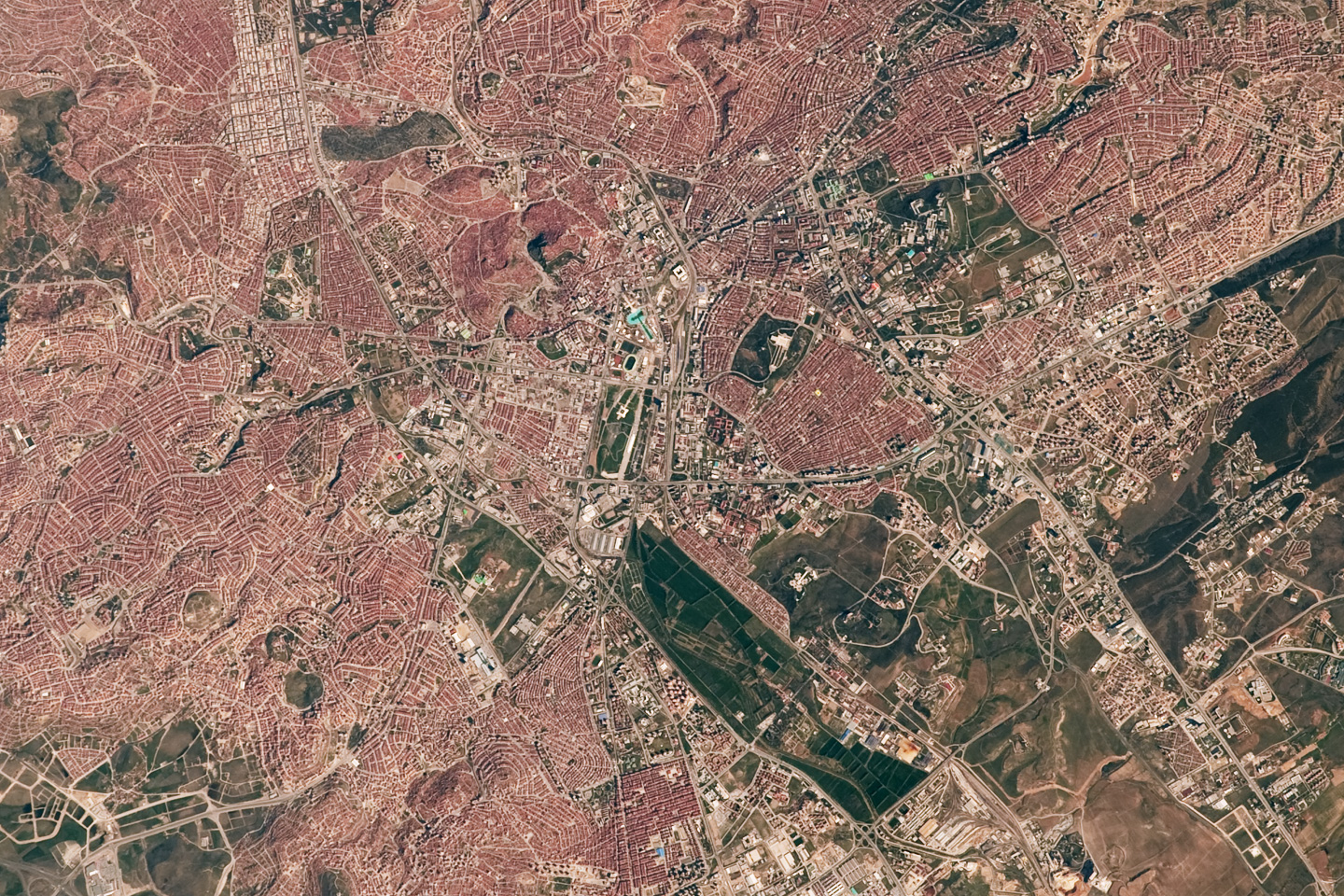
Archive photograph of Ankara taken from the International Space Station on 11 April 2009; this general view of the capital does not represent its urban development in 2026.
 Not every document is a results record
Some documents organise voting, some record counting and others establish a ballot box’s result. An electoral register is not a results table; a tally sheet completed as votes are read out is not necessarily the final signed record. Sandık Sonuç Tutanağı means the ballot-box results record, while Sayım ve Döküm refers to counting and recording the votes. Read the document’s heading before interpreting its figures, then look for the body or form explaining its purpose. A photograph may show only part of a larger document, omitting essential identifying information.
A single ballot-box record also differs from a district or provincial aggregation record. Similar headings can conceal different levels of data. Do not compare a province’s total votes with the registered voters at one ballot box, or count an original and its photograph as two separate boxes. Note the document’s level, ballot-box or area number and election year. This simple step prevents many mistaken conclusions before any addition or comparison begins.
 Identify the photograph before reading the result
When you receive a photograph of a record, establish the country, election type, date, round and geographical scope. Check that the ballot-box number, location and full form heading are visible. An old, foreign or incomplete image can be retained as unverified, but should not be presented as decisive evidence of an event in 2026. A logo or stamp alone does not authenticate a copy: trace the document, its publication source and the official version where available.
Comparing two copies is useful once they are established as concerning the same ballot box and election. Record the precise difference: an entry, list name or vote total. A different camera angle or clearer paper is not a different result. If an entry is illegible, label it illegible and request a clearer copy instead of choosing the number that supports your interpretation. This preserves the observation’s value even if its cause later proves to be a poor-quality image rather than an arithmetic error.
 Secret voting and public counting
The constitutional and legal framework combines secrecy of a voter’s choice with public counting and recording under the applicable procedures. Secret voting does not prevent scrutiny of aggregate figures, while public counting does not reveal each person’s choice. The historical circular explains observing the count while maintaining orderly work. Distinguish access to the process or its documents under the rules from intervening in the reading of a ballot, touching materials or directing those conducting the count.
Interest in the subject does not make a forum reader an accredited observer or committee member. The powers of the ballot-box committee, members, observers and voters depend on the instructions. If assigned an official role, read your appointment document, the election’s instructions and the relevant body’s training material. General readers can use published records without claiming powers they do not possess. Ask a specific procedural question about what a role permits instead of saying broadly, “I want to monitor everything.”
 Voter and envelope totals are different measures
A record may contain entries for registered voters, people who voted, envelopes, valid votes and invalid votes. These are not different names for one total. Registered voters are the base entitled to vote under the relevant list; turnout reflects those who voted; and envelopes and ballot papers enter particular counting stages. Where several election types take place together, read each ballot’s result as classified in the record without assuming every entry must match exactly.
Read the entry labels before the numbers, then examine explanations about excluded or disputed ballots or envelopes. A detailed entry may already form part of another total, so adding it again would double-count it. If a field’s definition is unclear, consult official instructions or ask for a translation of that term. An unknown data definition cannot justify an allegation of manipulation. Once the classification is understood, check the arithmetic relationship specified by the form and raise the precise discrepancy with the competent body if it remains unexplained.
 A worked example of reading totals
Imagine a hypothetical document showing 300 registered voters and 240 people who voted, with 235 valid votes and five invalid votes in one election. Turnout in this example is 80%, but a candidate’s share is calculated using valid votes in the election concerned. Do not divide their votes by 300 and call the result their share of valid votes, or compare five invalid votes on one ballot with a differently defined envelope entry without checking the definitions.
If you add the candidates’ votes and obtain 234 instead of 235, you have a specific arithmetic observation worth examining. Reread a clearer copy and check every name and entry, as well as the record’s level. If the discrepancy remains, describe a difference between specified entries and their stated sum without assuming its cause or legal effect. This is not a real ballot box and establishes no error in any election: it is practice in framing a question that can be reviewed.

Archive photograph of the Turkish Constitutional Court building from October 2020; it does not document a judgment or hearing in 2026.
 Validity is determined through the applicable procedure
Election laws and each election’s instructions provide for examining envelopes and ballots and recording those deemed valid, invalid or disputed. A reader cannot determine a ballot’s validity from a cropped social media photograph: details or rules concerning the ballot type, envelope, stamps and circumstances may be missing. This article therefore offers no shorthand rule declaring every particular appearance invalid in every election, and does not present a historical controversy as current instructions without verification.
Identify the reference and provision applicable to the election and the question raised about the ballot, then read the decision or record addressing it. A challenged ballot subsequently counted as valid under the procedure differs from one finally rejected. Recording a challenge also does not mean accepting the challenger’s interpretation or changing the result. These distinctions support a measured reading, especially when unofficial posts use “invalid” for different procedural situations that do not have a single outcome.
 Stamps, signatures and annotations
Signatures and stamps help explain a document’s status and route, but must be read alongside its heading, details and classification. It may contain a note or decision about a challenge, or require a second page for context. Do not remove a note when preparing an explanatory copy, or show only the numerical part when another part explains a significant difference. In a summary, state which elements you saw and which were missing instead of giving an incomplete copy the authority of a complete document.
Where a correction appears, record its location and the changed entry without accusing a particular signatory. Look for the version or procedure explaining the correction’s reason and status. Not every pen mark proves an irregularity; nor does a stamp justify ignoring an evident numerical discrepancy. Good review combines the visible description, arithmetic relationship and official process, leaving legal determination to the competent body once documents and facts are complete, rather than reducing scrutiny to one visually persuasive mark.
 From the ballot box to aggregation and the result
Results move from ballot-box documents to aggregation by the relevant bodies, with figures then presented at higher levels according to the election type. The official 2023 circular explains preserving and handing over materials and records, and recording the information. Here it illustrates how a result belongs to a chain of documents; transfer arrangements and forms must come from the current election’s instructions. Publishing a record photograph does not establish completion of every subsequent stage, nor does a provisional totals screen establish resolution of all challenges.
When comparing a record with a digital result, match the ballot-box number, election type and round before calculating. Establish whether the screen includes that box or a broader aggregate. If an amended result appears, look for its update time and explanation through the official channel: an earlier version may precede a correction or determination of a challenge. This does not remove the need to examine the difference, but prevents comparison of documents from different stages as though published at the same moment and in the same legal state.
 A complaint or challenge requires more than a comment
The historical official circular distinguishes a complaint, şikâyet, about a procedure before the ballot-box committee from a challenge, itiraz, to its decision before the competent electoral body, under the law. Posting online or messaging a media account does not itself complete the required electoral procedure. First identify the action or decision, the applicant’s standing and the competent body, then check the submission format and timing in the election calendar. These may differ by stage and election type; this article supplies no single deadline for every case.
General complaint channels are not a guaranteed substitute for an electoral body with specific responsibilities and deadlines. To understand a term, you can seek information; to bring a legal challenge, verify its particular route before the relevant stage ends. Keep proof of receipt and the documents submitted. Do not assume online attention extends time or guarantees admissibility. Acceptance and effects depend on the law, facts and procedures, rather than the number of supportive posts.
 Describe an observation the body can examine
A useful observation identifies the document, place, year and election type, then specifies the entry needing review. You could ask: “The figures visible in these entries do not add up to the total written on the copy I consulted. Is there a clearer version or correction notice?” This describes your evidence without claiming knowledge of intent or issuing a criminal judgment. For formal action, the required wording and documents remain subject to the body’s instructions and your legal standing.
Separate what you witnessed from what somebody else reported, noting whether you have a complete document or a circulating photograph of unverified origin. Do not combine unrelated allegations in one challenge merely because they concern elections. Arranging evidence by incident and date makes it easier to examine. Protect personal information visible on papers during public discussion. If the official body needs a complete copy, provide it through the appropriate channel without publishing individuals’ details in comments or circulating irrelevant documents.
 Stop an old photograph from becoming a new story
Keep a short identification note for an image: who published it, when, what event it purports to document and what was actually verified. A 2018 archive image might appear beside a comment mentioning 2026, changing its meaning in a reader’s mind without changing its contents. Do not republish it as contemporary news unless the connection is established; explicitly label it archival when used for explanation. The photographs in this article are illustrative, rather than evidence of a new electoral event.
Published numbers need the same identification. A record may concern the presidential first round while a post compares it with the second round, or mixes a parliamentary result with a candidate’s result. Before deciding there is a discrepancy, set the comparison criteria side by side: year, round, type, ballot box and aggregation level. If any differs, stop comparing until a matching document is available. This prevents a normal difference in what documents concern becoming an unsupported allegation that votes were changed.
Checklist for a document and its accompanying claim- Identify the document type, election year, round, ballot-box number or aggregation level.
- Check that the image is complete and numbers legible before adding entries or comparing copies.
- Distinguish registered voters, people who voted, envelopes, valid votes and invalid votes using the form’s definitions.
- Describe the specific discrepancy without accusation and separate direct observations from reported information.
- Check the election’s instructions for standing, competent body, submission format and timing; do not apply a historical deadline to 2026.
- Keep the document and proof of the action taken, protecting personal information in public discussion.
 Frequently asked questions
Does a photograph of one record establish the national result?
The record concerns its particular level. It does not replace aggregation of the remaining records, determination of procedures and announcement of the official result.
Does every arithmetic discrepancy prove deliberate wrongdoing?
A discrepancy is an observation requiring a clearer reading and matching of documents and stages. Addition alone does not establish its cause, responsibility or legal determination.
Does this article give one deadline for challenges?
No. Deadlines come from the actual election’s law, instructions and calendar, according to the procedure and election type; they must not be copied from a 2023 document.
Is a social media post a formal electoral challenge?
Publishing an observation is not itself the required electoral procedure. Standing, competent body, format, timing and proof of submission must be checked.
Can a forum reader act as an observer without appointment?
Interest in the subject does not confer official powers. Check the role’s requirements and instructions, distinguishing general scrutiny from duties requiring accredited status.
 Related topics
 Following Public Affairs and Government Decisions in Türkiye
 How Laws and Official Decisions Are Made in Türkiye: A Guide for Residents and Visitors
 Türkiye’s Official Gazette: How to Find Laws and Government Decisions
 Laws, Presidential Decisions and Local Rules in Türkiye: Who Has the Power to Act?
 Municipalities in Türkiye in 2026: Responsibilities, Services and Getting Procedures Right
 Municipal Elections and Local Government in Türkiye: A 2026 Guide
 Municipality or CİMER? Choosing the Right Complaint Route in Türkiye in 2026
 Organising and Storing Important Documents in Türkiye
 Türkiye Public Affairs and Politics: Guide Index 2026
Last edited by a moderator: