

المسافر
Active member
- Joined
- Dec 3, 2025
- Messages
- 189
- Reaction score
- 0
- Points
- 16

 Hiring a Lawyer in Türkiye in 2026: Registration, Powers of Attorney and Fees
Avukat is a regulated professional title in Türkiye. A business card, social media account or intermediary’s recommendation is not proof that someone is a registered lawyer.

Organising documents and an online application

 Practical overview
| Before engagement | What to verify |
|---|---|
| Professional registration | Name, bar association and registration number |
| Scope of work | Proceedings, appeals and enforcement |
 Fees | Agreement, expenses and taxes |
 Check the official register
Use the Union of Turkish Bar Associations’ Avukat Arama / Baro Levhası service. Check the lawyer’s full name, bar association, registration number, registration status and professional address where shown. A company listing or advertising directory cannot replace an official bar registration check.
 Deal directly with the lawyer
Be cautious about people presenting themselves as legal consultants without explaining their professional status, court intermediaries, application agents or a lawyer’s partner. Claims of guaranteed success or connections inside a court or migration office are serious warning signs. Speak directly to the lawyer who will handle the case and check their name yourself before handing over documents or money.
 Agree the scope and fees in writing
The agreement should identify the lawyer and client, the work and court or procedural stage covered, the fee and payment schedule, applicable taxes, court costs, translation and expert expenses, termination terms and arrangements for returning documents. State expressly whether appeals, further appeals and enforcement after judgment are included. One quoted fee does not necessarily cover every stage or outside expense.
 The 2025–2026 minimum fee tariff
Examples in the Union’s published tariff include:- Civil court of peace proceedings: TRY 30,000.
- First-instance court proceedings in the relevant tariff category: TRY 45,000.
- Consumer court proceedings: TRY 22,500.
- Enforcement office proceedings: TRY 9,000.
- Eviction enforcement proceedings: TRY 20,000.
- Serious criminal court proceedings: TRY 65,000.

 Keep proof of payment
Use a traceable payment method, such as transfer to the agreed account, and obtain the appropriate professional receipt (Serbest Meslek Makbuzu). Record what each payment covers. Avoid undocumented cash payments or payments to an intermediary without a verifiable written basis.
Checking and signing a contract

 Give only the authority that is needed
A lawyer generally needs a formal power of attorney (Vekâletname), usually executed before a notary, to act in a case or official procedure. Some acts need express authority: settlement or waiver, accepting or refusing an oath, divorce proceedings, property sales, receiving money, mediation or waiving appeal rights.Have the document translated before signing, understand each power and keep a copy. Do not grant broad authority simply because it appears in a standard form.

 Powers of attorney made abroad
A foreign document may need an apostille, where the applicable convention covers it, or the relevant consular legalisation route. A sworn Turkish translation and notarisation may also be required. Where available, a Turkish consulate can draw up a power of attorney directly. Confirm the requirements for the country and transaction before arranging it.
 Prepare the case file
Provide organised copies of your passport and residence card, notices and postal envelopes, contracts, invoices, correspondence, government decisions, court and enforcement file numbers, and a dated chronology. Keep your own copy of everything. Hand over originals only when needed and establish where they will be kept.  Ask for clear progress records
Request the court, investigation or enforcement file number, copies of petitions filed, fee receipts, hearing dates, decisions and notices, an explanation of the next step and a statement of payments. Many files linked to your identity can also be checked through UYAP.  Court-awarded fees and your agreed fee
The legal costs or lawyer’s fee awarded against the opposing party are governed by separate rules and are not necessarily the amount you agreed to pay your own lawyer. Have the agreement explain how the two are treated.  Warning signs
- A promise of a 100% success rate or an ability to buy a decision.
- Money requested without an agreement or receipt.
- Refusal to provide a file number.
- A request to sign a blank power of attorney.
- A name missing from the official bar register.
- Repeated fee increases without agreement.
- Retention of your original passport without a valid need.
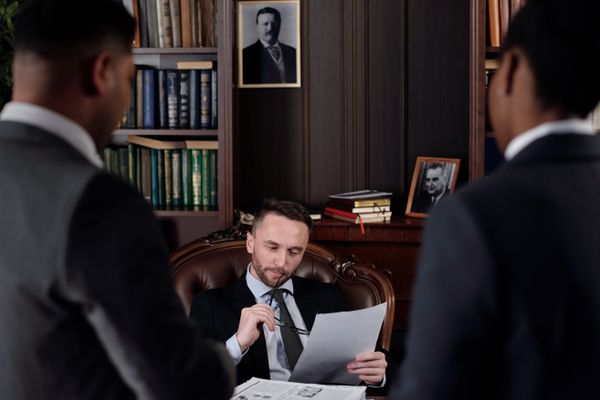
Discussing documents during a legal consultation
 Records and checks
| Document | Purpose |
|---|---|
| Fee agreement | Define the work and payments |
| Power of attorney | Define general and special authority |
| Receipt and filed petition | Evidence of payment and work completed |
 Related topics
- Foreigners’ Rights during Police Stops, Custody and Questioning in Türkiye 2026
- Legal Aid in Türkiye 2026: Lawyers and Court Costs for Foreigners
- Using UYAP in Türkiye 2026: A Guide for Foreign Residents
- Mandatory and Voluntary Mediation in Türkiye 2026
- Debt Enforcement in Türkiye 2026: Payment Orders, Objections and Seizure
- Judicial Notices and Legal Deadlines in Türkiye 2026
 Where to File a Complaint in Türkiye in 2026: Police, Prosecutors, Courts and Consumer Arbitration
- Reporting a Crime in Türkiye 2026: Criminal Complaints, Evidence and Victims’ Rights