

- Joined
- Nov 20, 2025
- Messages
- 221
- Reaction score
- 0
- Points
- 16
In Urfa, the table can help you understand the city: thin bread arriving hot, grilled food shared with herbs, a pepper with its own character and a small cup that deserves time. Do not start by trying to eat every speciality. Choose one question for each meal: how does isot change the flavour? How does lahmacun differ from kebab? Why is mırra served in such a small quantity? These questions make a food walk more enjoyable than an unarranged list of orders.
 İsot: Understand the Flavour before Ordering Heat
İsot is a pepper associated with Urfa’s cooking, appearing in many dishes including çiğ köfte and lahmacun. Asking whether food is hot is only a start; find out whether the pepper is mixed in or served alongside. You can control additions made at the table, while a prepared mixture may be difficult to change. Begin with a little, especially if you will taste other dishes afterwards.
Try a bite without additions, then add a small amount of pepper, lemon or herbs. This helps identify which element you actually enjoyed. Where heat preferences differ, keep additions at the side of the table whenever possible so each person can adjust their portion. It is a practical step that can be simpler than choosing one heat level for everyone.
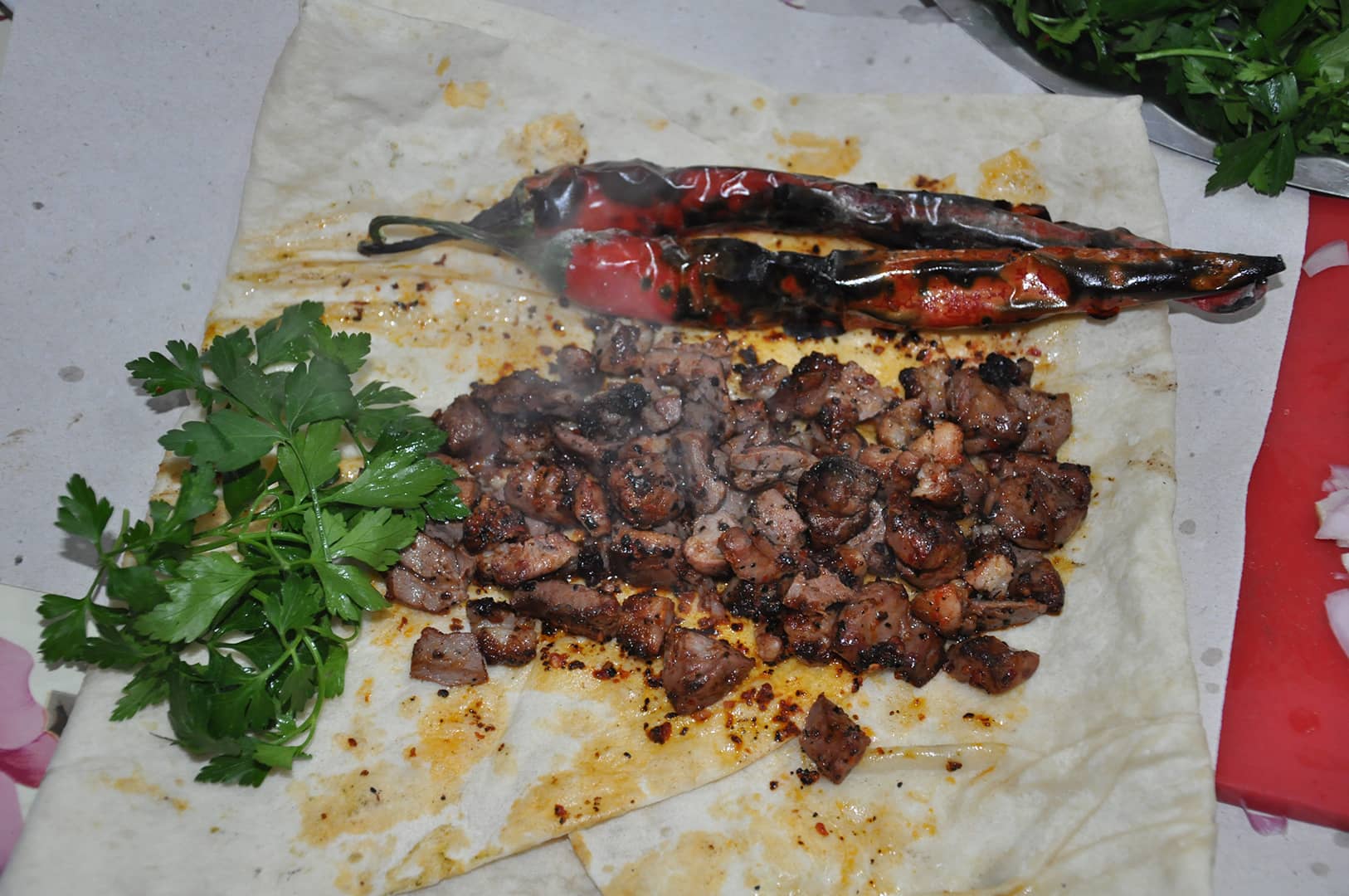
Liver kebab: a flavour of Şanlıurfa
 Liver and Lahmacun: Two Different Ways to Eat
Ciğer Kebabı has a strong presence in Urfa and is eaten at different times of day. In traditional service, it may come with bread, onion and herbs for you to make your own wrap. Try a small bite of grilled liver first, then build the wrap with a suitable amount of accompaniments. Too much onion or pepper from the start can make every bite seem alike regardless of the grilling.
Meanwhile, Lahmacun in Urfa has an onion, spice and isot mixture on a thin base. Begin with only a few if tasting is your aim, then add more as needed. Ask whether it is ordered by the piece or portion; this is clearer than guessing the size from the name. If having ayran alongside, check what is already included before adding more drinks and starters.
 Tirit and Çiğ Köfte: Two Names to Clarify
Tirit combines boiled meat with local thin bread that takes up the broth, offering a contrast to crisp lahmacun. Choose it when you want a dish to enjoy slowly from a plate. Ask how it arrives and about toppings, then wait for service before ordering extra bread: the base may already be enough.
Meanwhile, Çiğ Köfte has a local history and several versions, including traditional meat-based and meat-free preparations. The name alone does not determine the ingredients; ask which version is offered. For the meat-free choice, use the word Etsiz. Keep discovering a city’s tradition separate from deciding what you will actually eat: you can understand the dish without assuming every shop prepares it in the same way.
 Choose by the Type of Meal
| Item | Serving style | A detail worth asking about |
|---|---|---|
| Liver kebab | Grilled food with bread and accompaniments | Portion, seasoning and additions |
| Lahmacun | A thin base with a seasoned topping | Per piece or per portion? |
| Tirit | Meat and bread absorbing broth | What comes with the plate? |
| Çiğ köfte | Small bites or a wrap, depending on the shop | Is this the meat-free version? |
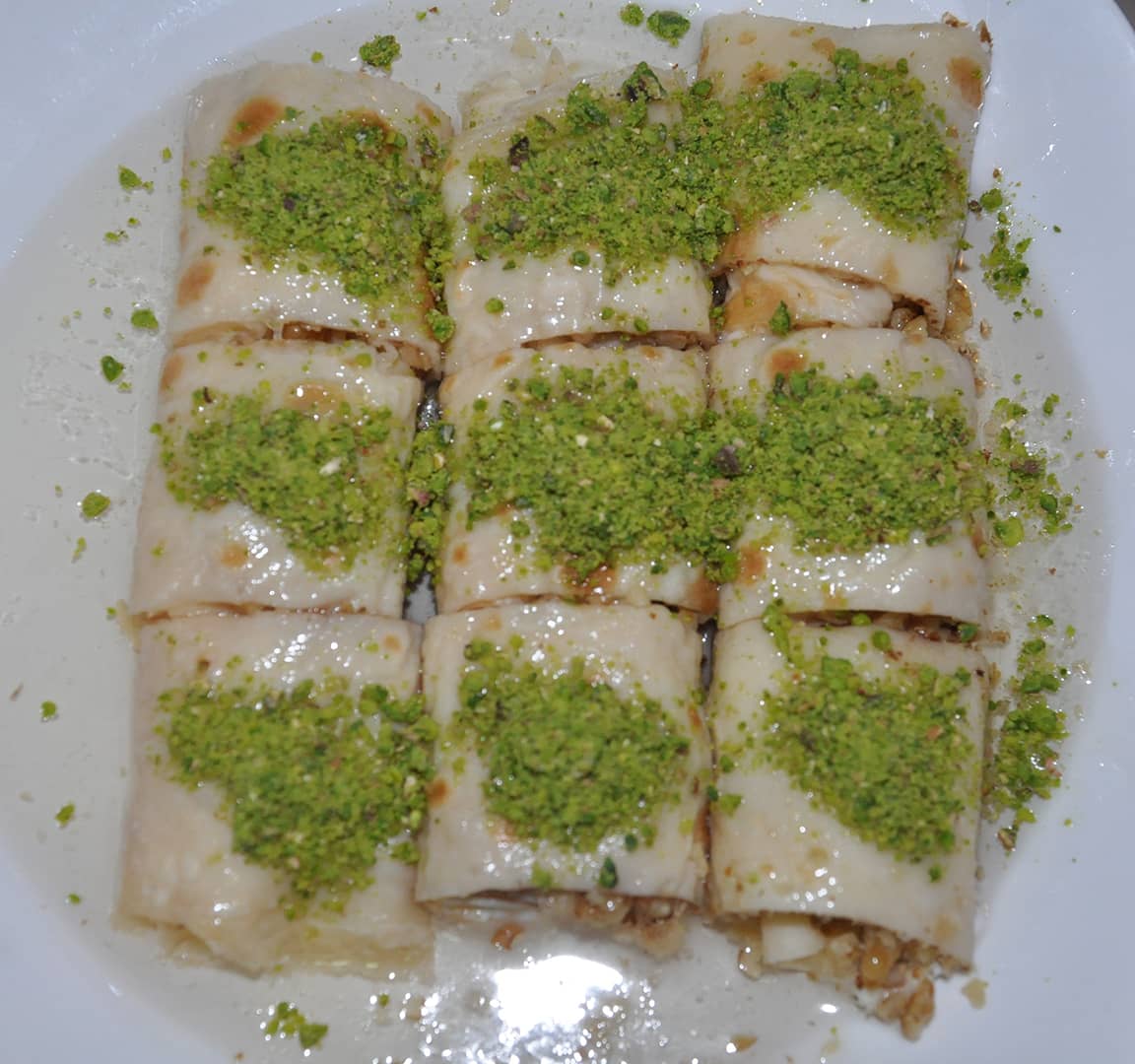
Şıllık dessert in Şanlıurfa
 Sıra Gecesi: Book an Evening You Understand
Sıra Gecesi is a social tradition bringing together conversation and music; visitor performances are also offered under this name. If attending, read the programme before booking: start and finish times, seating type, included food and whether the price is per person. “Dinner included” alone does not explain the number or size of dishes.
For families, ask about sound levels, table position and leaving early with children. If seating is on the floor, check for an alternative for anyone who finds this difficult. Choose the evening when you want to listen and stay, allowing it time of its own. Adding it after an exhausting day and a large meal may reduce enjoyment even if the programme suits you.
 Şıllık and Mırra: A Carefully Sized Finish
The dessert Şıllık uses thin cooked sheets of dough combined with walnuts and syrup, and may come layered or rolled. Its texture differs from baklava, so choose it for another local sweet experience. Ask for a sharing plate and confirm the serving size, then give the first bite its moment before drinking something very sweet alongside.
Meanwhile, Mırra is a strong, concentrated coffee usually served in small amounts. Treat it as a tasting of its own, especially if used to coffee with milk or sugar. During a hospitality ritual, observe the host and politely ask about the custom. Tea or another drink should be an easy choice for a companion who does not want mırra: different orders can make the break more comfortable.
 Where to Put the Break in Your Walk
Combine the markets and nearby landmarks with lunch within your chosen walking area. Afterwards, check the café inside: are the seats comfortable, can you talk easily, and does the table have shade or ventilation suitable for that hour? A café that looks attractive in a photograph may require a different seat to suit your family.
If you have an excursion outside the city, eat the main meal early enough to rest before leaving. Save food purchases for the end of the walk when possible, instead of carrying them for hours without knowing their storage needs. When buying isot, ask about type, quantity and packaging. A small amount you understand is more useful than a large bag whose flavour you have not tried.
 Phrases to Make the Order Clear İsotu ayrı verebilir misiniz? — Could you serve the isot separately? Bir porsiyon ciğer, lütfen. — One portion of liver kebab, please.
 Bu çiğ köfte etsiz mi? — Is this çiğ köfte meat-free? Yemek fiyata dahil mi? — Is food included in the price? Bir şıllık tatlısını paylaşacağız. — We will share one şıllık dessert.
Balıklıgöl: a view of Şanlıurfa
 A Flexible Food Route
Begin with a walk and a simple drink, then choose liver or lahmacun for lunch. Give şıllık a later break, and make a musical evening a separate appointment if you want one. On a second day, try tirit rather than repeating the grilled food. Your memories will be clearer when you notice how bread, herbs, isot and broth shape each meal, leaving time between stops to talk and walk.
 Related Topics
  Ocakbaşı Restaurants in Türkiye: Grills and Fireside Seating A Self-Guided Food Walk in Türkiye: Three Stops for an Enjoyable Day
  Ordering for a Family in Türkiye: Portions, Sharing and Less Waste
  Restaurant Bills, Service and Tips in Türkiye: Paying with Confidence
  Restaurants and Cafés in Gaziantep: From Morning Beyran to Baklava Restaurants and Cafés in Diyarbakır: Liver Kebab, Stuffed Ribs and the Walled City Restaurants and Cafés in Mardin: Kibbeh, Spices and Stone Courtyards Restaurants and Cafés in Adıyaman: Oven Dishes and Nemrut Breaks
  Hatay at the Table: Meze, Tepsi Kebabı and Künefe
Last edited: