

- Joined
- Nov 2, 2025
- Messages
- 282
- Reaction score
- 0
- Points
- 16
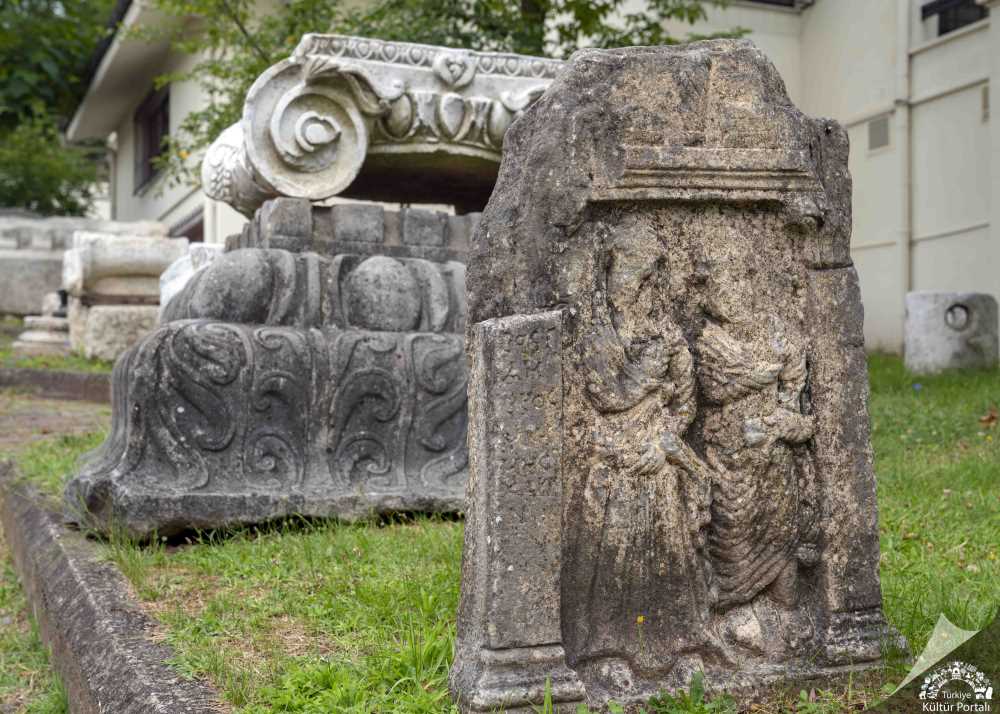
Stone monuments and architectural fragments in the garden of Konuralp Museum, Düzce.
Düzce, in the western Black Sea region, has a settled plain at its centre surrounded by forests and mountains. At Konuralp, the remains of ancient Prusias ad Hypium, its theatre and museum add a clear archaeological layer to the modern city. Together, they introduce a province with an urban history as well as varied natural landscapes.
1.
 Modern Düzce and Konuralp
Düzce spreads across a plain crossed by waterways and enclosed by higher ground, with Konuralp to the north. The area developed through ancient, Bithynian, Roman, Byzantine and Ottoman periods. Names including Hypios, Kieros and Prusias belong to the ancient town's history, while Konuralp's present name is associated with the Ottoman period.
The relationship between the modern centre and ancient site shows the continuity of settlement within the same wider area, as urban boundaries and functions changed. Streets, homes and archaeological buildings stand alongside a living community. Reading that relationship means distinguishing ancient structures from later conservation work and subsequent development.
2.
 The Ancient Theatre and Its Architecture
The theatre of Prusias ad Hypium is among the area's most prominent archaeological monuments. Seating, the orchestra and stage buildings preserve evidence of Greek and Roman architectural traditions and successive phases of construction. Rows, entrances and walls help visitors imagine the organisation of audiences and performances, and the use of the natural slope.
Stonework and architectural fragments reveal construction and decoration, while columns, capitals and inscriptions offer further insight into ancient civic culture. The theatre shows that the city had public functions beyond housing and defence, with social and artistic activity helping to shape it. Excavation can expose layers from several periods, so understanding of the site continues to develop.
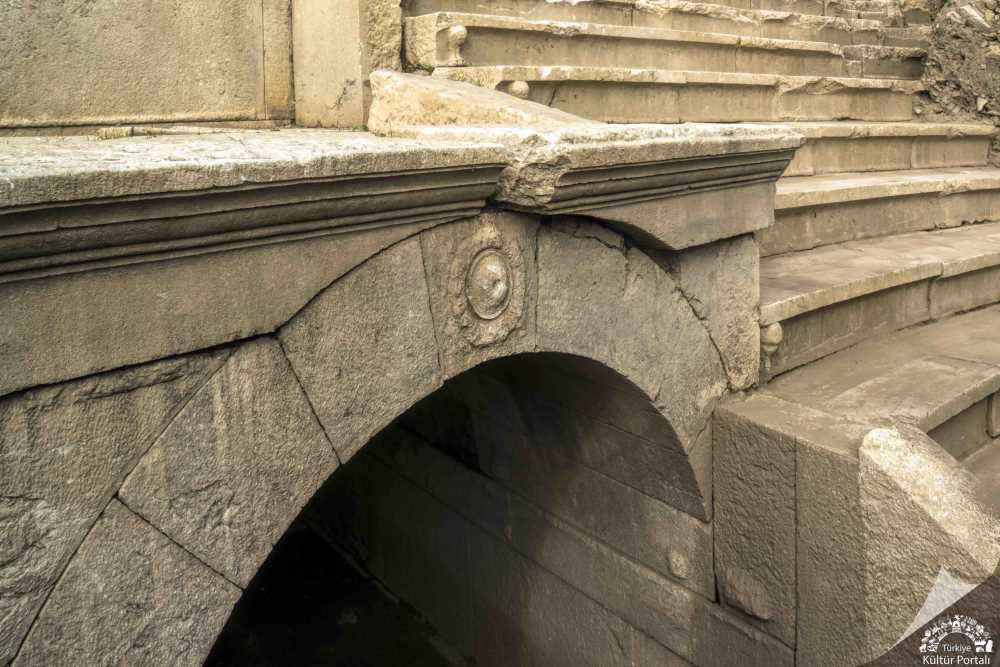
Stone details beside a passage and the seating of the ancient theatre at Prusias ad Hypium.
3.
 Walls, Bridge and Urban Infrastructure
Other remains at Konuralp include walls, the gate known as Atlı Kapı, aqueduct remains and a Roman bridge. These structures connect defence and entry with the supply of water and movement across the landscape. They reveal a network of services alongside the theatre, although preservation varies from substantial remains to scattered fragments.
Some walls contain materials reused in earlier repairs, illustrating how buildings changed over time. Gates, defences and water structures help explain the town's organisation and its position near streams and the plain. Understanding how these elements worked together gives the archaeology greater meaning than considering each as an isolated monument.
4.
 Konuralp Museum and Local Memory
 Access to Konuralp Museum: The Ministry of Culture and Tourism lists the entire museum as closed from 11 January 2024 for structural strengthening until the work is completed, with no fixed reopening date. The following account introduces its collections and does not mean that the galleries are currently accessible. Check the theatre, archaeological paths and bridge separately: the museum closure does not establish that the entire ancient site is closed.
The museum collections preserve archaeology, ethnographic material, stonework and coins. Their best-known objects include a cast of the Tyche statue; the ancient original found at Konuralp is held by the Istanbul Archaeological Museums. The collections also include the Orpheus mosaic, covering approximately 45 square metres. Their imagery, materials and decoration introduce ancient culture: Tyche represents fortune, prosperity and the protection of cities in Greek mythology, while the mosaic depicts Orpheus with animals and personifications of the four seasons.
Ethnographic displays introduce more recent local life through clothing, tools, customs and work. The museum complements the archaeological site with objects whose details cannot be understood from walls alone. Considered together, the site and collections connect the wider ancient townscape with the art and everyday lives of the region's inhabitants across different periods; learning about the collections remains distinct from entering the museum while it is closed.
5.
 Reading the Sites and Collections
| Element | What it reveals | Key detail |
|---|---|---|
| Ancient theatre | Seating, orchestra, stage buildings and the organisation of audiences | Greek and Roman traditions and several phases of construction are visible. |
| Walls and Atlı Kapı | Defence, entry and the reuse of building materials | Check paths separately from museum access. |
| Bridge and aqueduct remains | Crossings and water supply within the urban network | Do not assume that every surviving structure is an open walking route. |
| Tyche and the Orpheus mosaic | Art and symbolism in the museum collections | The displayed Tyche is a cast; the mosaic covers about 45 m². |
6.
 Konuralp within Düzce Province
The inland centres of Düzce and Konuralp differ from Akçakoca on the Black Sea coast, although all belong to the same province. Konuralp introduces the ancient city and its civic buildings, while the coast and wooded countryside offer another, natural side of the province. These interests can form part of a wider trip, allowing for distances, road conditions and access at each site; the coastal photograph should not be read as a view of the archaeological site at Konuralp.
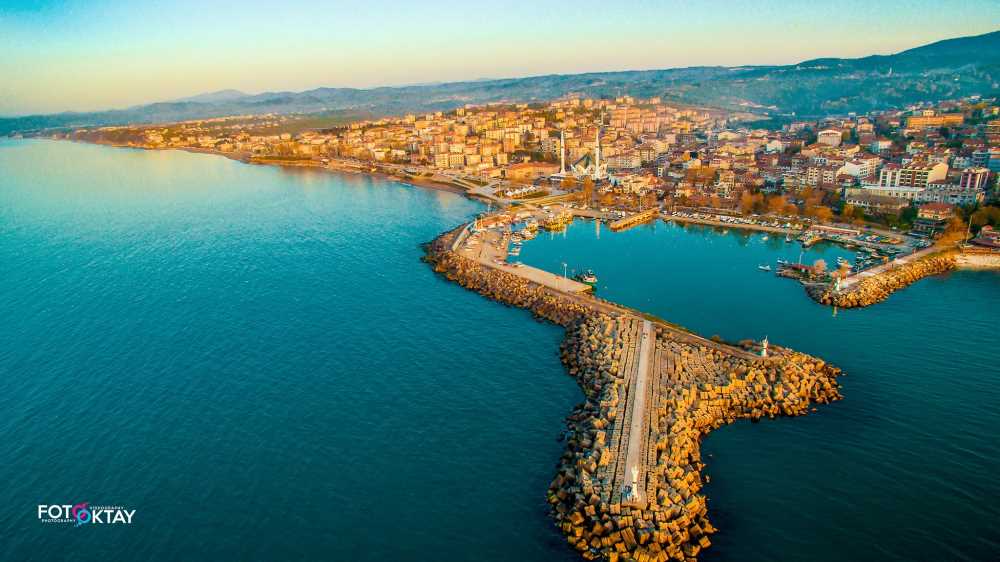
Akçakoca on the coast of Düzce province, separate from the inland archaeological site at Konuralp.
7.
 Visiting Notes
Check access to the theatre, excavation areas and museum, as routes may change during research and conservation. Keep off ancient walls and stones, and follow photography instructions in the galleries. Learning about the site and museum collections provides a fuller historical picture, but entering the galleries depends on reopening. For museum enquiries, call +90 380 541 37 70; check excavation areas and outdoor monuments with the authority responsible for them.
8.
 Access and What to Check
| Place | Position to consider | Before visiting |
|---|---|---|
| Konuralp Museum | Entirely closed from 11 January 2024 for structural strengthening | Confirm an announcement of reopening; an older collections page does not establish access. |
| Theatre and excavation areas | Archaeological areas with arrangements distinct from the museum | Check open routes, ongoing work and staff instructions. |
| Walls, gate and bridge | Separate remains within an inhabited area | Use permitted paths; keep off the stones and respect private property. |
| Akçakoca and rural Düzce | Another destination in the province, separate from Konuralp | Plan distance, weather and access to the coast or natural areas separately. |
 Related topics
- Bolu 2026: The Historic City, Museums and Markets
- Abant 2026: The Lake, Forests, Meadows and Wildlife
- Gölcük and Aladağ 2026: Bolu Lakes, Forests and Highlands
- Yedigöller 2026: Seven Lakes, Forests and Natural Diversity
- Mudurnu and Göynük 2026: Ottoman Houses, Markets and Heritage
- Seben, Gerede and Mengen 2026: Rock-Cut Houses and Rural Bolu
- Akçakoca and Rural Düzce 2026: Coast, Castle and Waterfalls
- Bartın and Amasra 2026: The Coast, Castle and Rural Heritage
Last edited by a moderator: