

- Joined
- Nov 2, 2025
- Messages
- 282
- Reaction score
- 0
- Points
- 16
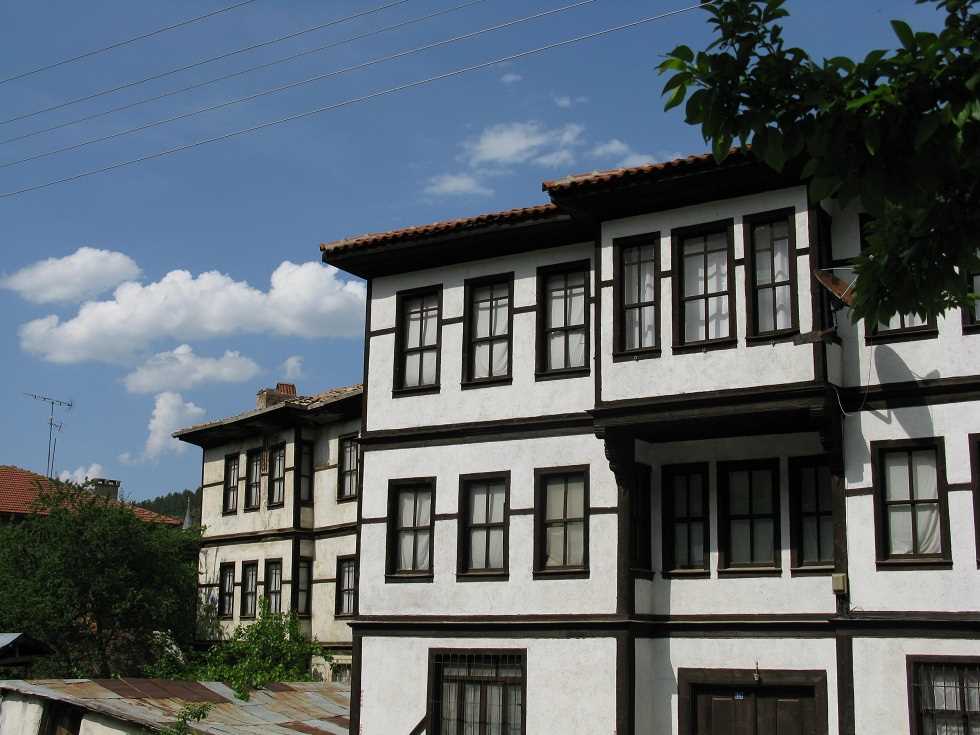
Historic timber-framed house façades in Mudurnu.
Mudurnu and Göynük are historic towns in south-western Bolu, where traditional houses, religious buildings and markets occupy settlements shaped by valleys and slopes. Their value lies in a preserved townscape as well as individual monuments, with the life of the communities that have continued within it.
 Mudurnu's Traditional Houses
Mudurnu's houses and mansions display timber construction, arrangements of windows, projecting upper floors and the relationship between home and street. The protected townscape includes listed heritage houses. Mansions such as Armutçular and Keyvanlar differ from simpler homes in scale and decoration, helping visitors understand variations in function and social standing.
Buildings adapt to the town's terrain, waterways and lanes, with stepped façades and changing viewpoints. Gardens, courtyards and entrances add detail, revealing the traditional house as a living space with several functions. Some buildings remain homes or serve other purposes, bringing preservation and everyday use together in the historic fabric.
 Religious Buildings and Crafts in Mudurnu
Yıldırım Bayezid Mosque and its bathhouse are prominent examples of early Ottoman architecture. Their domes, stone masses and entrances reveal the division of functions within the buildings, while the grouping of mosque, bath and services shows their connection to the community. These public structures complement the private houses in the historic townscape.
Mudurnu is also associated with crafts, trade and the professional fraternity traditions known as Ahilik. Markets and shopfronts reflect the continuing place of local work, with clothing, crafts and products adding a lived dimension to the heritage. Urban conservation protects the relationships between streets, homes and public buildings alongside individual structures.
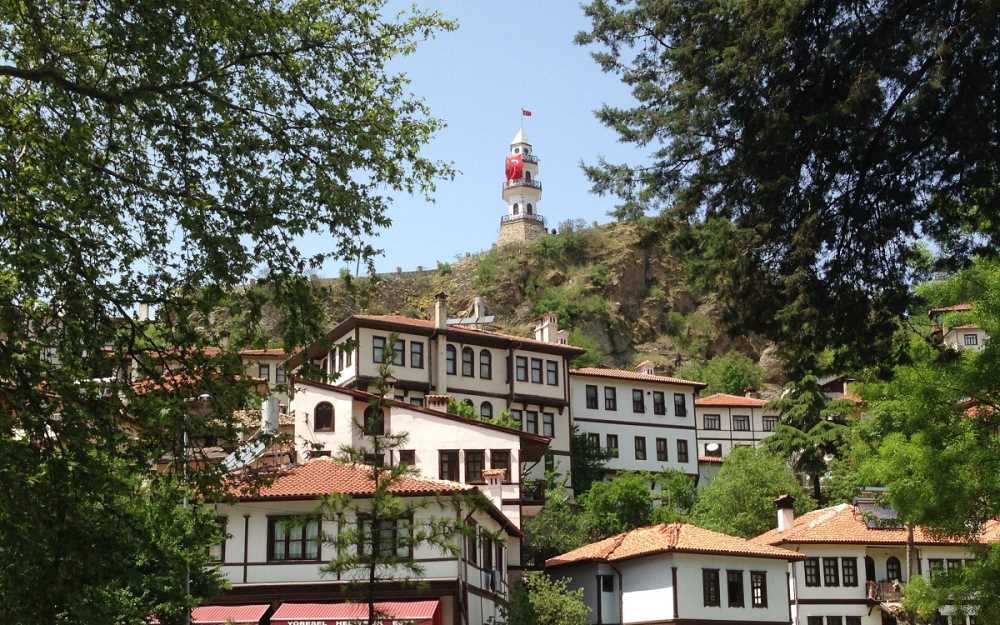
Göynük's historic houses, with the Victory Tower above the town.
 Göynük's Hillside Houses
Göynük's traditional homes spread across stepped ground, their pale façades contrasting with roofs, windows and timber details. Houses, courtyards and streets follow the terrain, giving wider views a clear sense of the relationship between town and hillside. Residents and local services remain part of this historic setting.
The town's religious heritage is associated with Süleyman Paşa and Akşemseddin, bringing domestic and religious architecture together. Houses, mosque, bathhouse and tomb reveal the varied functions of the historic centre. Craftsmanship in doors, windows and materials adds another account of building skill and local work.
 The Victory Tower and the Towns' Shared Heritage
Göynük's Victory Tower stands on a hill overlooking the town. Built in 1922 to commemorate success at the Battle of Sakarya, it has several storeys and a hexagonal base and body. Its position makes the surrounding townscape part of the experience, while its meaning belongs to a later period than the Ottoman houses and religious buildings.
Comparing the two towns reveals the variety of Bolu's heritage: houses, markets, crafts, religious architecture and the memory of the War of Independence. Both derive much of their character from their townscapes, but each has its own terrain and landmarks. Continuing residential and working life helps sustain their spirit, connecting the value of the houses with the people who use and care for them.
 Visiting Notes
Respect the privacy of homes and the limits of public access, and observe prayer times and instructions at religious buildings. Some lanes and hillside routes are steep; choose a walk suited to your abilities. Confirm access to mansions or exhibitions before visiting, enjoying the façades where a building is private or closed.
 Related topics
 - Bolu 2026: The Historic City, Museums and Markets
- Abant 2026: The Lake, Forests, Meadows and Wildlife
- Gölcük and Aladağ 2026: Bolu Lakes, Forests and Highlands
- Yedigöller 2026: Seven Lakes, Forests and Natural Diversity
- Seben, Gerede and Mengen 2026: Rock-Cut Houses and Rural Bolu
- Düzce and Konuralp 2026: Ancient City, Theatre and Museum
- Akçakoca and Rural Düzce 2026: Coast, Castle and Waterfalls
- Hamsiköy and Zigana 2026: Mountain Villages, Pastures and Heritage
- Akçaabat, Lake Sera and Hıdırnebi 2026: Coastal Heritage and Highlands
Last edited by a moderator: