

- Joined
- Nov 2, 2025
- Messages
- 282
- Reaction score
- 0
- Points
- 16
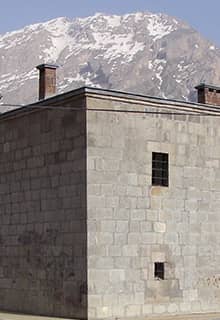
Meydan Medrese, one of Hakkâri's outstanding stone monuments.
Hakkâri offers an introduction to mountain city life through its architecture and crafts, which continue to carry local names and motifs. Begin in the centre, then extend the day to a heritage site outside the city if you have arranged transport beforehand.
This outing suits travellers interested in both history and everyday life. Choose one main monument and leave time for the market, a meal and conversations with craftspeople, instead of putting every widely separated site into one itinerary.
 Meydan Medrese and its inscription
Meydan Medrese stands in central Hakkâri. Its entrance inscription dates the building to 1700–1701. The two-storey structure surrounds an internal courtyard, with arcades and rooms showing how a religious school was organised within the architectural traditions of the region.
Look at the entrance, regular masonry and rhythm of columns around the courtyard. Comparing the exterior with the courtyard helps explain the layout. Stay out of closed areas, and do not assume every room is open to visitors.
 Koçanis outside the centre
The village of Konak, also known as Koçanis, contains a church historically associated with the Assyrian patriarchate. A visit adds a Christian dimension to Hakkâri's heritage alongside its Ottoman monuments.
Make it a separate excursion or an arranged stop with a driver familiar with the route. Check access and the building's condition before travelling, and allow time to study its details from accessible areas while respecting the village and its residents.
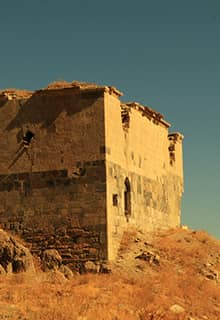
Koçanis Church in Konak village, outside Hakkâri city centre.
 Kilims as a record of local life
Hakkâri's textiles include kilims, belts, bags and woollen coverings. Geometric motifs and names associated with birds, flowers and pastures appear in the weaving, while domestic uses reveal its connections with everyday life and livestock keeping.
If buying a piece, ask about the wool, dyes, weaving method and maker. Unfold it fully to examine the colours and edges. Compare pieces according to their materials and workmanship, alongside their size and appearance in a photograph.
 An unhurried day in the city
Begin with a monument close to your accommodation, then have a meal and explore a manageable part of the market. Spend the second part of the day in a textile shop or on a short walk through the streets. Leave Koçanis for another day if the journey would make the programme too tight.
For places requiring a climb or longer walk, agree a meeting point and return arrangements with your driver. Save the Turkish site name on your phone to make asking for directions easier. Clear planning leaves more time to observe and explore instead of repeatedly searching for the way.
 Details worth recording
Take a broad view showing a building's setting, followed by a photograph of an architectural detail or textile that interests you. Ask before photographing people or work inside shops. Record the name of the craft or monument so your photographs retain the meaning of the place after the trip.
 Related topics
 - Yüksekova 2026: Highland Plain, Pastures and Local Cheese
- Şemdinli and Nehri 2026: Kayme Palace and the Stone Bridge
- Çukurca 2026: Stone Houses and Local Tahini
- Derecik 2026: Rural Life and Balkayalar Mountain
- Cilo and Sat 2026: Glaciers and High Mountain Lakes
- Merga Bütan 2026: Planning a Ski Day in Hakkâri
- Zab Valley 2026: Mountain Scenery and River Trips
- Erzurum: The Historic Capital of Eastern Türkiye
- Van: The Pearl of the East and Its Legendary Lake
Last edited by a moderator: