

- Joined
- Feb 23, 2026
- Messages
- 207
- Reaction score
- 0
- Points
- 16


 Choosing transport between Turkish cities
Compare time, cost and comfort from one hotel door to the next
The fastest flight in the air may not be fastest for your itinerary. The cheapest coach search result may not be cheapest for your family, and a train to the right city may arrive far from your hotel. No mode wins every journey. Compare the same elements for each option, then choose a service you can use at a practical time with clear luggage arrangements and costs.
This guide covers changes of overnight city, such as Istanbul to Ankara or Eskişehir, or moving to Antalya or the Black Sea region. It compares total journey time, individual and family cost, arrival arrangements, tickets, bags and the return journey. The numerical examples are for learning the method: replace them with results for your travel date.

 Start with two addresses and an arrival deadline
Write down your current and next accommodation addresses and a useful arrival time. “Istanbul to Ankara” is broad: proximity to a railway station or airport changes the comparison. Evening arrival may suit one person but waste another family's day. For a fixed event, note when you need to reach the venue itself and allow for delay.Find three actual results for your date: a train between named stations, a coach from a specified boarding point and a flight from a known airport. If a direct service is unavailable, do not label a connecting itinerary as direct. Identify the advertised connection and cost, or exclude the option. An old tourist journey or a line under development is not evidence of a service operating today.
For Istanbul, distinguish IST from SAW and identify the railway station or otogar, the intercity coach terminal. Include travel across the city when comparing a flight from the far side with a train near your hotel. Check the arrival point too: a destination's marketing name does not establish the onward time to your hotel or resort.
 The door-to-door time calculation
Total time = travel to departure point + preparation and advance arrival + published journey duration + exit and baggage collection + travel to the next accommodation + an appropriate margin.Separate the stages to see where the hours go. For trains and coaches, include finding the desk or platform, entry and luggage procedures. For flights, follow your airline's requirements for arrival, security, baggage drop, check-in closure and the gate. Reaching the terminal late is not equivalent to reaching the aircraft door on time.
Turkish Airlines, for example, recommends arriving two hours before domestic flights on its official page checked in October 2026. That is one airline's planning recommendation, not permission to arrive later or a universal rule for all carriers. Check your flight's check-in and gate deadlines and terminal. Online check-in does not remove baggage drop or security, or shorten the drive to the airport.
Avoid counting breaks twice: use a coach's published overall duration if it already includes them. For flights, check whether the displayed total includes a connection; do not compare one flight segment with a complete train journey. Clearly mark next-day arrival when travelling past midnight.
 A time example that changes the first impression
Every time below is hypothetical, not a specific route's timetable or a guaranteed operating duration.| Stage | Train | Coach | Flight |
|---|---|---|---|
| Hotel to departure point | 35 min | 50 min | 75 min |
| Preparation and advance arrival | 45 min | 30 min | 120 min |
| Published journey | 4 h 30 min | 7 h | 1 h 15 min |
| Exit and baggage collection | 10 min | 15 min | 45 min |
| To the next hotel | 30 min | 40 min | 60 min |
| Total before delays | 6 h 30 min | 9 h 15 min | 6 h 15 min |
 Calculate the complete cost
Total cost = tickets for every traveller + transfers at both ends + paid bags, seats and necessary services + additional expenses caused by the departure or arrival time.Include all passengers, with the product each child needs. Airport or station transfers may be priced per vehicle, while connecting coaches may charge per passenger: multiply correctly before comparing. Check the vehicle and capacity before budgeting one car for a family that cannot fit with its luggage.
For flights, read the fare package. A personal item, cabin bag and checked bag are different allowances. Check weight, dimensions and operating carrier; the lowest fare does not necessarily include your family's bags or adjacent seats. Turkish Airlines and AJet publish baggage information, but enter the terms of your actual booking into the calculation.
Add expenses arising from timing: a night transfer after public transport stops, a room or luggage storage for early arrival, or a transfer between stations. Food you would buy either way should not become an artificial cost difference. Compare expenses that actually vary and know what each carrier's offer includes.
 A family budget example
Hypothetical figures for four passengers, not current fares.| Budget item | Train | Coach | Flight |
|---|---|---|---|
| Tickets | 4 × 900 = TRY 3,600 | 4 × 650 = TRY 2,600 | 4 × 1,000 = TRY 4,000 |
| Family transfers at both ends | TRY 600 | TRY 800 | TRY 1,200 |
| Necessary extras in this example | 0 | 0 | TRY 600 for bags + TRY 200 for seats |
| Total | TRY 4,200 | TRY 3,400 | TRY 6,000 |
When to consider the train
First confirm a service for your date through the official search. Trains deserve consideration when both stations are convenient and arrival time is useful, especially if you want fewer airport-related baggage and processing stages. On routes with high-speed services, such as Istanbul to Ankara or Eskişehir, compare the actual stops and times rather than assuming every train uses identical endpoints.Seating space and the ability to move around may help some travellers, but facilities vary by train, carriage and class. Check the selected service, seats and baggage. Include any onward train or connecting coach and its conditions; a map connection is not a complete travel plan. Separate tickets require a margin and an alternative if the first service is delayed.
Check your return station and seats before scheduling a distant morning activity. A comfortable outward journey may have an early return requiring a taxi to the station. Include the return transfer from the start, particularly for a short visit followed by a return to the original hotel.
When a coach is practical
A coach can suit convenient boarding or drop-off points, timings unavailable by train, or destinations requiring a road connection anyway. Check the exact arrival point and any confirmed shuttle: proximity to your hotel may offset some extra journey time. Review seats, luggage, breaks and facilities confirmed for that departure.For overnight travel, assess the experience rather than just a saved hotel night. Can everyone sleep seated? Will dawn arrival mean waiting for room access, and is transport to the hotel available? A child prone to travel fatigue or someone needing rest may find a daytime journey easier even if it looks longer on paper. Families have different needs.
Do not book an important activity immediately after a long road journey based on an estimated arrival time. Roads and stops can affect progress. Have a workable alternative: move the activity, notify the hotel or travel earlier. Do not generalise one company's free cancellation, internet or shuttle promise to other operators.
When domestic flying saves time
For longer distances, flying can remove much of the road journey, but include transfers at both airports. Compare a direct result if you mean a direct flight, checking airport, terminal, time and operating airline. Istanbul's two main airports are not neighbouring platforms; separate bookings using different airports need their own transfer plan.Check outward and return tickets separately for bags, seats, changes and deadlines. Different airlines do not automatically mean through-checked bags or protection for a separately booked connection. A late domestic arrival shortly before an international flight does not make a two-hour gap guaranteed usable time: include baggage collection, new check-in and any terminal or airport transfer.
If arrival is close to the last public transport departure, work back from when you can leave arrivals after collecting bags, rather than touchdown. Depending on your itinerary, a confirmed private transfer, earlier flight or nearby overnight stay may help. Check the operator for your date and choose an achievable connection rather than relying on a fixed timetable in this guide.
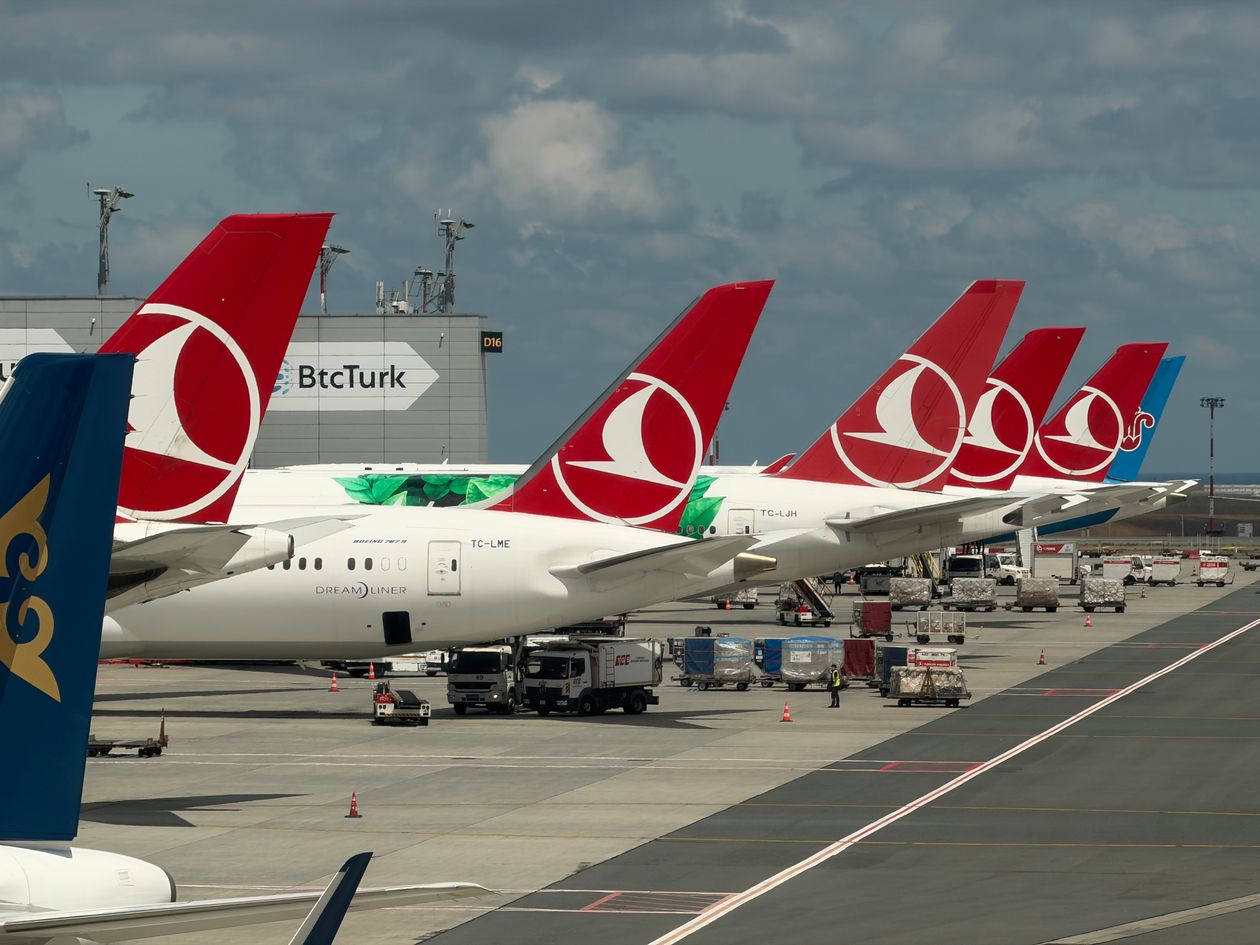
Turkish Airlines aircraft at Istanbul Airport. Photograph: Anthony Rahayel.
 Three decision scenarios
A solo traveller between Istanbul and Ankara: Convenient hotels near suitable departure and arrival stations make the train a strong starting point. A flight from a nearby airport at a suitable price including the needed bag deserves a complete time calculation too. Compare actual results for the same date, rather than flight duration or the mere existence of a railway.A family moving from Istanbul to a resort outside Antalya: Find a suitable flight and coach, then add the transfer to the resort. Neither the airport nor coach stop is the resort door. Confirm family and luggage capacity and child-seat requirements, comparing daytime arrival with one requiring waiting or private transport. If the official search offers no direct train, do not invent one to fill the table.
A group with many bags and repeated hotel changes: Count luggage handling and waiting and all local transfers, not just each main ticket. Fewer cities or an extra night in one place may matter more than a small fare saving. That is an itinerary decision, not a failure to find tickets: packing and getting from the room to transport repeat with every move.
 Flexibility, the return and disruption planning
Before paying, check cancellation and change rules for the specific ticket. A cheap fixed ticket can suit a settled itinerary; a dearer flexible ticket may help with an undecided return. Compare the actual premium with what you could lose if plans change. “Changeable” does not necessarily mean no fare difference or free cancellation.Keep tickets, documents, accommodation address and operator contact details accessible offline. After a delay or cancellation, contact the organisation managing the booking and save the notice and offered alternatives before buying another ticket. Do not expect a fixed compensation outcome in every case: options depend on service, conditions and facts. After any change, reopen the new confirmation and verify time, airport or station, seats and baggage.
Plan the return before spending the remaining budget on activities. Boarding point, baggage conditions or operator may differ. Before an international departure or important appointment, allow more margin or return to the departure city earlier according to the consequences of delay. A separate late domestic leg on the same day adds risk to the decision.
 Questions that simplify comparison
Is the coach always cheapest? Compare all passengers, bags and transfers. A seat price alone does not settle a family trip, and offers change by date.Does flying save a whole day? It can save considerable time, but compare arrival at your accommodation after procedures and transfers, not only time aboard.
Should I take the first morning departure? Include waking time, access to departure and connecting transport hours. Early travel helps when everyone can reach it without excessive fatigue or unbudgeted cost.
Can I leave all transport bookings until later? Flexibility has value, but important dates, holidays and adjacent seats require attention. Check your dates instead of expecting the same price and capacity at the last minute.
 A short decision sheet before payment
- Write the actual airports or stations at both ends, not only city names.
- Add every time component and write the hotel arrival time for each option.
- Total family tickets, bags, seats and transfers, counting each charge once.
- Compare sleep, comfort, changes and local vehicle capacity for your luggage.
- Check changes, return and onward connections, then save the booking and a workable alternative.
 Related topics
- Trains in Türkiye: High-Speed and Conventional Intercity Services
- Istanbul to Bursa, Yalova and Sapanca: Transport Options
- Major Airports in Türkiye: Choosing the Right Airport for Your Trip
- Airport Transfers in Türkiye: Buses, Rail, Taxis and Private Cars
- Getting Around Türkiye: Flights, Trains, Buses and Local Transport
- Public Transport Cards in Türkiye: Istanbul, Ankara, İzmir and Antalya
- Antalya and Alanya Transport: Trams, Buses and Resort Transfers
- Transport in Türkiye’s Black Sea Region: Trabzon, Rize, Uzungöl, Ayder and Ordu