

- Joined
- Sep 30, 2026
- Messages
- 47
- Reaction score
- 0
- Points
- 6
 Turkish League Transfer Guide 2026–2027
From the announcement to the pitch: transfer windows, contract types and domestic and European registration
Why might a club announce a signing before the player makes his debut? Does a loan with an option to buy mean that a permanent move is already agreed? And why can a player feature in the league but miss his club’s European matches?
Understanding the transfer market means distinguishing between a contract with a club, registration with the football association and inclusion in a competition’s squad list. Each stage has its own requirements; completing one does not automatically complete the others.
This guide explains what followers of Turkish football need to know, using actual examples from the summer 2026 transfer window.
 Last updated: 30 September 2026.
Scope: men’s professional football, focusing on the Turkish Süper Lig and European club competitions.
1. Transfer windows for 2026–2027The Turkish Football Federation set the season’s two transfer and registration periods as follows:
| Window | Opens | Closes |
|---|---|---|
| Summer | 22 June 2026 | 4 September 2026 |
| Winter | 1 January 2027 | 5 February 2027 |
The summer window has closed, making winter the next normal registration period. Negotiations can continue before a window opens, but the date of a public announcement alone does not determine a player’s eligibility.
Transfer windows also differ between countries. For a move abroad, the relevant registration period is the one set by the receiving club’s association.
 2. How does a signing become a player on the pitch?
| Stage | What it means |
|---|---|
| Negotiations | Discussing the financial terms, contract and conditions of the move. |
| Signing the agreements | Documenting the agreement with the player and, where necessary, his former club. |
| Association registration | Completing registration procedures and submitting the required documents. |
| Competition squad list | Including the player on the appropriate list under the competition’s rules and deadlines. |
| Playing | Being eligible, then being selected by the coaching staff. |
A photograph of a player in his new club’s shirt shows that he has been presented to supporters; it does not, by itself, establish his eligibility for every competition.
Under Turkish regulations, registration normally takes place within the designated periods. In international transfers, an exception allows registration to be completed later if the International Transfer Certificate was requested during the permitted window and the relevant conditions are met.
 3. Understanding the different types of deal
| Deal | Practical meaning |
|---|---|
| Permanent transfer | A player joins a new club on a separate contract; the agreement may include a transfer fee payable to his former club. |
| Free transfer | A club signs a player who is no longer under contract to his previous club. Wages, bonuses and other costs may still apply. |
| Loan | A temporary move for a specified period, with the parties’ obligations set out in the agreement. |
| Loan with an option to buy | A right to purchase the player later on agreed terms. The initial loan does not make the purchase a certainty. |
| Loan with an obligation to buy | A commitment to a permanent transfer, potentially subject to specified contractual conditions. |
| Contract renewal | An extension of the player’s stay at his current club, without a move to another club. |
When reading about a loan, pay attention to whether it includes an option or an obligation to buy. That distinction changes both the assessment of the deal and the club’s future commitments.

 4. Deniz Gül: a permanent transfer
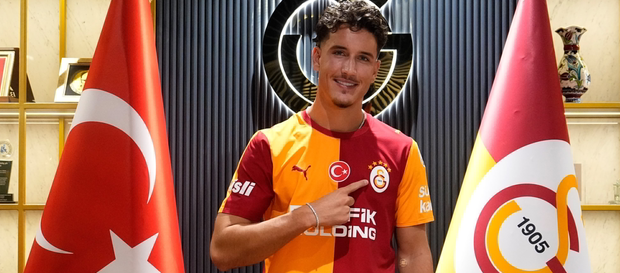
Deniz Gül in a Galatasaray shirt at his presentation in September 2026.
On 1 September 2026, Galatasaray announced an agreement with Porto to sign Deniz Gül.
| Item | Deal details |
|---|---|
| Transfer type | A permanent move from Porto to Galatasaray. |
| Contract length | Five seasons. |
| Transfer fee | €10 million. |
| Future sale clause | Porto receives 10% of the profit from the player’s next sale. |
How should we read this?
The contract length tells us how long the player is tied to the club. The transfer fee is the amount agreed with his former club. The future sale percentage relates to a later transaction and is not automatically added to the amount paid now.
In this deal, the percentage applies to the profit from the next sale. It should therefore not be described as a percentage of the entire future transfer fee.
 5. Tiago Gouveia: a loan with an option to buy

Tiago Gouveia in Gençlerbirliği colours following his summer 2026 move.
On 20 August 2026, Benfica announced that Tiago Gouveia had joined Gençlerbirliği on a season-long loan, through the end of 2026–2027, with an option to buy.
This arrangement gives the receiving club a full season to assess the player before deciding whether to buy him under the agreement. Having an option does not mean that the permanent transfer has already taken place.
Key rules for domestic loans in Türkiye:
- The player and both clubs must have a written agreement specifying the duration and terms.
- The minimum term runs between two registration periods; the maximum is one year, subject to the rules governing the loan’s end date.
- The borrowing club cannot loan the player on or transfer him permanently to a third club.
- For 2026–2027, the general domestic limit is seven players loaned in and seven loaned out, with specific exemptions for young players trained at the club.
- No more than three players may be loaned between the same two clubs in either direction.
On the pitch: a loan can quickly fill a position the team needs to strengthen, but its value depends on playing opportunities, the player’s role and the terms of any future purchase.

 6. Fabinho: a free transfer and the total cost
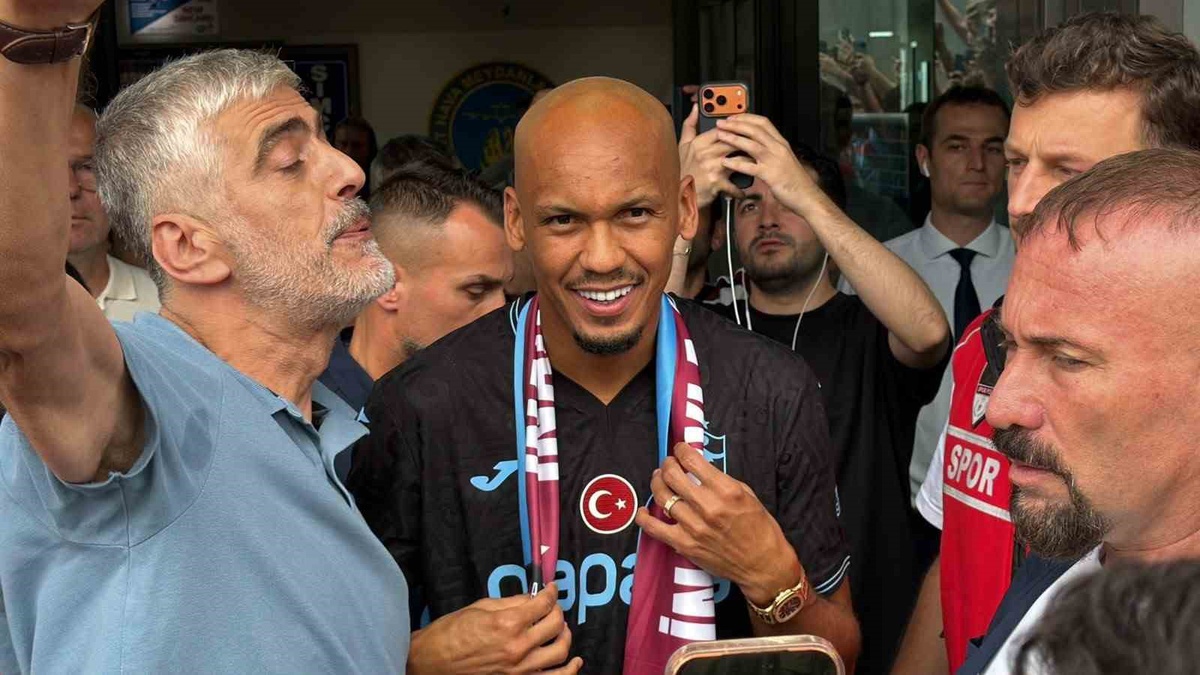
Fabinho welcomed by Trabzonspor supporters on his arrival in August 2026.
On 24 August 2026, Trabzonspor announced Fabinho’s arrival on a two-season contract without a transfer fee.
A free transfer does not mean a deal costs nothing. Depending on the contract, the club may still pay wages, a signing bonus, incentives and other expenses.
Comparing a free transfer with a fee-paying signing therefore requires looking at the total commitments across the contract, rather than the transfer fee alone.
 Can any free agent be registered after the window closes?
Not automatically. The way and date on which the previous contract ended, the applicable exception, association procedures and squad eligibility all need to be checked. The FIFA regulations in force permit specific exceptions, but free-agent status alone does not give a player the right to play outside the registration period.
 An update relevant to the winter window:
FIFA announced that its new transfer regulatory framework takes effect on 1 January 2027. The rules in force when the winter window opens must therefore be checked.
 7. Süper Lig squad lists and the foreign-player rule
The following rules apply to first-team squad lists in the 2026–2027 Süper Lig:
| Item | Rule |
|---|---|
| First-team squad list | A maximum of 28 players. |
| Players ineligible for Türkiye’s senior national team | A maximum of 14. |
| Age requirement when 14 foreign players are listed | At least four must have been born on or after 1 January 2003. |
| Players eligible for Türkiye’s senior national team | At least 14, including at least four born on or after 1 January 2003. |
A transitional provision covers certain foreign players born in 2002 who meet the conditions relating to an earlier contract and squad registration, with their contract still running.
What does this mean for supporters?
- Eligibility for Türkiye’s senior national team is a central criterion; a passport alone does not tell the whole story.
- Signing a player does not guarantee him a place on the squad list.
- A foreign player omitted from the first-team list is not eligible for its matches simply because he has a contract.
- The “10+4” formula concerns the composition of the squad list. It does not require four young foreign players to start a match.
 8. Why is the European squad list different?
Domestic and European registration are separate procedures. A player may be eligible for the Süper Lig without being included in his club’s European squad.
| List or requirement | Explanation |
|---|---|
| List A | Up to 25 players, subject to the places reserved for locally trained players. |
| Locally trained places | Eight reserved places, of which no more than four may be occupied by players trained at other clubs within the same association. |
| List B | Available to young players who meet the age and registration-duration criteria, rather than automatically to every new young signing. |
“Locally trained” describes a player’s training history, rather than his nationality. It depends on how long he was registered during his development between the ages of 15 and 21. If the club does not meet the required number, its maximum List A size is reduced.
For 2026–2027, List B eligibility includes being born on or after 1 January 2005, alongside the required period at the club. Simply buying a young player does not allow him to be added immediately.
 Squad changes after the European league phase
Under the general rule, a club can register three new eligible players before the knockout phase, while continuing to meet the squad-list requirements.
| Item | Deadline |
|---|---|
| Official European deadline | 4 February 2027 at 23:59 Central European Time (CET). |
| Türkiye and Saudi Arabia time | 5 February 2027 at 01:59. |
The practical consequence: a player could be registered domestically on the Turkish window’s final day after the European amendment deadline has passed. The two deadlines do not automatically coincide.
 9. Reading a deal’s financial figures
| Term | What it represents |
|---|---|
| Transfer fee | The amount agreed with the former club for the transfer. |
| Wages | The player’s pay: check whether the figure is annual or for the full contract, and net or gross. |
| Signing bonus | A payment linked to signing the contract, where the agreement provides for one. |
| Incentives | Conditional payments tied to agreed criteria, such as appearances or achievements. |
| Future sale percentage | A share of the sale fee or of the profit, according to the agreement. |
Do not mix annual amounts with whole-contract totals, or the fee paid to the former club with the player’s wages. A deal should also be assessed in terms of the player’s role, the team’s needs, the contract length, development potential and future resale prospects, rather than price alone.
 10. Six questions before assessing any signing
- Is the transfer complete, or is the news about negotiations or a preliminary agreement?
- Is it a permanent move, a loan, a free transfer or a contract renewal?
- If there is an option or obligation to buy, what conditions apply?
- Are the reported figures a transfer fee, wages or performance-related bonuses?
- Has registration been completed, and is there room on the relevant squad list?
- Is the player eligible for European competition, or only for domestic matches?
These questions make transfer news easier to assess and help explain a player’s delayed debut or differing reports of the same deal.
 Discussion
Which approach would you prefer for your club: buying a young player on a long contract, a loan with an option to buy, or a free transfer for an experienced player? What matters most in your choice?
 Related topics Turkish League Transfers, Summer 2026: Major Signings, Contracts and Tactical Impact
 Turkish Süper Lig 2026–2027: Clubs, Competition Format and Season Dates Türkiye’s UEFA Ranking 2026–2027: Coefficient Points and European Places
 Turkish Cup 2026–2027: New Format, Round Dates and the Route to the Trophy
 Türkiye Under-21: Play-off Qualification and the Road to EURO 2027
 Türkiye Under-17 and Under-19 Teams 2026–2027: Talent, Results and the European Path