

المسافر
Active member
- Joined
- Dec 3, 2025
- Messages
- 189
- Reaction score
- 0
- Points
- 16

 Dual Citizenship in Türkiye 2026: Keeping and Registering Another Nationality
Turkish law recognises multiple citizenship, çok vatandaşlık. However, retaining your existing nationality also depends on the law of the other country. Some countries allow it freely, others require prior permission or restrict it to certain groups, and some provide for loss of nationality when another citizenship is acquired.

Organising documents and an online application

 Practical overview
| Issue | Practical rule |
|---|---|
| Turkish law | Provides for recording multiple nationality |
| The other country’s law | Determines retention or permission requirements |
 Mavi Kart Mavi Kart | Is not a second Turkish citizenship |
 Does Türkiye allow dual citizenship?
Yes. Article 44 of Turkish Citizenship Law 5901 provides for recording another nationality in the Turkish population register once official evidence is supplied and the person's identity is verified.
 Is retaining the original nationality guaranteed?
Check the law of your existing country of nationality before completing naturalisation. Its embassy, interior ministry or official nationality authority should confirm whether permission, notification or renunciation is required.On the Turkish side, the former Article 11(2) provision allowing renunciation of a foreign nationality to be required for general naturalisation was repealed by Law 7039 in 2017. It should not be presented as a current general requirement. Recognition of multiple nationality in Türkiye still does not override another country's citizenship law.

 Common situations
- A foreign national becomes Turkish: retention of the previous nationality depends on the other country's law.
- A Turkish citizen acquires another nationality: this does not automatically end Turkish citizenship; notify the Turkish authorities so the record can be updated.
- A child acquires two nationalities at birth: Turkish descent and the other country's nationality rules must both be examined.
- A former Turkish citizen holds a Blue Card: a person who formally relinquished Turkish citizenship is not a dual Turkish citizen merely because they hold a Mavi Kart.

 Registering another nationality
Notification updates the Turkish record; it does not create the foreign citizenship. It records the nationality and acquisition date, helps reconcile identities and name changes, and supports family and consular transactions.
 Documents for VAT-12
The official checklist requires:- Form VAT-12.
- Two recent 50×60 mm biometric photographs on a plain white background, meeting the specified ICAO standard.
- Turkish identification or a copy.
- An appropriately authenticated official document identifying the person and showing when the other nationality was acquired, with a notarised Turkish translation.

 Where to apply
Apply to the district population directorate (ilçe nüfus müdürlüğü) where you live, or to a Turkish embassy or consulate abroad. An application can be made personally or through a special power of attorney covering the procedure. A parent or guardian acts for a child or person lacking capacity. Postal applications are not accepted. The Turkish identity number is used for the transaction.
 Different names or identity details
If differences prevent the authority from confirming that both records concern the same person, registration may be delayed. NVI's guidance explains that a Turkish court determination may be needed in some identity mismatch cases.Potential problems include a name chosen on naturalisation, a married surname, reordered compound names, mistranslation, a different birth date or inconsistent Latin spelling. Resolve them through the appropriate official evidence or procedure rather than an unsupported personal declaration.

Seeking assistance with an application

 Losing the other nationality: VAT-13
If the population register contains a multiple-nationality annotation and the foreign nationality is later lost, request cancellation of that annotation. The official VAT-13 checklist includes the form, two 50×60 mm biometric photographs, Turkish identification and an authenticated official document showing the loss date, with a notarised Turkish translation.  Travel documents
A lawful dual citizen can hold a passport issued by each country. Match booking details to the travel document, check entry and exit requirements, keep documents valid and carry the document establishing your right to enter the destination. Use Turkish identification for transactions carried out as a Turkish citizen. If the documents differ, carry official evidence explaining the difference rather than presenting conflicting identities without explanation.Airlines check the document establishing destination entry rights; each country's authorities apply their own nationality rules.
 Rights and obligations in Türkiye
A Turkish citizen in Türkiye remains subject to Turkish law. A foreign passport does not automatically remove civil registration duties, requirements to use the Turkish identity number, applicable military service obligations or Turkish court and administrative decisions. Tax treatment depends on residence, income sources and treaties as well as the applicable domestic rules; nationality alone is not the full test.  Spouses and children
One spouse's naturalisation does not automatically make the other Turkish. Each person needs a legal basis or must qualify under the family provisions of a particular route. A child may acquire two nationalities from birth if both countries' laws allow it. Register the birth and nationality information with the relevant authorities; another parent's consent may be needed for particular procedures involving children.  Consular assistance
The other country's ability to provide consular protection can be limited while a dual national is in Türkiye, where Turkish authorities treat them as Turkish.  Dual citizenship and the Blue Card
A dual Turkish citizen remains a citizen with the rights and obligations of citizenship, recorded in the population register. An eligible Mavi Kart holder has relinquished Turkish citizenship with permission and retains a range of statutory rights with exceptions. The Blue Card is neither a passport nor proof of current Turkish citizenship.  Common mistakes
Avoid assuming your original country allows what Türkiye allows, failing to notify a second nationality or its later loss, submitting a passport without evidence of acquisition date, ignoring name differences, treating a Blue Card as citizenship, using unauthenticated documents or assuming a spouse and children automatically become dual nationals.  Questions to resolve before applying
There is no single rule for every Arab country or other state. Obtain an official answer from your present country of nationality. A routine nationality notification does not inherently require a lawyer, but identity disputes or court proceedings may. Failure to update the record can cause administrative inconsistencies; registration documents the legal position rather than creating the nationality. Children's nationality depends on each country's law and their parents' nationality at the relevant time, not simply on a parent holding two passports.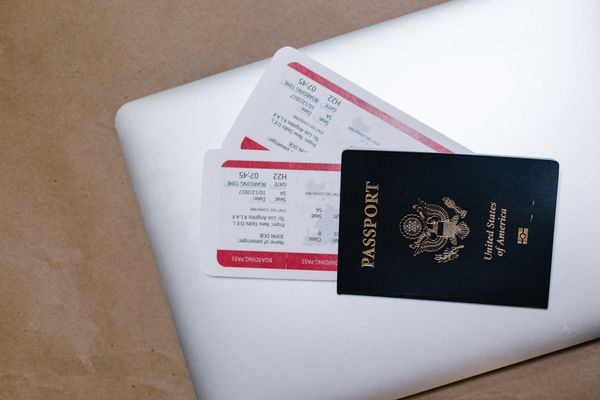
Preparing a passport for travel
 Records and checks
| Record | What to verify |
|---|---|
| Acquisition record | Date and the person’s identity |
| VAT-12 | Application to record foreign nationality |
| VAT-13 | Update the record after losing the other nationality |
 Related topics
- Turkish Citizenship 2026: Routes, Requirements and Applications
- Turkish Citizenship by Property Investment 2026: USD 400,000, Title Deeds and Applications
- Turkish Citizenship through Residence and Work 2026: The Five-Year Route
- Turkish Citizenship by Birth and Descent 2026
- Reacquiring Turkish Citizenship and Exceptional Citizenship Routes 2026
- Turkish Citizenship Applications 2026: Stages, Interview and Tracking
- Turkish Citizenship Refusals 2026: Objections and Court Challenges
- Hiring a Lawyer in Türkiye in 2026: Registration, Powers of Attorney and Fees