

سفير طرابزون
Active member
- Joined
- Feb 23, 2026
- Messages
- 207
- Reaction score
- 0
- Points
- 16
 Çeşme Castle and Museum: Aegean Archaeology between the Towers and Harbour
Çeşme is known for the sea and its beaches, but its castle adds a different dimension to a visit. Inside a defensive building close to the waterfront, you can see archaeological objects from the region, then climb to the permitted viewpoints to understand the harbour's position and its relationship with the castle. This works well as a half-day visit in central Çeşme, combined with lunch and a walk, rather than a hurried stop on the way to Alaçatı or the beach.
The museum is inside the castle, rather than in a separate building some distance away. Planning therefore needs to allow for galleries, passages, steps and exposed areas. The name 'museum' does not make the whole visit indoors, and viewing a wall from outside does not cover everything either. The most rewarding visit combines selected collections with an understanding of the building and some unhurried time at a viewpoint, depending on the sections available, the weather and the group's energy.
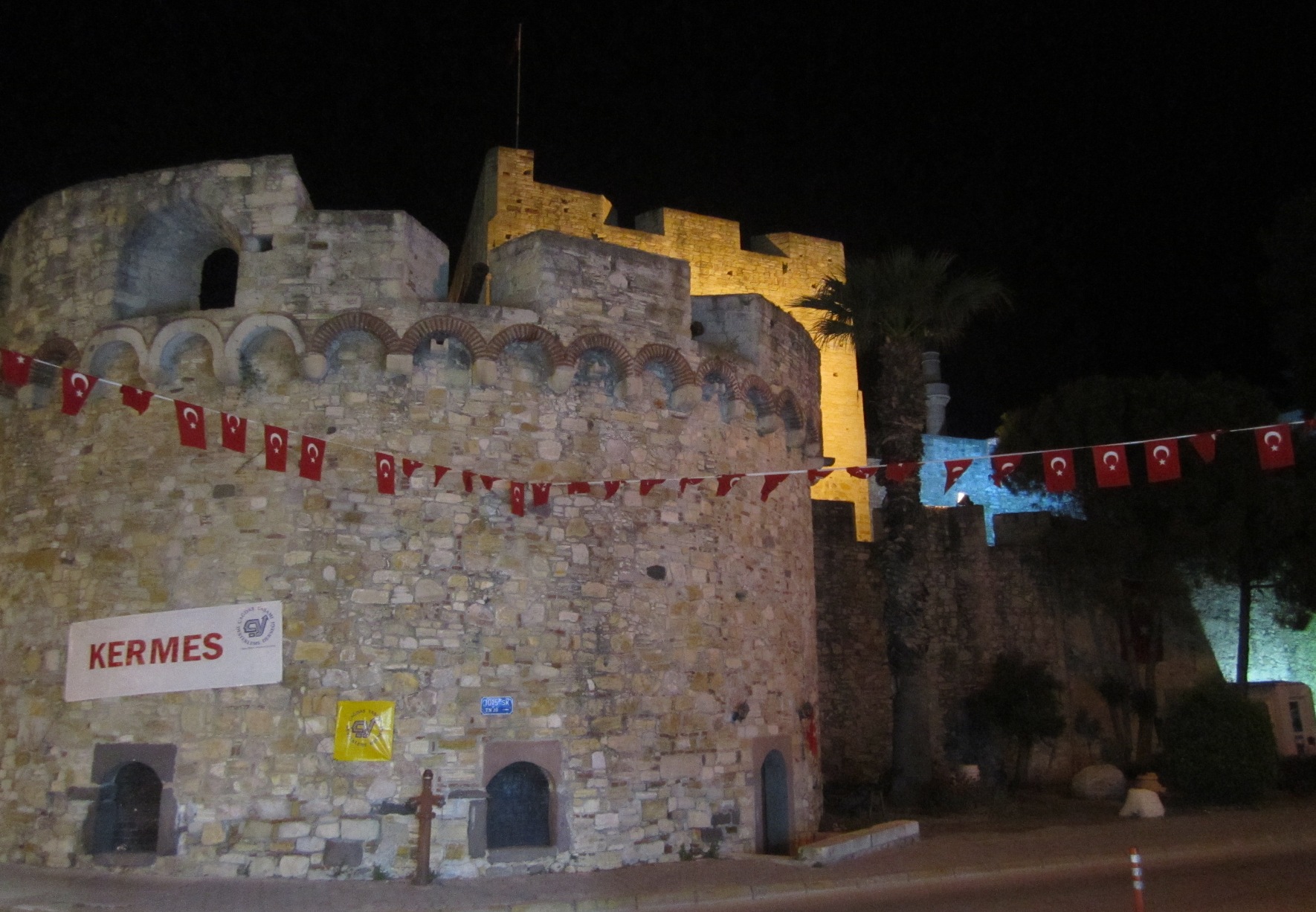
Çeşme Castle: a photograph of the façade taken in 2012.
 Choosing how long to spend
For a balanced visit, allow around an hour and a half to two hours as a planning estimate, with longer if you read most labels or want time for photography. With less time, choose one archaeological collection and one viewpoint instead of trying to visit every tower. Families arriving after a long day at the beach should take a break before entering: steps and reading become less enjoyable when everyone is already tired.
Decide what you want to learn before buying your ticket: the archaeology of Erythrai, the naval battle, or the architecture and view. You can still see other parts, but priorities help if a section closes or you arrive late. Avoid making the castle visit dependent on reaching the beach at a fixed time; give it its own space in the day or simplify the programme around it.
| Type of visit | Suggested order | Best suited to |
|---|---|---|
| Archaeology and galleries | Object labels, then outdoor exhibits | Visitors who enjoy history and reading |
| Architecture and harbour | Castle entrance, then viewpoints | A shorter visit with moderate walking |
| Families with children | A few objects, then a break and a view | Observation questions rather than lengthy explanations |
 The entrance and travel from İzmir or Alaçatı
Search for 'Çeşme Kalesi' or 'Çeşme Müzesi' when setting your destination, then check how the bus stop or parking place relates to the visitors' entrance. If travelling from İzmir, calculate the outward and return journeys separately from your museum time. If staying in Alaçatı, remember that it is not central Çeşme: choose suitable transport and save the return departure point before starting your visit.
The castle's proximity to the harbour makes combining two activities easy, but does not guarantee free parking beside the door. Groups should agree a drop-off point that does not obstruct the road, then walk to the ticket office. If someone needs to minimise walking, ask for the nearest permitted arrival point and information about thresholds. Leave large beach equipment out of the visit; a light bag makes steps and viewing easier.
 Castle and museum: what are you buying?
At the ticket office, ask which sections the castle museum ticket includes and whether a temporary exhibition or tower has different arrangements. Collections within one building still require you to check the scope of admission. Ask whether you may re-enter after leaving for a break, rather than assuming this is allowed. Keep your ticket until the end, particularly if there is another checkpoint between parts of the site.
No admission price is quoted here because the tourist category, pass coverage and extras should be confirmed on the current sales screen. If you have a tourist museum pass, check whether Çeşme is included and when the pass expires, then present it before paying. A statement in Turkish listings that Müzekart is valid does not give every foreign tourist the same eligibility as Turkish citizens. Ask about the child's age and required identification instead of assuming that all children enter free.
 Winter hours and when to arrive
The İzmir Directorate's timetable for 1 October 2026 to 1 April 2027 lists Çeşme Museum visiting hours as 08:30–17:30 and ticket-office hours as 08:30–17:00, as checked on 8 October 2026. An early arrival leaves time to read and enjoy the view before the route closes. Ask on the day about last entry to towers or galleries if these operate differently from the general timetable.
 Extended summer hours are not the October timetable. The Ministry announced summer extensions until 1 October 2026, so do not base a late visit on an image showing a 21:00 closing time. Confirm any dated special programme and treat an evening harbour walk as a separate activity from entering the museum.
 The castle and its architectural layers
An important Ottoman phase of the castle is associated with 1508 and the reign of Bayezid II. Look at the towers, gateways and the walls' relationship with the sea, then compare the enclosed galleries with the courtyard and defensive passages. You do not need to memorise every stone's history: understanding the site's function explains why a museum now occupies a space originally designed for protection and control of access.
Start somewhere that lets you see the castle as a whole, then explore the interior. Consider how conversion into a museum changed the use of rooms and what remains visible of their original function. Avoid assigning every feature to one date unless a panel confirms it. Restoration work or changes to displays may affect what you see, and an old photograph alone cannot date the stonework.
 Erythrai: connecting the museum with the region
Among the core collections are objects associated with Erythrai, the archaeological city near Ildırı. The Directorate mentions figurines, vessels, coins and other finds. When reading, distinguish the findspot from the object's period: objects from the same place were not necessarily all made in the same era. Choose two cases to compare, beginning with shape and material before looking at finer details.
If you plan to visit Ildırı later, save the objects' names or photograph their labels where photography is permitted. At the outdoor site, you will see building remains, while the museum displays some of the details that move from excavation into study and conservation. After seeing an object in a gallery, do not expect to find it back at its original site. Allow appropriate time and transport rather than adding Erythrai automatically to the day.
 Amphorae: vessel shapes and the movement of trade
The museum description includes an amphora display spanning different periods. Look at how each vessel was carried, the shape of its neck and its base, then read the contents or function stated on the label. Do not assume every amphora held the same product. This can become a simple comparison with transport containers today: what needs stability, what needs a handle, and how does shape change with use?
Ask children to choose the vessel they think would be easiest to carry, then discuss their reasons without touching the exhibits. If interested in trade, look for the place and period on the label and compare two objects rather than simply photographing a long row. A small museum becomes more useful when you use a few objects to ask clear questions, instead of trying to read every case at once.
 Coins, glass and everyday objects
Official collection lists include coins, glass, pottery and sculpture. Approach a small object within the permitted viewing distance and choose one feature to examine, such as lettering, decoration or a difference in material. Some details need suitable light and a viewing angle, so do not skip an object just because it is small. Read its date and findspot, then compare it with a larger object from the same period where a clear connection is available.
You need not recognise every figure depicted on a coin to learn from it. Ask how a small object communicates something about authority, a city or circulation. If the label does not explain a symbol, note the question instead of inventing an answer. Use the museum to learn how to read evidence, rather than merely collecting photographs as you move between cases.

A view from Çeşme Castle: a 2020 photograph illustrating the site's relationship with the town and coast.
 The naval battle display and Hasan Paşa's statue
One of the castle's displays concerns the Ottoman–Russian naval battle at Çeşme in 1770, while the familiar statue of Hasan Paşa with his lion stands in front of the castle. Set aside time to read the display if it is open, distinguishing the historical event from commemorative exhibits and artistic representations. A battle map or explanatory panel helps you understand the location better than simply photographing a cannon outside the gallery.
On leaving, view the statue from a position where you can see the castle behind it without blocking traffic. This makes a useful ending to the story of the harbour, defence and sea. A single statue does not replace reading the display, and the objects shown cannot explain every detail of the battle. If children dislike explanations of warfare, it is enough to explain that the harbour was a place of trade and conflict over time.
 What changed after the early military museum?
The museum began with a weapons display, before its collections and presentation changed after weapons were moved because of the effects of humidity. This explains why an old description may focus on arms while today's displays include a broader archaeological collection. Do not arrive expecting only a large military museum: the visit covers regional history and excavated objects alongside the castle's architecture and maritime memory.
Explain this to the family with a question: why might a museum move an object into another gallery or a different museum? Conservation and environmental conditions are part of the experience, even when the equipment and procedures are not all visible. Barriers and rules against touching help keep objects available for study and viewing. Do not open a window or adjust a curtain or lighting yourself to improve a photograph.
 Temporary exhibitions and events
Parts of the castle may host temporary exhibitions, but an old announcement does not prove that an exhibition will still be running during your trip. For example, a glass art exhibition announced in September 2026 had a stated end date of 20 September; this is not an invitation to visit it in October. Check the exhibition's name, dates and gallery, then ask whether it affects access to any part of the castle or has different admission arrangements.
Without a temporary exhibition, the core collections and architecture still provide enough for a well-planned visit. A seasonal announcement should not determine the entire day, and a recurring festival will not necessarily retain the same dates and venue. A small additional exhibition may appeal to photographers or art enthusiasts, but check its dates before buying transport or making a booking that cannot be changed.
 Steps and viewpoints
Before climbing, ask which viewpoints are open and whether you return the same way or follow a one-way route. Steps inside a fortification may be narrow or uneven, so leave space for the visitor ahead and avoid stopping for a photograph halfway up. Stable footwear and a small bag help, but do not pressure anyone who finds climbing difficult to visit every tower.
For wheelchair or pushchair access, ask about the entrance level, thresholds, galleries reachable without steps and toilets. The presence of a museum does not guarantee access to every tower or roof. If climbing is unsuitable, make the accessible galleries and exterior views the shared visit, with anyone who wants to climb doing so briefly and meeting at an agreed point. Do not leave a pushchair on steps or in a narrow passage while waiting for the group to return.
 Photographing the castle and harbour
In the galleries, check rules on flash, tripods and objects that may not be photographed. Do not rest your phone on display cases or cross viewing boundaries because of reflections in the glass. Try a side angle, or photograph the label if staff permit it. A few pictures with accurate location captions are more useful than dozens you cannot identify on returning home as Çeşme rather than another museum.
At viewpoints, respect barriers and keep the route clear. Do not put a child on a wall for a sea photograph or stand at an edge outside the designated area. Photograph the exterior from a suitable square or walkway after leaving, gaining another view without prolonging the climb. Rooftop wind may change your plans even when conditions in the street seem calm.
 A half-day programme in central Çeşme
1. Start at the castle before the rest of the day becomes busy, asking about the sections and ticket.
2. Read the Erythrai collection, then choose amphorae or coins according to your interests.
3. See the naval section if available, then climb to one viewpoint rather than every roof.
4. Take a break outside the museum and view the statue and façade from a suitable spot.
5. Walk near the harbour and have lunch, then return or add a nearby activity after calculating transport time.
If starting around midday, leave some walking until after the visit so that you do not reach the ticket office too late. Alaçatı can be left for a separate evening rather than travelling back and forth all day. This is a suggested order, not an operating timetable. Allow for reading panels, waiting for the group and choosing food: these details make a half-day longer than the sum of walking times alone.
 Budgeting for a day in Çeşme
Divide the budget into museum admission, transport from your accommodation, food and parking where applicable, then add any optional services. Beach or sea activities are not included in the castle price. When comparing a car with a bus, consider the whole group's cost and return time, rather than one person's fare. A programme within the nearby centre may be simpler than saving a small amount through tiring, repeated journeys.
If booking an organised tour, ask for the museum's name, the length of the stop and whether admission is included or payable on arrival. Read the cancellation and route-change policy before paying, especially when an advertisement combines the beach, castle and Alaçatı in one trip. Refund rules differ between companies. Also check that a 'castle stop' includes entry if that is what you want: it may mean only an exterior photograph.
 Weather and a shorter alternative
In hot weather, visit galleries and viewpoints early and carry water to use where permitted. In rain or wind, shorten exposed rooftop and stair sections and ask which galleries require the least outdoor movement. If a viewpoint closes, do not look for a side route; viewing the façade and harbour from a safe place is a suitable alternative. An open museum does not remove the weather's effect on every part of the castle.
If the whole site is closed or you are severely delayed, choose a short walk and a break in the centre, then return another day if possible. Do not automatically replace the castle with an archaeological visit outside town without checking transport and site conditions. The aim is a comfortable, useful day for the group, rather than filling an unexpected gap with a long journey that does not suit its interests.
 Frequently asked questions
Is the museum separate from the castle? The Çeşme Museum described here is inside the castle; check the ticket's coverage and open sections at the entrance.
Is this only a weapons museum? No. The early display changed, and regional archaeological collections and a maritime story accompany the fortifications.
Do the views require climbing? Viewpoints inside the castle involve routes shaped by its historic layout; ask about steps and the sections open.
Is one hour enough? It may cover a selected visit, but reading galleries, photography and a break generally need longer.
Is September's exhibition still running in October? The official announcement checked ended on 20 September 2026; look for a new announcement instead of assuming the exhibition continues.
Can Erythrai be added on the same day? Yes, with suitable time and transport, but it is another visit beyond the castle tour, so plan and budget for it separately.
 Practical checklist
Save the entrance name and return transport details, check your admission category and ticket coverage, and allow time for galleries before the view. Choose specific exhibits to read, ask about steps and check photography rules. Confirm the dates of any temporary exhibition, leave time for a harbour break, and count travel to Alaçatı or the beach as a separate activity.
 Related topics
- Ephesus from Selçuk: Entrances, Terrace Houses, Tickets and Day Plans
- Pamukkale and Hierapolis: White Terraces, Ancient Ruins and Swimming
- İstanbul Archaeology Museums: Ancient Civilisations in the Historic City
- Kaş, Kekova and Patara: Boat Trips, Ancient Sites and the Beach
- Attraction Tickets and Museum Passes in Türkiye: Inclusions and Value
- Planning Attraction Visits with Children and Older Travellers: Comfort, Access and Booking
- Türkiye Attractions and Experiences: Guide Index
- Museums, Palaces and Castles in Türkiye: Regional Highlights and Itinerary Planning
Image credits:
Image 1: Cesme Castle — Elelicht · CC BY-SA 3.0
Image 2: Çeşme Kalesi, İzmir, 2020 05 — Gargarapalvin (Görkem Yavuz) · CC BY-SA 4.0