

المسافر
Active member
- Joined
- Dec 3, 2025
- Messages
- 189
- Reaction score
- 0
- Points
- 16
Istanbul is a vast, changing province with dense historic neighbourhoods, international business centres, airports, ports and transport reaching into expanding suburbs.Scope: the whole Istanbul province and its 39 districts, rather than only the central visitor areas.
Its headline population grows slowly, while some outer districts expand and parts of the old city lose residents. New transport lines and substantial international tourism add to the changing picture.
This guide provides an overview of Istanbul province in 2026, covering population, urban expansion, transport and tourism.
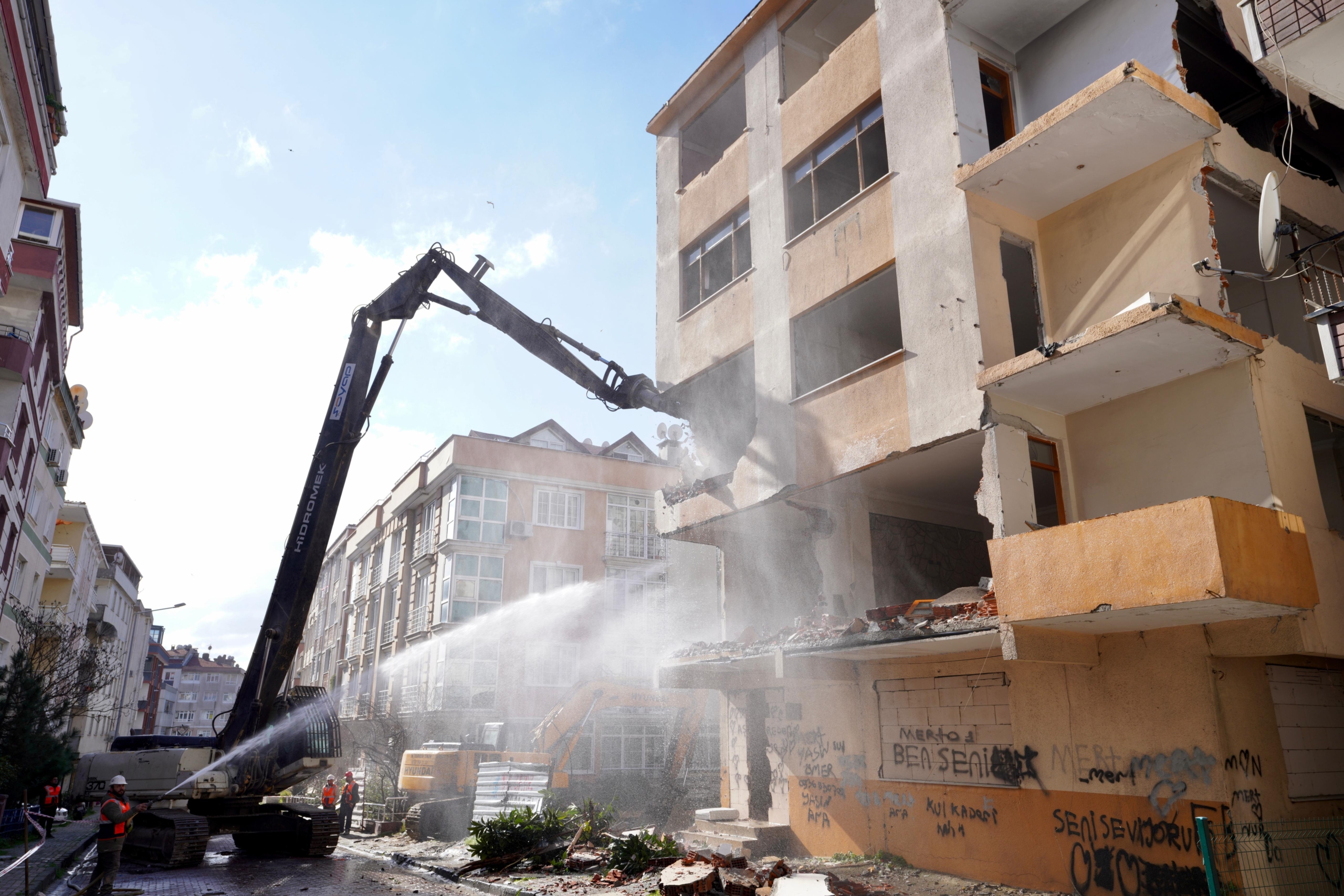
Urban renewal in Avcılar illustrates change within Istanbul’s districts.
1.  Reading the figures correctly
An official end-2026 population figure cannot be finalised before the year ends. The figures below use the following reference periods:- The latest resident population is for the end of 2025, published during 2026.
- The 2026 tourism figures cover January–August, not the full year.
- Transport boardings and journeys do not necessarily represent different individuals.
- Border arrivals are not equivalent to unique visitors or hotel guests staying in Istanbul.
2.  A numerical snapshot
| Indicator | Figure | Period or scope |
|---|---|---|
| Registered residents | 15,754,053 | End-2025, released in 2026 |
| Share of Türkiye’s population | 18.3% | Approximately one in five residents |
| Area | 5,343 km² | Whole province |
| Administration | 39 districts, 964 neighbourhoods | European and Asian sides |
| Foreign visitor arrivals | 18,972,699 | 2025, through Istanbul border points |
| Foreign visitor arrivals | 12,473,679 | January–August 2026 only |
| Operating urban rail | 402.60 km | All operators |
| Metro İstanbul | 245.75 km, 18 lines | Over three million daily boardings |
| IETT system | 6,807 vehicles, 852 routes | 2025 activity report, published in 2026 |
3.  Slow overall population growth, substantial internal change
The TÜİK address-based population results for 2025 give 15,754,053 residents for Istanbul province.That is 52,451 more than in 2024, approximately 0.33% growth. The modest total increase does not mean expansion has stopped: outer districts can gain homes and residents while central districts lose population.
Istanbul accounts for around 18.3% of Türkiye’s population. The municipality’s numerical overview gives 5,343 km², 39 districts and 964 neighbourhoods, with an overall density approaching 3,000 residents per km².
Density varies considerably. Compact Güngören and Fatih differ from extensive Çatalca, Şile and Silivri, which include countryside, forests and coasts.
4.  Where is the population moving?
The official district data show very different local trends. Esenyurt passes one million
Esenyurt had 1,003,905 registered residents, becoming the first Turkish district to exceed one million. Its population is larger than many provinces, illustrating the pressure one district can place on transport, schools and services. Tuzla grows to the east
Tuzla rose from 301,400 residents in 2024 to 313,865 in 2025: an increase of 12,465, or approximately 4.14%. Housing, industry, ports and shipyards meet along this Istanbul–Kocaeli corridor. Decline in some older districts
Güngören fell from 264,831 to 251,242 residents, a decrease of approximately 5.13% in one year.That does not establish a single explanation or a loss of importance. Housing preferences, moves to newer developments, dwelling sizes, density, renewal and changes of property use may all contribute.
The wider pattern
The figures suggest more growth towards the edges, housing around transport corridors, logistics and industry near airports and motorways, and relative decline in some dense older districts. They show redistribution, but do not by themselves prove its causes.5.  Main directions of urban expansion
Western and northwestern corridor
Esenyurt, Başakşehir, Arnavutköy, Büyükçekmece and Silivri have larger development areas, newer housing and, in some locations, access to Istanbul Airport, motorways and logistics activity.A modern development can still involve a long journey to work or study if it lacks effective public transport.
Eastern Asian-side corridor
Çekmeköy, Sancaktepe, Sultanbeyli, Pendik and Tuzla benefit from metro expansion, Sabiha Gökçen Airport and connections with Kocaeli’s industrial and technology areas.Older central districts
Parts of Fatih, Beyoğlu, Şişli, Beşiktaş, Güngören and Zeytinburnu have limited room for outward expansion. Change therefore involves building renewal, redevelopment and shifts from residential to commercial or visitor-related uses.Choosing a newer area
Check actual commute times, station and bus access, schools, hospitals, daily services, peak traffic, building structure and age, official ground studies and facilities outside the development as well as within it.The municipal rapid-screening service is an initial building assessment, not a final safety certificate.
6.  Tourism in 2026
The official provincial reports count foreign visitor entries through Istanbul’s border points. These are entries rather than unique people or hotel guests.Full-year 2025
There were 18,972,699 foreign visitor entries, against 18,582,322 in 2024: approximately 2.1% growth.January–August 2026
The total reached 12,473,679, against 12,367,851 in the same period of 2025: 0.86% growth. August adds another month to the previous January–July total of 10,544,321. These remain part-year figures.| Indicator | August 2026 | Meaning |
|---|---|---|
| Foreign visitor entries | 1,929,358 | 4.12% above August 2025 |
| Entries by air | 1,873,770 | Istanbul Airport:70.75%; Sabiha Gökçen:29.17% of air entries |
| Entries by sea | 55,588 | Entries through the ports |
| Entries from Saudi Arabia | 58,399 | Seventh-largest nationality group in August |
The five largest nationality groups in August were Russia, Germany, Iran, the United States and the United Kingdom. This differs from July, when Saudi Arabia ranked fifth with 81,917 entries.
Practical implications
- Choose airport and accommodation together: the airports are far apart.
- Geographical proximity does not guarantee a faster journey if accommodation is poorly connected to public transport.
- Historic districts and markets are busiest at peak times.
- Group visits by European or Asian side and avoid repeatedly crossing the entire city from east to west in one day.

The M12 testing programme; passenger service awaits a formal opening announcement.
7.  Public transport
The official operator overview reports 402.60 km of urban rail across all operators. Metro İstanbul itself operates 18 lines over 245.75 km, approximately 240 stations in the source overview and more than three million daily boardings.The distinction matters: the larger length includes other operators’ railways, whereas the smaller figure covers Metro İstanbul’s own services.
 Buses remain essential
The IETT 2025 activity report announcement describes a system of:- 6,807 vehicles and 852 routes.
- Around 66,000 daily operating trips.
- Approximately 1.4 million vehicle-kilometres daily.
- More than five million passenger journeys on 6 October 2025, identified in the announcement as a daily record.
8.  New transport connections in 2026
M5 to Sultanbeyli
The Samandıra Merkez–Sultanbeyli extension opened on 22 May, adding 4.4 km and four stations, bringing rail service to Sultanbeyli for the first time.The line connects Sultanbeyli, Sancaktepe, Çekmeköy and Ümraniye with Üsküdar, with a published end-to-end time of around 50 minutes.
Halkalı’s airport connection
The Halkalı–Arnavutköy airport-line section was inaugurated on 19 June 2026; passenger services began on 20 June.The section is approximately 21.75 km and adds İbn Haldun Üniversitesi, Kayaşehir, Olimpiyatköy, Halkalı Stadı and Halkalı stations. It completes an approximately 69 km corridor from Halkalı through Istanbul Airport to Gayrettepe.
Published times from Halkalı are approximately 30 minutes to the airport, 43 to Göktürk, 54 to Kağıthane and 57 to Gayrettepe. These do not include the whole door-to-door journey.
Has congestion disappeared?
No. Millions still travel across a very large province. New lines improve options and make effective stations and interchanges more important when choosing accommodation or planning visits.9.  Ferries remain part of the solution
Ferries are everyday transport as well as a visitor experience. Some European–Asian journeys can avoid bridge traffic and reduce transfers through places such as Eminönü, Karaköy, Beşiktaş, Kadıköy and Üsküdar.They are not always fastest. Compare the actual origin, destination and sailing time with metro and Marmaray alternatives.
10.  What the figures mean for you
- Short-stay visitors: choose accommodation around the daily itinerary. Far-western or far-eastern locations can consume much of a day if most sights are in the old city.
- Residents and students: test the real peak-hour commute. “Near the metro” is insufficient if reaching it needs a long bus ride or several changes.
- Families: prioritise schools, healthcare, parks and everyday services alongside commuting. A new complex cannot replace missing surroundings.
- Property buyers: assess legal status, building condition, infrastructure, official plans, project progress and real station access rather than a predicted transport-led price rise.
- Frequent flyers: IST is often more practical for northern and European-side locations; SAW may suit Asian-side and eastern areas. Check airport codes and actual travel times.
11. The main developments
- The latest population figure reached 15.754 million at the end of 2025, with slow overall growth.
- Esenyurt passed one million residents.
- M5 reached Sultanbeyli.
- The Halkalı–Istanbul Airport–Gayrettepe corridor was completed.
- Tourism remained high through August 2026, with limited growth over the same period of 2025.
12.  Understanding Istanbul’s scale
The headline totals—more than 15.7 million residents, substantial international tourism and over 400 km of urban rail—matter alongside where growth occurs and how neighbourhoods connect.For daily decisions, assess journey time, transfers and access to transport as carefully as distance in kilometres.
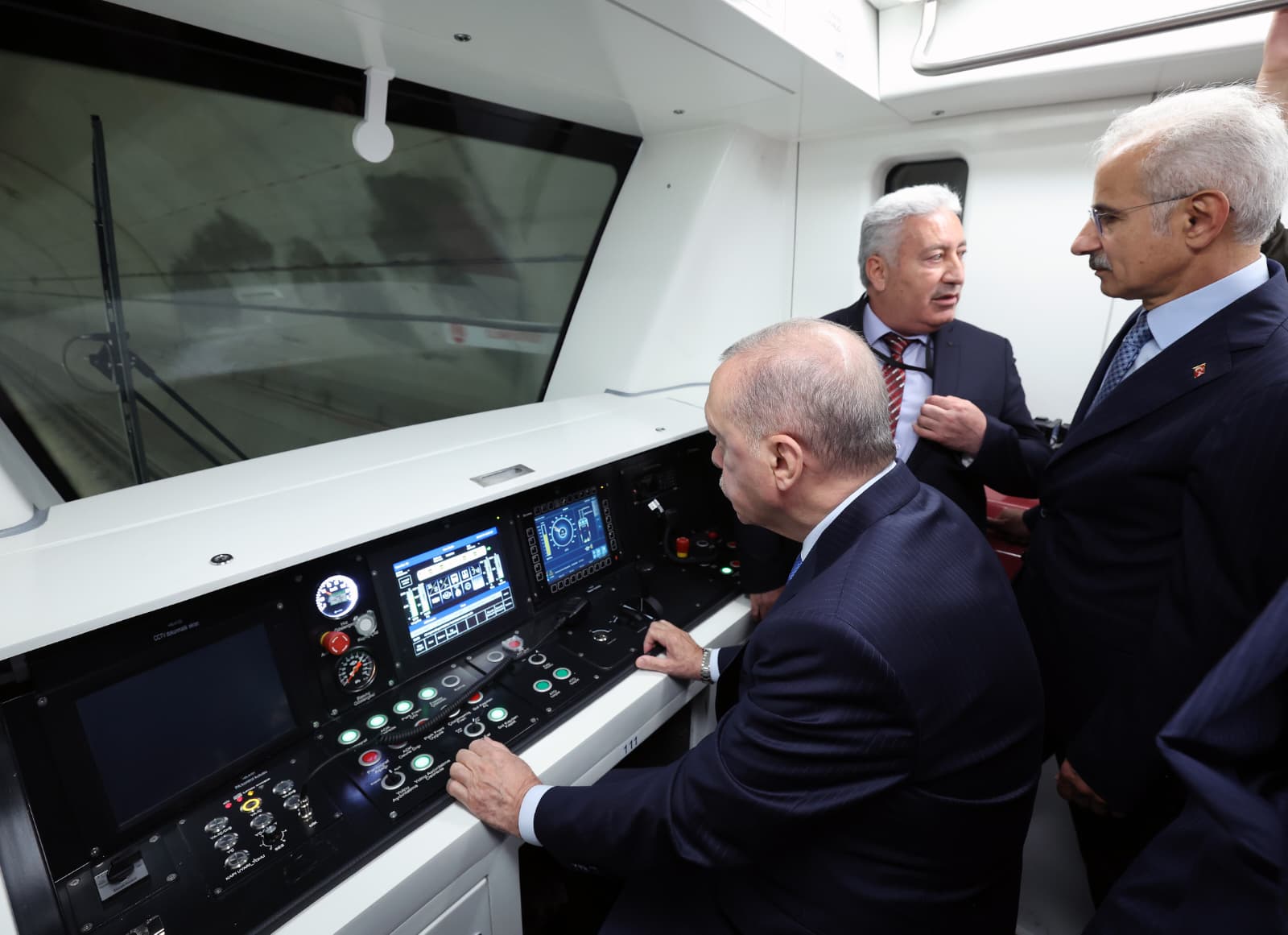
Image from the ministry’s June 2026 announcement of Halkalı–Arnavutköy passenger service.
 Related topics
- Istanbul: History, Culture and Life across Two Continents
- Choosing an Istanbul Neighbourhood to Suit Your Lifestyle
- Istanbul Ferries: Choosing Routes and When to Take the Boat
- Historic Istanbul Without the Crowds: A More Relaxed Way to Explore
- Istanbul Shopping: Grand Bazaar, Spice Bazaar or a Mall?
- Getting Around Marmara: Trains, Ferries, Coaches and Sensible Routes
- Day Trips from Istanbul in Marmara 2026: Seven Destinations and Practical Plans
- Marmara’s 11 Provinces: Character, Highlights and Who They Suit
- Istanbul Metro 2026: New Lines, Airport Routes and Key Interchanges