

- Joined
- Nov 2, 2025
- Messages
- 282
- Reaction score
- 0
- Points
- 16
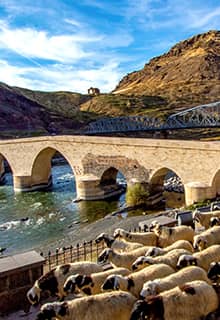
Palu's stone bridge and its setting on the Murat River.
Palu combines the landscape of the Murat River with Urartian remains, a stone bridge and the monuments of the old town. It suits a day focused on the castle and bridge, with another heritage stop added if site conditions and the journey from Elazığ and back allow.
 The Castle: Defence and Landscape
Palu Castle occupies a rocky site bordered by the Murat River to the south and south-east. Urartian remains include cisterns, passages and steps cut into the rock, showing how the elevated ground was used for defence.
Use the permitted route and decide how much climbing suits the group before starting. If the path is tiring, enjoy the castle from a nearby viewpoint. You can appreciate its position in the landscape without reaching every part of the interior.
 Menua's Rock Inscription
The Urartian inscription at Palu is on the castle's north-eastern side and is associated with King Menua and his westward campaigns. Its cuneiform text adds a written historical record to the walls and wider landscape.
Ask where it is and which approach is open. Read the interpretation or visit with someone familiar with the site. Take photographs from a suitable distance without touching or attempting to clean the lettering, leaving room for others to see it.
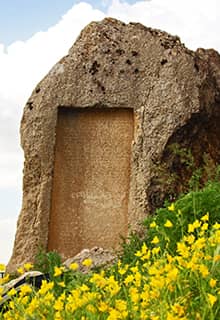
The Urartian rock inscription at Palu, associated with King Menua.
 The Stone Bridge over the Murat
The historic bridge spans the Murat River, but no surviving foundation inscription establishes its construction date conclusively. Its fabric reflects several periods and repairs. Appreciate its form and role as a crossing while recognising that its precise origins remain uncertain.
View the arches from a permitted riverside position, then compare the overall outline with the masonry details. Choose a photograph from an accessible spot rather than descending to an unprepared riverbank or obstructing a route in use.
 A Stop in Old Palu
Old Palu includes the remains of a church, mosques, a bathhouse and other stone monuments. Their condition and accessibility differ, with maintenance work and the state of each building affecting what can be seen or entered.
After asking locally about current access, choose a monument close to your route and leave time for a rest. Follow public roads between homes and monuments, respecting residents' lives. An old building may still be private or inaccessible.
 Planning a Day from Elazığ
Start with the castle and inscription if the route is open, then continue to the bridge, followed by lunch and a stop in the old town. Reverse the order if it better suits your arrival, the weather or the group's walking ability.
If using public transport, confirm the current return service before departure. Save the names Palu Kalesi and Tarihi Palu Köprüsü on your phone and agree a pick-up point with the driver. Clear travel arrangements allow an unhurried visit without a rush at the end of the day.
 Related topics
- Harput 2026: Castle, Ulu Mosque and Old Elazığ Heritage
- Elazığ 2026: City Museum, Kâzım Efendi Street and Bazaars
- Lake Hazar and Sivrice 2026: Lakeside Visits and Seasonal Hazarbaba
- Arslantepe and Battalgazi 2026: Early State Formation and Old Malatya
- Malatya 2026: Apricots, Local Food and Shopping after Reconstruction
- Darende 2026: Somuncu Baba, Tohma Canyon and Günpınar Waterfall
- Akçadağ 2026: Levent Valley and the Arabian Horses of Sultansuyu
- Elazığ: Lakes and Deep Anatolian Heritage
- Malatya: Türkiye’s Apricot Capital and Eastern Heritage
Last edited by a moderator: